The Lectionary readings opened more doors than could be entered in the sermon. I could for example have spent much more time exploring the Trinity at work for our salvation in John’s Gospel. Hence this postscript.
One of the sermon’s primary themes was the Trinity as eternal community/fiesta/banquet/dance of love—hat tip to Leonardo Boff (Holy Trinity, Perfect Community) and C. S. Lewis (the Great Dance in Perelandra, chapter 17). But what of the buzzkill at the end of the Romans reading, Paul’s reference to sharing Jesus’ suffering?
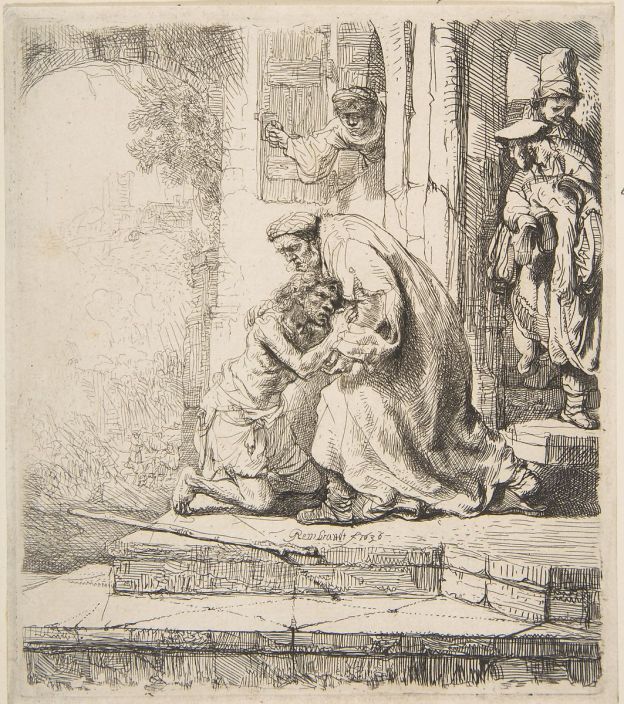
The mediation between these themes was “The Prodigal Son” parable. (Is that parable a retelling of the Cain and Abel story?) The father wants both the younger “prodigal” son and the older self-righteous son at the banquet. But that’ll only happen if both recognize that the father’s love, forgiving, repaying evil with good (Rom 12:21), is an expression of strength, not weakness. That’ll only happen if both practice that love in forgiving, in repaying evil with good. Likewise the Father wants us at the banquet—us and our enemies. And that’ll only happen etc. That practice in this world means suffering (just ask Jesus how Holy Week went).
Pulling back the camera, while there are many moving parts in Jesus’ death, the combination of today’s Isaiah reading and the Prodigal Son parable encourage me to think that that death is less about paying some extrinsic penalty incurred by our guilt (a coal from the altar took care of Isaiah’s) and more about breaking the cycles of getting even that mar human beings and human history (see, conveniently, Gerhard Lohfink’s chapter 16 “Dying for Israel” in Jesus of Nazareth: What He Wanted, Who He Was).
Forgiving and repaying evil with good instead of seeking payback: signs of a strong or weak human being? (Signs of a strong or weak male?) The winds of that argument buffet us daily, and it’s worth noticing the answers we’re giving. And, since this is an election year, our presidential election is also about that.
 With Jacob at Bethel