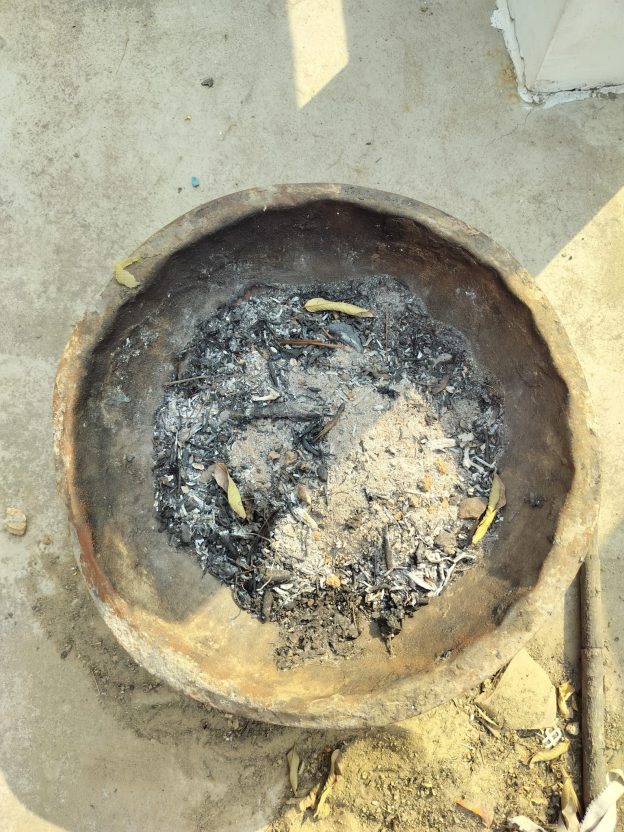
Ash Wednesday, the year of our Lord 2026. Here we are again. How might we hear the appointed readings this evening?
Our Isiah reading: we might hear some exasperation in the Lord’s words: too much of the people’s current behavior is a distraction from the serious work that needs doing. Our text points to that work:
“Your ancient ruins shall be rebuilt;
you shall raise up the foundations of many generations;
you shall be called the repairer of the breach,
the restorer of streets to live in.”
Lent: time to notice what distracts us, to set it aside. That “what” is different for each individual or community; our readings direct my attention to discouragement and fatigue. Recall how the conversation between the Lord and Israel begins back in that section of Isaiah from which many of our recent readings have been taken.
Why do you say, O Jacob,
and speak, O Israel,
“My way is hidden from the Lord,
and my right is disregarded by my God.” (Isa 40:27)
Or today’s psalm:
…we are but dust.
Our days are like the grass;
we flourish like a flower of the field;
When the wind goes over it, it is gone,
and its place shall know it no more.
What’s the point?
And here the good news kicks in: God assumed our dust. Jesus: fully God, fully dust.
So Paul in our second reading can pick up Isaiah’s words:
In a time of favor I have answered you,
on a day of salvation I have helped you;
And Isaiah’s words continue:
I have kept you and given you
as a covenant to the people,
to establish the land,
to apportion the desolate heritages;
saying to the prisoners, “Come out,”
to those who are in darkness “Show yourselves.” (Isa 49:8-9a)
Jesus has gotten God’s project of healing the world back on track.
So, the imposition of ashes in the form of a cross in a couple minutes. We’re dust; some years we’re more in touch with that than others. But ashes in the form of a cross. We’re reading Matthew this year, so recall how Matthew begins and ends his account.
The first scene at the end of the angel’s encounter with Joseph: “All this took place to fulfill what had been spoken by the Lord through the prophet: ‘Look, the virgin shall conceive and bear a son, and they shall name him Emmanuel,’ which means, ‘God is with us’” (1:22-23).
The last scene on a mountain in Galilee: “And remember, I am with you always, to the end of the age” (28:20b).
Ashes in the form of a cross: we’re not walking alone. That’s a good thing. There are breaches to be repaired, streets to be restored, a world to be healed.
 With Jacob at Bethel