Author Archives: Fr. Tom McAlpine

Unknown's avatar

About Fr. Tom McAlpine

Fr. Tom is a semi-retired priest in the Episcopal Church living in Fitchburg, Wisconsin.

Re the Daily Office Readings June 23 Anno Domini 2020

The Readings: Numbers 16:20-35; Romans 4:1-12; Matthew 19:23-30

Paul’s just been talking about Jews and Gentiles. But who are Abraham’s children anyway? The New Revised Standard Version (NRSV) and Common English Bible (CEB) offer strikingly different translations of v.1:

  • NRSV: “What then are we to say was gained by Abraham, our ancestor according to the flesh?”
  • CEB: “So what are we going to say? Are we going to find that Abraham is our ancestor on the basis of genealogy?”

The NRSV assumes that genealogy settles as the question; the CEB questions that assumption. The rest of the chapter may support the CEB translation: Abraham’s children are the ones who share Abraham’s faith, the argument focusing on works (vv. 2-8), circumcision (vv.9-12), and the law (vv.13-15).

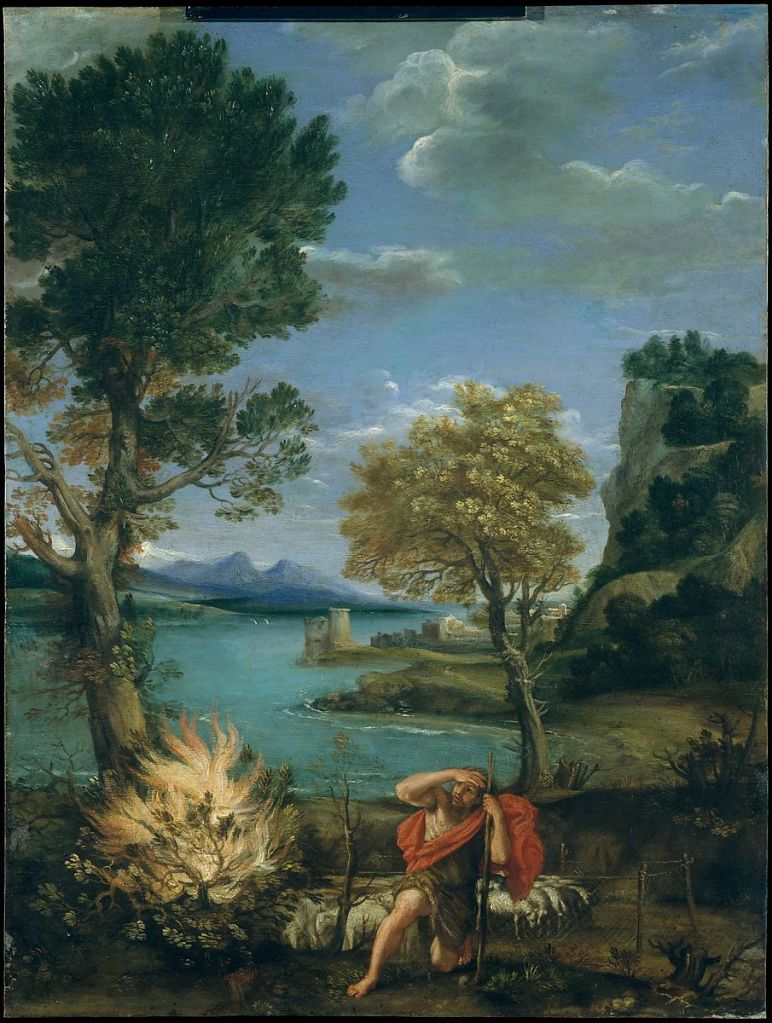
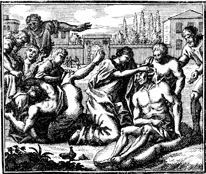
I wonder about Paul’s argument in vv.2-8, which reads Genesis 15:1-6 in terms of a faith vs. works contrast. In context, the story is striking. It’s the first story in which Abraham says anything to the Lord, and that “anything” is a sharp question. The Lord responds with, well, more words (hence the accompanying image), and Abraham believes. “Believes”: stays out in the sticks rather than heading back to the rest of his family and civilized life. “Believes”: he doesn’t walk off the set, out of the story. What definition of ‘works’ is Paul assuming to make the contrast work?

Wright notices “trusts him who justifies the ungodly,” striking on three counts. First, ‘ungodly’ is not the first word to come to mind to describe Abraham (but see Genesis 12:10-20, etc.). Second, “justify the ungodly” is precisely what a just judge is not supposed to do (e.g., Proverbs 17:15), pointing back to the mind-bending 3:24-26. Third, ‘ungodly’ (asebēs) points back to the “ungodliness” (asebeia), at the head of Paul’s description of the global problem. So especially in my most self-critical moments, no reason to not feel right at home in Abraham’s family.

Re the Daily Office Readings June 22 Anno Domini 2020

The Readings: Numbers 16:1-19; Romans 3:21-31; Matthew 19:13-22

The Romans text is about as dense as biblical texts get. Working through it, I’ve found the following useful. Verse 21: New Jerusalem Bible’s “saving justice” for dikaiosunē (NRSV “righteousness”) is helpful (see June 16 post). V. 22: Common English Bible’s “through the faithfulness of Jesus Christ” is probably better than NRSV’s “through faith in Jesus Christ” (redundant). V. 23 “and fall short of the glory of God” probably a reference back to 1:23 (the problem to be solved). V.24 “justified” paraphrased by Wright: “declared to be in the right, to be members of the covenant.” V.24 “redemption,” recalling “under the power of sin” (v.9). V.25 “a sacrifice of atonement by his blood,” probably an allusion to Isaiah’s fourth “Servant Song.”

In the Eucharist the celebrant prays:

  • “a perfect sacrifice for the whole world” (Prayer A)
  • “In him, you have delivered us from evil, and made us worthy to stand before you. In him, you have brought us…out of sin into righteousness” (Prayer B)
  • “we who have been redeemed by him” (Prayer C)
  • “To fulfill your purpose he gave himself up to death” (Prayer D)

How does the celebrant know this? Texts like today’s Romans text: not explanations, but witnesses.

Re the Daily Office Readings June 21 Anno Domini 2020

The Readings: Numbers 14:26-45; Acts 15:1-12; Luke 12:49-56

Texts like today’s reading from Acts provide the back story for why letters like Paul’s to the Romans needed writing. Later in that letter Paul writes “Welcome one another, therefore, just as Christ has welcomed you” (15:7), encouraging Jews as Jews and Gentiles as Gentiles to live as “one body in Christ” (12:5). And because there were still voices saying “Unless you are circumcised according to the custom of Moses, you cannot be saved” (Acts 15:1), Paul also writes “keep an eye on those who cause dissensions and offenses, in opposition to the teaching that you have learned” (16:17).

The sad irony is that while Paul dedicates an entire chapter (Rom 14) to creating space for different approaches to food and festivals, by around the end of the first century there are influential voices questioning the legitimacy of Jewish Christians observing Torah.

Have Jews and Christians done any better at dealing with difference than their neighbors?

“Then Jephthah gathered all the men of Gilead and fought with Ephraim; and the men of Gilead defeated Ephraim, because they said, ‘You are fugitives from Ephraim, you Gileadites– in the heart of Ephraim and Manasseh.’ Then the Gileadites took the fords of the Jordan against the Ephraimites. Whenever one of the fugitives of Ephraim said, ‘Let me go over,’ the men of Gilead would say to him, ‘Are you an Ephraimite?’ When he said, ‘No,’ they said to him, ‘Then say Shibboleth,’ and he said, ‘Sibboleth,’ for he could not pronounce it right. Then they seized him and killed him at the fords of the Jordan. Forty-two thousand of the Ephraimites fell at that time” (Jdg. 12:4-6).

Re the Daily Office Readings June 20 Anno Domini 2020

Flight from Pompeii by Benzoni

The Readings: Numbers 13:31––14:25; Romans 3:9-20; Matthew 19:1-12

Paul develops his “all…under the power of sin” theme through a series of OT quotations: “Vv.10-12: Pss 14.1-2; 53.1-2. 13: Pss 5.9; 140.3. 14: Ps 10.7. 15-17: Isa 59.7-8; Prov 1.16. 18: Ps 36.1” (New Oxford Annotated Bible). I am puzzled by the series, since all the citations except Isa 59:7-8 are descriptions offered by one group of another group, hardly intended to cover the speakers. But perhaps this is Paul’s polemical point, that our eloquent denunciations of others tend to boomerang?

(Verses 10-18 might be useful in preparing for the confession and absolution portion of our worship, since multiple issues highlighted there reappear as issues for Christian communities in the epistles, e.g., kindness (v.12, cf. Col 3:12), the tongue (vv.13-14, cf. Jas 3:1-12), peace (v.17, cf. 2 Cor 13:11).

All “under the power of sin” implies that what’s needed is not simply repentance, but rescue. So it might set the stage for God’s intervention as a sort of new Exodus. But that is in the text’s future, with the present portrayed by the text simply bleak. This would be an unfortunate place for the book to end.

Paul caps his argument citing Psalm 143:2, and in its own way that psalm points the way forward in two respects. First, the opening petition highlights the Lord’s righteousness as the motive for the Lord’s non-judgmental intervention:

Hear my prayer, O LORD;
give ear to my supplications in your faithfulness;
answer me in your righteousness.
Do not enter into judgment with your servant,
for no one living is righteous before you. (Vv.1-2; see also v.11)

So in Paul it’s the Lord’s righteousness (dikaiosunē) that drives the Lord’s saving action.

Second, later in the petitions:

Teach me to do your will,
for you are my God.
Let your good spirit lead me
on a level path. (v.10)

So in Paul it’s the Holy Spirit that leads those incorporated in the Messiah.

Re the Daily Office Readings June 19 Anno Domini 2020

The Readings: Numbers 13:1-3, 21-30; Romans 2:25––3:8; Matthew 18:21-35

I think I get Rom. 3:1-8. God has a global problem (see Genesis 1-11); God elects Israel to solve that problem but Israel falls victim to the same problem (see Genesis 12ff). So now God has two problems. But God’s faithfulness means not being satisfied with punishing the guilty, but rescuing both Israel and the world.

I don’t get Rom. 2:25-29, puzzled by at least three things. First, if Paul’s argument holds, there are by definition no disobedient Jews. Second, it’s not clear that Paul’s argument helps Paul, for he still agonizes over his fellow Jews who don’t acknowledge Jesus (chapters 9-11). Third, the stark contrast between keeping and breaking the law (v.27) is hard to square with our experience of the wide spectrum of unfaithfulness-faithfulness among both Jews and Christians. Help!

Re the Daily Office Readings June 18 Anno Domini 2020

The Triumph of Hypocrisy by Thomas Rolandson

The Readings: Numbers 12:1-16; Romans 2:12-24; Matthew 18:10-20

“For the wrath of God is revealed from heaven against all ungodliness and wickedness of those who by their wickedness suppress the truth” (1:18) It looks like Paul is still developing this theme, focusing on groups that think themselves exempt, e.g., the Jews.

Commentators wonder who these Gentiles who “do instinctively what the law requires” are: a strictly hypothetical group, righteous non-Christians, Christians? None of the proposed identifications are without problems.

Some 2,000 years out from Paul’s writing, today’s text sounds like it could as easily be written about Christians as a group. Paul: “For it is not the hearers of the law who are righteous in God’s sight, but the doers of the law who will be justified.” And already Paul’s contemporary James finds it necessary to remind his Christian readers “For if any are hearers of the word and not doers, they are like those who look at themselves in a mirror; for they look at themselves and, on going away, immediately forget what they were like” (Jas. 1:23-24). What do I do with that?

Re the Daily Office Readings June 17 Anno Domini 2020

An Allegory of Intemperance by H. Bosch

The Readings: Numbers 11:24-33(34-35); Romans 1:28––2:11; Matthew 18:1-9

For today’s reading in Romans we might bring two Russians into the conversation.

Fyodor Dostoevsky: “Above all, don’t lie to yourself. The man who lies to himself and listens to his own lie comes to a point that he cannot distinguish the truth within him, or around him, and so loses all respect for himself and for others. And having no respect he ceases to love” (The Brothers Karamazov).

Aleksandr Solzhenitsyn: “If only there were evil people somewhere insidiously committing evil deeds, and it were necessary only to separate them from the rest of us and destroy them. But the line dividing good and evil cuts through the heart of every human being. And who is willing to destroy a piece of his own heart?” (The Gulag Archipelago).

In short, idolatry not only profoundly insults God, but also profoundly degrades those truly created in God’s image: human beings. As the psalmist puts it:

The idols of the nations are silver and gold,
the work of human hands.
They have mouths, but they do not speak;
they have eyes, but they do not see;
they have ears, but they do not hear,
and there is no breath in their mouths.
Those who make them
and all who trust them
shall become like them. (Ps. 135:15-18)

“For he will repay according to each one’s deeds… For God shows no partiality. (Rom. 2:6, 11). Is this part of our picture of God? Why or why not?

Re the Daily Office Readings June 16 Anno Domini 2020

Let my people go by Aaron Douglas

The Readings: Numbers 11:1-23; Romans 1:16-25; Matthew 17:22-27

Reading Romans is challenging—also because it’s hard not to assume that Paul means what we mean by words shaped by 20 centuries of theology. And because translations always involve tradeoffs. Three examples:

First, “For I am not ashamed of the gospel; it is the power of God for salvation to everyone who has faith, to the Jew first and also to the Greek” (v.16). When we hear ‘salvation’ we’re apt to think of the destiny of the individual soul after death. When a first-century Jew heard ‘salvation’ they were apt to think of liberation from the Roman Empire. When a first-century patriotic Roman heard ‘salvation’ they were apt to assume that that was the law and order and prosperity that Rome was bringing. And what Paul means by it?

Second, “For therein is the righteousness of God revealed from faith to faith: as it is written, The just shall live by faith” (v.17, KJV). When we hear ‘righteousness’ we’re apt to think of an abstract standard of behavior, so probably bad news for everybody. In the Old Testament it’s about faithfulness to one’s responsibilities, e.g., God’s faithfulness to God’s responsibilities as defined in the covenants with Abraham and Moses. And when Israel is in trouble, God’s righteousness is good news:

To the sound of musicians at the watering places,
there they repeat the triumphs [literally ‘righteous acts’] of the LORD,
the triumphs [literally ‘righteous acts’] of his peasantry in Israel. (Jdg. 5:11 NRS)

So back in Rom 1:17 the New Jerusalem Bible uses ‘saving justice’ to translate dikaiosunē. Divine dikaiosunē, good news if I’m oppressed, less good news if I’m the oppressor. In Romans, what divine responsibilities define divine righteousness?

Third, re the same text. It’s easy to think of faith and faithfulness as two quite different things. But both words are possible translations of Greek pistis, and translations of v.17 make different choices. Perhaps we might expand the translation like this: “revealed from [God’s] faithfulness to [human] faith and faithfulness: as it is written, The just shall live by faith/faithfully.” When we encounter ‘faith’ or ‘faithfulness’ in the New Testament, we might wonder how the text would read if the other translation were used.

The Lectionary omits vv.26-27. On the one hand, regrettable: silencing troublesome voices is problematic (see Colin Kaepernick). On the other hand, entry into the arguments regarding their interpretation can too easily derail attention to Paul’s larger argument.

Ecclesiastes in Ellen F. Davis‘ “Simple Gifts” (Getting involved with God pp. 104-120)

Some of us at St Dunstan’s (Madison, Wisconsin) have been reading Ecclesiastes together. Wondering how we might sum up what we’ve encountered, I reread Davis’ essay, which prompted the following.

“From the mainstream sages of Proverbs we may learn about the nature of ‘righteousness, justice, and equity’ (Proverbs 1:3), but Kohelet teaches us about humility. This is the core of his teaching: life can never be mastered, if ‘mastery’ means shaping it in conformity with our desires. It can only be enjoyed, when pleasures great and small come our way. Or, when enjoyment is not possible, then life must be endured. What Kohelet aims to instill in his students is the ability to receive the pleasures of life as the gift they are and to recognize God as sole Giver—‘For who eats or who feels anything, apart from him?’ (2:25).

“It is often said that the message of Ecclesiastes is best summed up as carpe diem, ‘seize the day.’ But the evidence belies that. The key verb in the book is not ‘seize’ but ‘give’, which occurs twenty-eight times in these twelve chapters—and most often the one who gives is God. The essential message, then, is ‘Receive the gift.’ We practice the core religious virtue of humility by noting with pleasure, day by day, the gifts that come to us from God.”

Kohelet “specifically urges us to realize three forms of happiness in our lives: sensual pleasure (eating and drinking, sleep, sunlight), intimate relationships (friendship and conjugal love), and satisfaction in work.”

“The only wisdom we can hope to acquire
Is the wisdom of humility: humility is endless” (T. S. Eliot in “East Coker II”)

Very helpful, and noticeable overlap with William Brown’s description of the “fear of God” in the book (see June 12, 2020 post).

As is often noted, Kohelet (the teacher) slams the door on speculation re the afterlife (e.g., 3:20-21). In the context of the entire biblical witness, is this a defect? The teacher might argue not: why should we expect to receive/enjoy the afterlife if we’ve not learned to receive/enjoy this life?

The sharp tension in the book between the teacher’s theology (God is active; God “will bring every deed into judgment” [12:14]) and God’s inscrutability is like the tension in the petitionary psalms and Job. But the petitionary psalms typically call on God to conform to the psalmist’s theology, and Job—loudly, repeatedly—calls on God for an explanation. Why is the teacher silent? “Never be rash with your mouth, nor let your heart be quick to utter a word before God, for God is in heaven, and you upon earth; therefore let your words be few” (5:2). To speculate: perhaps the teacher’s prayers are kept private. Perhaps the teacher regards teaching about or modeling prayer too likely to be mistaken for an attempt to wrest mastery from God.

Davis: “Kohelet has meditated long and hard on the first few chapters of Genesis,” noting hebel as also the name of Cain’s brother, and the role of death. We might also wonder about “the tree of the knowledge of good and evil.” Kohelet (the teacher) has spent the book seeking knowledge through experience, with both negative and positive results. The negative: our ignorance is profound: the past (forgotten), the present (what God is up to), the future (the results of our actions especially). The positive: a stance or character that might be described in terms of humility, fear of God, receiving God’s gifts. The bottom line—in sharp contrast to the Genesis 3 story—“Fear God and keep his commandments” (12:13).