Category Archives: Daily Office Readings

Re the Daily Office Readings June 16 Anno Domini 2020

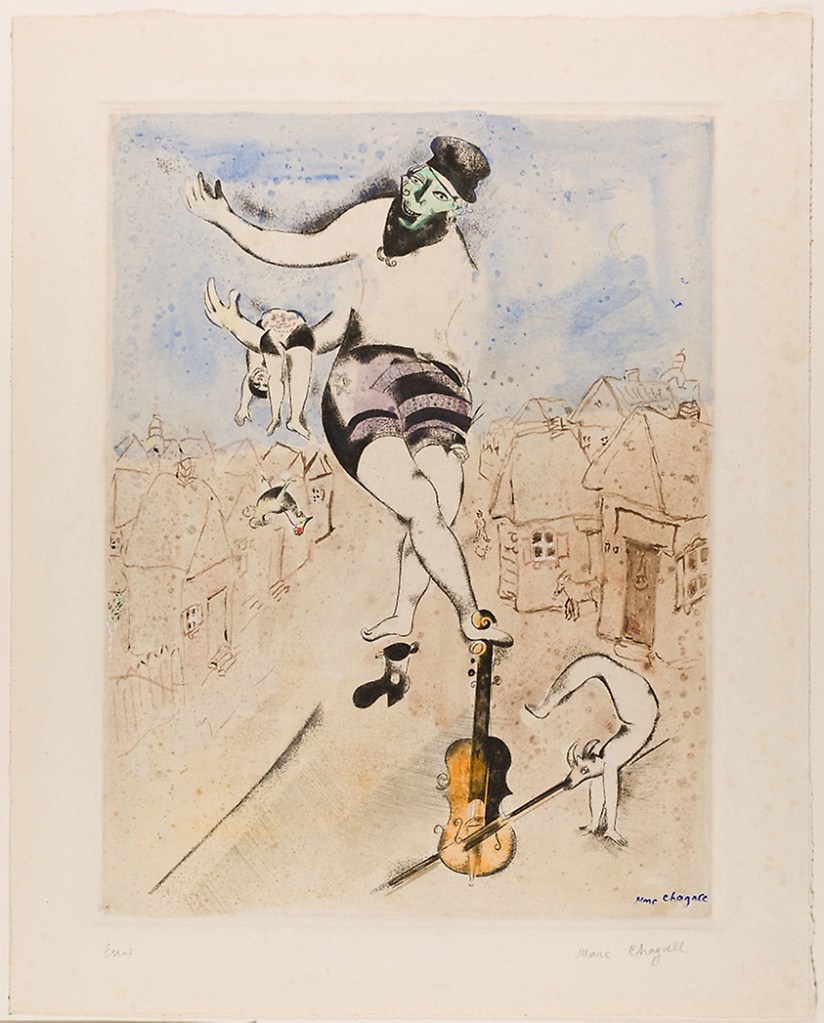
Let my people go by Aaron Douglas

The Readings: Numbers 11:1-23; Romans 1:16-25; Matthew 17:22-27

Reading Romans is challenging—also because it’s hard not to assume that Paul means what we mean by words shaped by 20 centuries of theology. And because translations always involve tradeoffs. Three examples:

First, “For I am not ashamed of the gospel; it is the power of God for salvation to everyone who has faith, to the Jew first and also to the Greek” (v.16). When we hear ‘salvation’ we’re apt to think of the destiny of the individual soul after death. When a first-century Jew heard ‘salvation’ they were apt to think of liberation from the Roman Empire. When a first-century patriotic Roman heard ‘salvation’ they were apt to assume that that was the law and order and prosperity that Rome was bringing. And what Paul means by it?

Second, “For therein is the righteousness of God revealed from faith to faith: as it is written, The just shall live by faith” (v.17, KJV). When we hear ‘righteousness’ we’re apt to think of an abstract standard of behavior, so probably bad news for everybody. In the Old Testament it’s about faithfulness to one’s responsibilities, e.g., God’s faithfulness to God’s responsibilities as defined in the covenants with Abraham and Moses. And when Israel is in trouble, God’s righteousness is good news:

To the sound of musicians at the watering places,
there they repeat the triumphs [literally ‘righteous acts’] of the LORD,
the triumphs [literally ‘righteous acts’] of his peasantry in Israel. (Jdg. 5:11 NRS)

So back in Rom 1:17 the New Jerusalem Bible uses ‘saving justice’ to translate dikaiosunē. Divine dikaiosunē, good news if I’m oppressed, less good news if I’m the oppressor. In Romans, what divine responsibilities define divine righteousness?

Third, re the same text. It’s easy to think of faith and faithfulness as two quite different things. But both words are possible translations of Greek pistis, and translations of v.17 make different choices. Perhaps we might expand the translation like this: “revealed from [God’s] faithfulness to [human] faith and faithfulness: as it is written, The just shall live by faith/faithfully.” When we encounter ‘faith’ or ‘faithfulness’ in the New Testament, we might wonder how the text would read if the other translation were used.

The Lectionary omits vv.26-27. On the one hand, regrettable: silencing troublesome voices is problematic (see Colin Kaepernick). On the other hand, entry into the arguments regarding their interpretation can too easily derail attention to Paul’s larger argument.
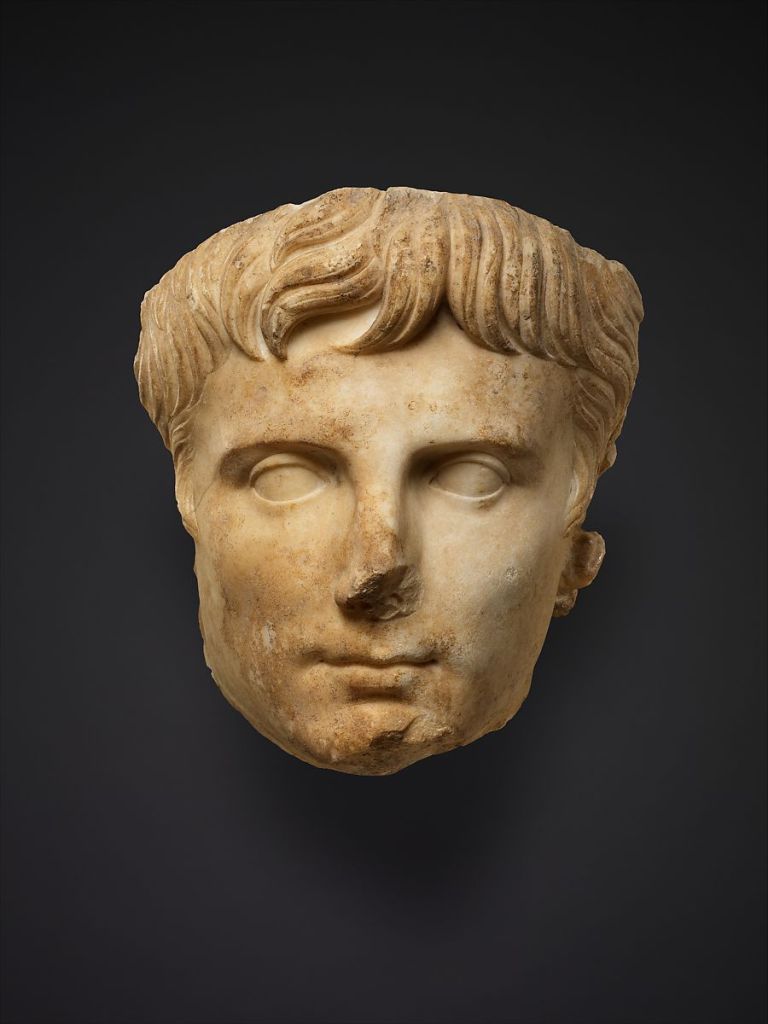

Re the Daily Office Readings June 15 Anno Domini 2020

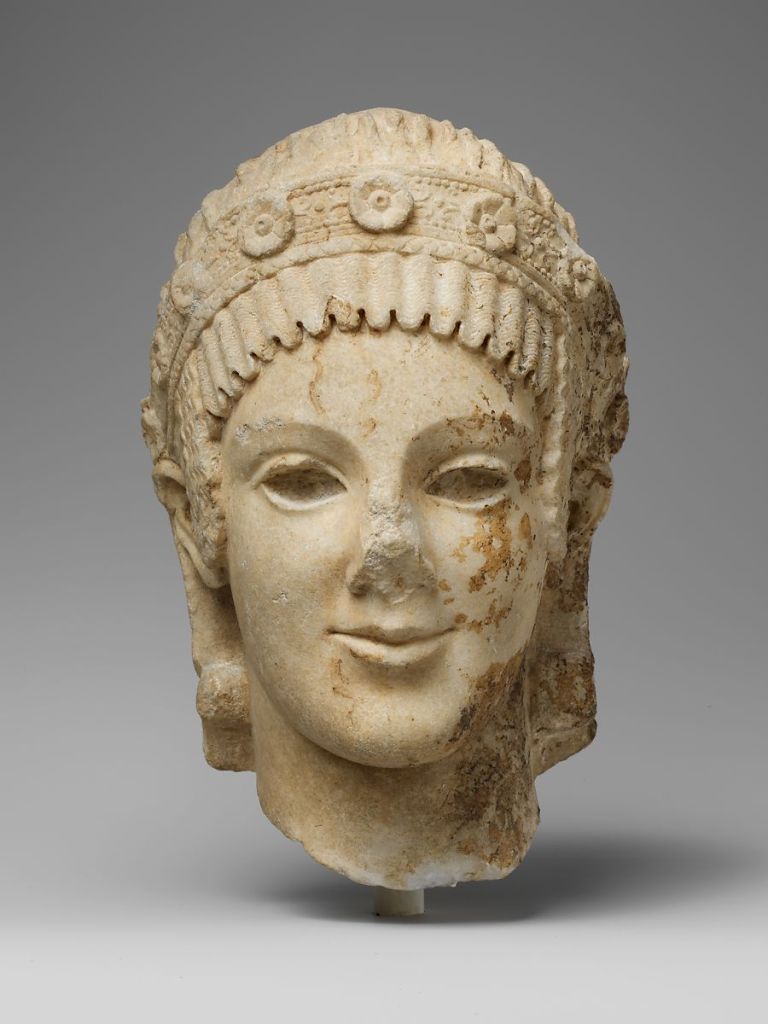
Marble portrait of the emperor Augustus, ca. A.D. 14–37 Roman, Early Imperial, Julio-Claudian Marble; H. 12 in. (30.48 cm) The Metropolitan Museum of Art, New York, Rogers Fund, 1907 (07.286.115) http://www.metmuseum.org/Collections/search-the-collections/247993

The Readings: Numbers 9:15-23; 10:29-36; Romans 1:1-15; Matthew 17:14-21

If I’m one of the Christians to whom Paul is writing, what might I notice in these opening verses?

  • Paul describes himself as a doulos (‘servant’ in NRSV). On the one hand, no status; on the other, whose slave is he?
  • “Jesus the Anointed” (or “Jesus the Messiah”—the phrase is not yet functioning as a proper name), so three words into the letter and we’re already on thin ice politically.
  • “Gospel”—that’s the word used for “the announcement of the accession or the birthday of a ruler or emperor” (Wright).
  • “…the obedience of faith among all the Gentiles for the sake of his name, including yourselves who are called to belong to Jesus Christ.”

It takes more than a little chutzpah to write like this to folk in the capital of the empire. There’s more in the same vein, Paul reclaiming words that the emperors liked to use: ‘lord’, ‘son of God,’ and later ‘justice’, ‘salvation’, etc. The letter is not anti-Roman—Paul has bigger fish to fry—it just hasn’t drunk the Roman Kool-Aid. And ‘gospel’, not first about me and what I decide, but about who has authority in and over this world.

While these reflections on Romans owe much to a wide variety of secondary sources, they’re particularly indebted to N. T Wright’s work in both the “Paul for Everyone” series and The New Interpreter’s Bible Commentary.

Re the Daily Office Readings June 14 Anno Domini 2020

Photo by Ekaterina Litvinova

The Readings: Numbers 6:22-27; Acts 13:1-12; Luke 12:41-48

“The LORD spoke to Moses, saying: ‘Speak to Aaron and his sons, saying, “Thus you shall bless the Israelites: You shall say to them, ‘The LORD bless you and keep you; the LORD make his face to shine upon you, and be gracious to you; the LORD lift up his countenance upon you, and give you peace.’” So they shall put my name on the Israelites, and I will bless them.’”

What we know as the Aaronic Blessing, presented in the first reading, has long been used in Jewish and Christian liturgies. In our polarized context, it’s perhaps an opportunity to examine our speech.

“And forgive us our sins, for we ourselves forgive everyone indebted to us” (Lk. 11:4). That’s bad enough—but Jesus doesn’t stop there: “bless those who curse you, pray for those who abuse you” (Lk. 6:28). We have public figures with real power who are abusing too many people. On that we agree, even as we sharply disagree as to who these figures are. When they come to my attention—usually on the evening news—my body reacts, my emotions engage, my mouth responds, whether audibly or inaudibly. Jesus’ notion seems to be that my response track with the Aaronic Blessing. “[Name], may the LORD bless you and keep you…” That is not what usually happens. I have work to do.

Jesus’ brother James gets at it this way: “With it [the tongue] we bless the Lord and Father, and with it we curse those who are made in the likeness of God. From the same mouth come blessing and cursing. My brothers and sisters, this ought not to be so” (Jas. 3:9-10). “Made in the likeness of God”—no matter what they’re doing. Perhaps the idea is that the likeness of God gives me my starting point, encouraging me to pray that that likeness be as clear and life-giving as possible. As I said, I have work to do.

Re the Daily Office Readings June 13 Anno Domini

The Readings: Numbers 3:1-13; Galatians 6:11-18; Matthew 17:1-13

Matthew begins “Six days later”: six days after Peter’s confession and Jesus’ pivot to warning his disciples about his coming passion. This narrative of “the Transfiguration” might take us in many directions; here are two.

The same Jesus whose face is shining like the sun will undergo great suffering. We might think that the one excluded the other; we might wonder about recalibrating our ideas of how glory and honor work.

The Jewish disciples know Moses and Elijah, and are still trying to puzzle out Jesus. The heavenly voice’s “listen to him” suggests that Jesus properly interprets Moses and Elijah. We Gentile disciples aren’t worried about Moses and Elijah, but have our own set of authorities who jealously guard their turf: Mars (war, national security), Pluto (wealth, the economy), Venus (beauty), etc. And the heavenly voice’s “listen to him” is telling us how to and when to listen to them?

“He is the image of the invisible God, the firstborn of all creation; for in him all things in heaven and on earth were created, things visible and invisible, whether thrones or dominions or rulers or powers– all things have been created through him and for him. He himself is before all things, and in him all things hold together” (Col. 1:15-17).

Re the Daily Office Readings June 12 Anno Domini 2020

The Readings: Ecclesiastes 11:9––12:14; Galatians 5:25––6:10; Matthew 16:21-28

There are any number of things we might take away from Ecclesiastes. One is what William Brown in Wisdom’s Wonder sees as the teacher’s redefinition of the fear of God: “To fear God…is to be fearfully receptive in the domain of the Holy, where human initiative is minimized and all scheming is eliminated. To fear God is to acknowledge the gulf between transcendent eminence and fragile creatureliness… Reverence is equated with utmost reticence in matters pertaining to the Divine, both discursive and performative.”

And this fear translates into the formation of a particular sort of character:

  1. The God fearer is receptive to the pleasure that God gives. “Carpe diem is all about reshaping desire to what is given, not to what one strives for.” The pleasures that God gives are typically small in comparison to the grandiosity of the projects narrated in Eccl. 2. The God-fearer embraces simplicity.
  2. The God fearer toils for pleasure, not gain.
  3. The God fearer eschews virtue-osity, any pursuit of virtue as a means of securing one’s existence.
  4. The God fearer seeks wisdom, that is, wisdom as redefined by Qohelet’s search: “Faced with a world that cannot be mastered, Qohelet urges his readers to go forth freed from obsession and extremism, freed from illusions of grandeur, freed from compulsive striving, yet filled with fear and wonder in the receiving and in the doing, with wonder minus the glory, with wisdom minus Wisdom.”

That’s worth some reflection!

Re the Daily Office Readings June 11 Anno Domini 2020

The Readings: Ecclesiastes 11:1-8; Galatians 5:16-24; Matthew 16:13-20

“…you do not know the work of God, who makes everything.” Our not-knowing: that’s been one of the teacher’s main themes. It would not be hard for that not-knowing to be paralyzing, precisely the danger today’s text addresses.

Verses 1-2 are sometimes taken as investment strategies, but since that involves a fair amount of interpretive squinting, perhaps the older Egyptian proverb is a better clue: “Do a good deed and throw it in the water; when it dries you will find it.” Why not some senseless random acts of kindness: who knows what effects they might have?

“Whoever observes the wind will not sow; and whoever regards the clouds will not reap.” That’s the pragmatic angle: when do we have the information we’d like before making an important decision?

“Just as you do not know how the breath comes to the bones in the mother’s womb, so you do not know the work of God, who makes everything.” The teacher could have chosen any example; why this one? Perhaps G. K. Chesterton’s observation re Job provides a clue: “Lastly, the poet has achieved in this speech…another and much more delicate thing. Without once relaxing the rigid impenetrability of Jehovah in His deliberate declaration, he has contrived to let fall here and there in the metaphors, in the parenthetical imagery, sudden and splendid suggestions that the secret of God is a bright and not a sad one–semi-accidental suggestions, like light seen for an instant through the cracks of a closed door.”

Where were you when I laid the earth’s foundations?
Speak if you have understanding.
Do you know who fixed its dimensions
Or who measured it with a line?
Onto what were its bases sunk?
Who set its cornerstone
When the morning stars sang together
And all the divine beings shouted for joy? (Job 38:4-7)

Re the Daily Office Readings June 10 Anno Domini 2020

Photo by Camilo Jimenez

The Readings: Ecclesiastes 9:11-10:20; Galatians 5:1-15; Matthew 16:1-12

“Like fish taken in a cruel net, and like birds caught in a snare, so mortals are snared at a time of calamity, when it suddenly falls upon them.”

Perhaps this is the place to say more about the early form of globalization that shapes the teacher’s context, in which local control and predictability become, well, like breath. William Brown in Wisdom’s Wonder: “In contrast to the largely subsistence, small-scale, agrarian-based economy of preexilic times, the economy of the Persian period became increasingly commercialized. A standardized monetary currency was established under Darius the Great (550-486 bce) to facilitate commerce between Egypt and Persia. Some two centuries later, under Ptolemy II (283-246 bce), coinage became firmly established in Yehud (as Israel was called in Persian times), yielding dramatic economic development. In addition, an aggressive system of taxation was introduced by the Persians and continued to be enforced and developed throughout Hellenistic times.”

The lectionary ends the first reading at 9:18; the above link expands it. The brief complaint about the social order upended is a familiar topos (meme) in wisdom literature, and we might wonder what the teacher would have made of the Magnificat! The teacher knows the stories of poor wise people (4:13-16; 9:13-16), but defaults to rich=wise, poor=fool, testimony to the trouble all of us have in escaping from our mental ruts. “Dead flies make the perfumer’s ointment give off a foul odor; so a little folly outweighs wisdom and honor” applies also to the teacher, and is perhaps a reminder to us not to be too indulgent with what we regard as our minor follies.

Re the Daily Office Readings June 9 Anno Domini 2020

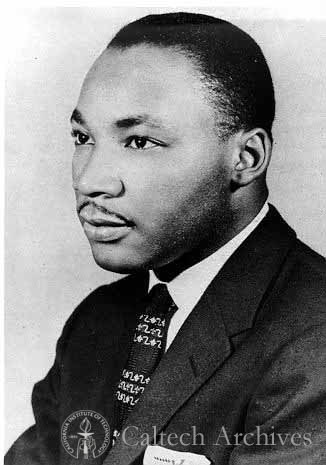
Martin Luther King, Jr., Feast Day April 4

The Readings: Ecclesiastes 8:1––9:10; Galatians 4:21-31; Matthew 15:29-39

The lectionary begins the first reading at v.14; let’s pick up a little before that.

“Though sinners do evil a hundred times and prolong their lives, yet I know that it will be well with those who fear God, because they stand in fear before him, but it will not be well with the wicked, neither will they prolong their days like a shadow, because they do not stand in fear before God.  There is a vanity that takes place on earth, that there are righteous people who are treated according to the conduct of the wicked, and there are wicked people who are treated according to the conduct of the righteous. I said that this also is vanity” (8:12-14).

We’ve seen this tension/contradiction before: it will be well with those who fear God, but not the wicked; the God fearers and wicked often get what they don’t deserve. Why doesn’t the teacher abandon divine justice/retribution? Perhaps because the teacher is even more convinced of his incapacity to discern what God is up to (e.g., 8:16-17).

We might wonder if the teacher is encouraging us to embrace a particular sort of freedom: if you’re going to act justly, don’t do it because that way you’ll succeed, or because God will reward you, or because you’ll get the desired results, or because it will matter in the end, or because it will be remembered. Just do it. The Book of Job opens with the accuser asking whether Job serves God for nothing; the teacher, in his own way, has aligned himself with Job.

And, when God gives the opportunity: “Go, eat your bread with enjoyment, and drink your wine with a merry heart; for God has long ago approved what you do. Let your garments always be white; do not let oil be lacking on your head. Enjoy life with the wife whom you love, all the days of your vain life that are given you under the sun, because that is your portion in life and in your toil at which you toil under the sun. Whatever your hand finds to do, do with your might; for there is no work or thought or knowledge or wisdom in Sheol, to which you are going” (9:7-10).

Ecclesiastes can be read as encouraging conformity. In his context the teacher judged that the wise course. But to assume conformity in all contexts would be to ignore the teacher’s exploratory approach. “…the wise mind will know the time and way,” and if “for everything there is a season” (3:1), if there’s a time for conformity… “Whatever your hand finds to do, do with your might.” It’s only stupid if it doesn’t work.

Re the Daily Office Readings June 8 Anno Domini 2020

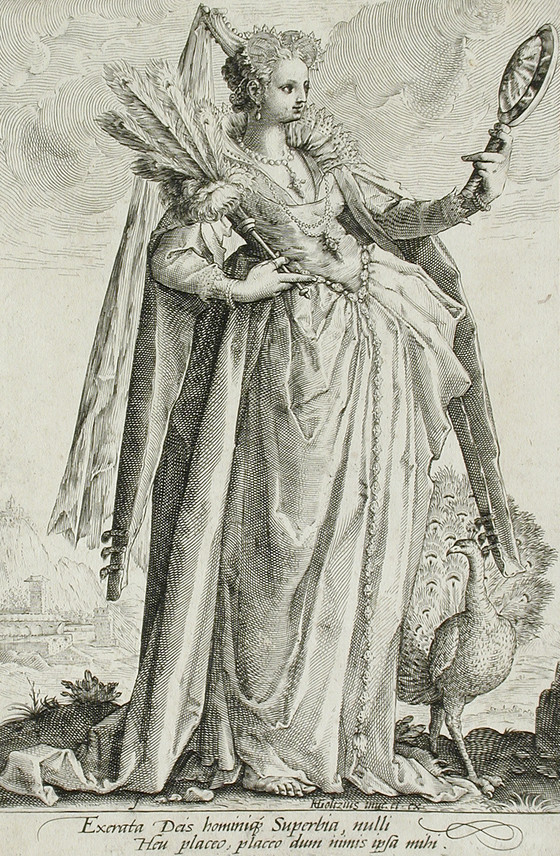
Pride by Jacob Matham

The Readings: Ecclesiastes 7:1-29; Galatians 4:12-20; Matthew 15:21-28

In the first reading vv.16-18 understandably give interpreters fits. (The Lectionary ends the reading at v.14, one way of dealing with the problem!) We might wonder about these verses in the context of other nearby verses:

“Surely oppression makes the wise foolish,
and a bribe corrupts the heart.” (7:7)

“Do not be too righteous, and do not act too wise; why should you destroy yourself? Do not be too wicked, and do not be a fool; why should you die before your time? It is good that you should take hold of the one, without letting go of the other; for the one who fears God shall succeed with both.” (7:16-18)

“Surely there is no one on earth so righteous as to do good without ever sinning. Do not give heed to everything that people say, or you may hear your servant cursing you; your heart knows that many times you have yourself cursed others.” (7:20-22)

In light of vv. 7, 20-22, I think William Brown’s on the right track re vv.16-18: “Qoheleth exposes all efforts to fulfill the absolute ideals of righteousness as self-serving attempts to reap glory. A life obsessed with righteousness, in fact, blinds a person from his or her own sinfulness.” So Thomas Keating, author of numerous books on centering prayer, tells of the young man who proudly drank everyone else under the table, and, on becoming a monk, when Lent came around, equally proudly fasted everyone else under the table. (The next year his abbot prescribed a penance of a full glass of whole milk and a large Hershey’s bar daily!)

So I might wonder: in what spheres or regarding what issues am I tempted to present myself as better/more woke/[insert preferred adjective here] than I in fact am?

In passing, v.7 may be important for our reading of the book as a whole. The teacher is immersed in an oppressive context; readers may properly wonder what effects this is having on his wisdom.

Re the Daily Office Readings June 7 Anno Domini 2020

Photo by Andres Siimon

The Readings: Job 38:1-11; 42:1-5; Revelation 19:4-16; John 1:29-34

The OT Reading bumped by Pentecost: Ecclesiastes 6:1-12

Robert Gordis in his Koheleth—the Man and his World writes “Koheleth sets up the attainment of happiness as the goal of human striving, not merely because he loves life, but because he cannot have justice and wisdom. Joy is the only purpose that he can find in a monotonous and meaningless world, in which all human values, such as wealth, piety, and ability, are vanity, where all men encounter the same fate and no progress is possible.”

Part of this “cannot” is clearly the economic globalization that arrived with the Persian Empire. The relatively predictable links between actions and their consequences—our baseline way of knowing what is to come—eroded with the monarchy, further eroded under the earlier empires, went on life support with the Persians. Progress.

We’re somewhat past the Persians. So we might wonder: is the teacher saying explicitly what we’ve concluded implicitly, that justice and wisdom are impossible?

It happens that this year this reading falls on Trinity Sunday. Perhaps It’s an opportunity to recall that with this God the impossible is as good a starting-point as any.

“When the disciples heard this, they were greatly astounded and said, ‘Then who can be saved?’ But Jesus looked at them and said, ‘For mortals it is impossible, but for God all things are possible’” (Matt. 19:25-26).

So cue up (again) Billie Holiday’s rendition of Sigman & Russell’s “Crazy,” not a bad image of the love of the Holy Trinity for the human race, a love that empowers the final couplet “The difficult I’ll do right now / The impossible will take a little while.” Enjoy.