Category Archives: Essays

Praying the Psalms with Job

“Inspired by the experience of his own innocence, Job bitterly criticized the theology of temporal retribution as maintained in his day and expounded by his friends.… But his challenge stopped halfway… What he should have done was to leap the fence set up around him by this sclerotic theology that is so dangerously close to idolatry, run free in the fields of God’s love, and breathe an unrestricted air like the animals described in God’s argument—animals that humans cannot domesticate. The world outside the fence is a world of gratuitousness; it is there that God dwells and there that God’s friends find a joyous welcome.
“The world of retribution—and not of temporal retribution only—is not where God dwells; at most God visits it.” (Gustavo Gutiérrez On Job p.88)

“Pray as you can, not as you can’t.” (Abbot H. John Chapman)

Many of the psalms call on G-d to give folk what the psalmist thinks they deserve, to visit—in Gutiérrez’ words—the world of retribution. If I think Gutiérrez is right, what do I do with them?

Chapman’s advice is probably a useful starting point. Sometimes (often?) my pain or my neighbor’s pain is such that I can only add my voice to the psalmist’s. Thwart the wicked, rescue the righteous, NOW! But sometimes there’s enough distance to experience some sympathy for G-d: it’s easy in prayer to play Saul to God’s David: “Here, bronze helmet, coat of mail, sword! Go for it!” (See 1 Samuel 17:38-39), when G-d would really rather do something else.

With a few exceptions the Psalter articulates only the human side of the conversation. The divine speeches in Job (chapters 38-41) with a nudge from Gutiérrez encourage us to notice the disconnects between the divine and human agendas, and to remember, with Isaiah, that the disconnects are finally very good news.

For my thoughts are not your thoughts,
nor are your ways my ways, says the LORD.
For as the heavens are higher than the earth,
so are my ways higher than your ways
and my thoughts than your thoughts.
For as the rain and the snow come down from heaven,
and do not return there until they have watered the earth,
making it bring forth and sprout,
giving seed to the sower and bread to the eater,
so shall my word be that goes out from my mouth;
it shall not return to me empty,
but it shall accomplish that which I purpose,
and succeed in the thing for which I sent it.
For you shall go out in joy,
and be led back in peace…  (Isa. 55:8-12)

Prophets’ voice = Author’s voice in 1-2 Kings?

I am (belatedly!) working through Brueggemann’s 1 & 2 Kings commentary (Smyth & Helwys 2000). In 1 Kgs 20 one of the “company of prophets” announces divine judgment against the king of Israel for having let the defeated king of Aram (Syria) live. Brueggemann writes:

In passing, Brueggemann clearly knows that there are multiple ideologies of Yahwism (however defined), so would doubtless be happy to nuance that first sentence.

Reading 1 Kgs 20 and Brueggemann’s commentary: an aha moment. It’s easy to assume that the authors/editors of 1-2 Kgs take the cited prophetic words at face value. But maybe not. The clearest counter-example occurs in 2 Kgs 9. There Elisha commissions one of the company of prophets to anoint Jehu and deliver a short message (vv.1-3). The young prophet anoints Jehu, but with a considerably expanded message, prefaced by “Thus says the LORD” (vv.4-10). There’s some slippage between the word Elisha commissions and the word the young prophet delivers!

Now, normally (?) the text encourages us to take the prophetic words at face value. Elijah announces a drought (1 Kgs 17:1); that drought drives the action in that and the next chapter. Micaiah reports an extended vision; the following events validate the vision (1 Kgs 22). But the 2 Kgs 9 story gives pause.

Where to go with this? On the one hand, “the company of the prophets” shows up repeatedly in 1-2 Kgs (often in connection with Elijah or Elisha). Perhaps the issue is bringing the text’s judgment regarding this group into focus. On the other hand, perhaps the issue is deeper. The 2 Kgs 9 story shows that “Is this an authentic word of the Lord?” does not always have a clear yes or no answer. Does this constitute a sort of interpretive warning sign, the text encouraging use to read every cited prophetic speech critically?

To rephrase, does 1-2 Kgs operate with a true/false prophet binary (e.g., 1 Kgs 18 and 22) or something more nuanced (“The ‘company of the prophets’: take their words with a few grains of salt”?).

If something like the latter is true, circling back to 1 Kgs 20, the question Brueggemann poses via the modern categories of “theological” and “political” may be a question the text itself is encouraging us to ask.

And, obviously, I’ll be listening to see if Brueggemann brings this “prophets’ voice = author’s voice” into focus in subsequent chapters!

Freedom to imagine and enact other forms of social existence

The November Atlantic contains William Deresiewicz’ a review of The Dawn of Everything: A New History of Humanity by David Graeber and David Wengrow. The final paragraph explores the sense of being stuck that has been pulling me towards depression:

“How did we get stuck?” the authors ask—stuck, that is, in a world of “war, greed, exploitation [and] systematic indifference to others’ suffering”? It’s a pretty good question. “If something did go terribly wrong in human history,” they write, “then perhaps it began to go wrong precisely when people started losing that freedom to imagine and enact other forms of social existence.” It isn’t clear to me how many possibilities are left: us now, in a world of polities whose populations number in the tens or hundreds of millions. But stuck we certainly are.

The Atlantic, November 2021, p.95

As for “that freedom to imagine and enact other forms of social existence,” that may be that dimension of the freedom of the Gospel of Jesus most relevant to contemporary hearers, myself included. How might our congregations better nurture that freedom?

New wine & old wineskins

“And no one puts new wine into old wineskins; otherwise, the wine will burst the skins, and the wine is lost, and so are the skins; but one puts new wine into fresh wineskins” (Jesus; Mk. 2:22).

This little proverb’s immediate context is a dispute about fasting, and possibly it’s just about that. But it resonates throughout the larger context of Mark’s entire Gospel, inviting us to hear the passion narrative itself as new wine into old wineskins, with the wine and skins both lost (Jesus crucified; the Temple veil ripped open also as a sign of its coming destruction). Pulling the camera back further to take in Paul’s letters: the struggle to keep both the new wine of the Gospel and the old wineskins of its adherents intact (“What I mean is that each of you says, ‘I belong to Paul,’ or ‘I belong to Apollos,’ or ‘I belong to Cephas,’ or ‘I belong to Christ.’ [1 Cor. 1:12]).

I suspect that an account of how the New Testament tries to keep wine and wineskins intact would be multi-dimensional. It would include the various ways in which Paul speaks of metamorphosis, e.g., “Do not be conformed to this world, but be transformed (metamorphousthe) by the renewing of your minds, so that you may discern what is the will of God– what is good and acceptable and perfect” (Rom. 12:2). It would include the metaphor of new birth, for Nicodemus certainly grasps the scope of the challenge (Jn 3:4). And, earlier in the Gospels, John the Baptist.

John’s task: to “prepare the way of the Lord” (Mk. 1:3). What I hadn’t realized until I came at John via the wine/wineskins parable is that a crucial part of preparing the way was bridging the gap between popular expectations of God’s promised future and Jesus. The gap doesn’t disappear: even John wonders whether Jesus is the coming one (Matt 11:1-6). And there’s enough of a gap between popular expectations and John that perhaps the bulk of the religious authorities end up on the far shore (Mark 11:27-33). Nevertheless, John’s warnings that the status quo is unsustainable and that more compassion/justice is needed (Luke 3:7-14) can get folk moving in the right direction, even while leaving aside the more contentious questions of whether established notions of justice/righteousness need revision (they do), and whether outsiders will receive God’s mercy (they will). So John, unpalatable in so many ways, is a fundamental expression of God’s mercy or—to switch frames—God’s marketing. From popular expectations to Jesus: no way. From popular expectations to John to Jesus: that happens. “Prepare the way of the Lord” indeed.

Preserve both the new wine and the old wineskins? Borrowing from Billie Holiday, The difficult God’ll do right now; the impossible will take a little while.

Wondering about Mark 12:18-34

More wondering occasioned by our parish’s Mark study…

The challenge re paying taxes the Pharisees and Herodians put to Jesus sizzles and perfectly fits the scene Mark’s painted (12:13-17). In contrast, the Sadducees’ question (12:18-27) and the interchange with the scribe (12:28-34) seem anticlimactic. What might be going on?

We know little about the Sadducees, so, guesswork! Not believing in the resurrection, they think that it takes a special kind of stupid for Jesus to set himself on a collision course with the authorities. They express this, indirectly, with the question they pose out of indolent curiosity. But for Jesus and the Markan readers, an existential question: if no resurrection, “we are of all people most to be pitied” (1 Cor 15:19). Jesus, answering directly, pulls out all the stops.

The interchange with the scribe. Matthew and Luke see the anticlimax problem, make the scribe an adversary (Mt 22:34-40), with Luke placing the story at an earlier point to segue to the Good Samaritan parable (Lk 10:25-28). Perhaps Mark is using the story to circle back to the challenge Jesus left unanswered (“By what authority are you doing these things? Who gave you this authority to do them?” 11:28) to give a partial answer: what do the Jews owe to God? Jesus is doing “these things” to love God and neighbor. And, looking ahead, the interchange invites the reader to contemplate the actions of the protagonists in Mark 14-15: who is loving God and neighbor (or not) and what does that love look like?

There’s a possible corollary to this in the scribe’s response (“and ‘to love him with all the heart, and with all the understanding, and with all the strength,’ and ‘to love one’s neighbor as oneself,’– this is much more important than all whole burnt offerings and sacrifices” 12:33). Readers properly wonder what theological frames Mark might be offering to understand the Passion, and OT sacrifice is often suggested as a or the frame. Are the scribe’s words a nudge to understand the Passion first in terms of love?

Wondering about the Mark 4 Parables

Wondering occasioned by our parish’s Mark study…

As far as I can see, the parables aren’t announcing any sort of change in what God’s reign is like. All four look like possible ways of understanding segments of the history reflected in the OT—with the spectacular harvest as eschatological a reality in the one Testament as in the other. Where’s the secret/mystery?

What is “the mystery of the kingdom of God” (Mark 4:11)?

And looking again at some commentaries, I doubt that there’s any single answer to this question.

A preliminary answer: Human response matters; nevertheless, the word will bear satisfying and surprising fruit. 

Clarifications: (1) Human response matters, not simply to the particular humans involved (“Will I be in or out?”), but to the overall success of the project. See the Song of the Vineyard (Isa 5:1-7.)

(2) “Nevertheless” not because God is the Author and the story can end however the author wants, but because God is more creative, persistent, committed (e.g., Isa 42:14-17).

(3) This mystery does not represent a change in divine strategy, so these parables are an appropriate lens for rereading the OT.

Corollaries: (1) The Mark 4 parables are a counterpoint to celebrations of the power of the divine word (Isa 55:8-11Wis 18:14-16, etc.). The celebrations are true enough; also true: the word is vulnerable.
Divine/human agency. I’m intrigued by the ways Mark explores this question, e.g., unbelief as limiting Jesus’ options (6:5-6 in Nazareth), unbelief not necessarily ending the conversation (9:24 the epileptic boy’s father). Isaiah 56-66 seems to keep the two in tension, with some texts highlighting divine agency, e.g., 63:1-6, others, human, e.g., 56:1-2. Divine agency seems to receive more emphasis. From what little I’ve read of Orthodox writers, their notion of divine/human synergy looks promising.

(2) The Mark 4 parables reject readings of the OT that expect a Borg-like divine entrance to set things right (“Resistance is futile; you will be assimilated.”), readings that even the disciples were slow to give up (FireNow?)

As an imaginative portrayal, I like Lewis’ The Great Divorce. It’s been too long since I read it, but if I recall correctly Sayers’ The Mind of the Maker has some important observations re how artistic integrity limits the author’s freedom vis à vis the characters.

On a more personal level, st least three days in any given week I wonder if the value God apparently places on human freedom isn’t too costly for God and humanity. I can only conclude that God sees more value, takes more joy, in this creation in its present state, than I do. In any case, the litmus test for any serious hymnal revision is whether it includes Billie Holiday’s “Crazy he calls me” (“The difficult I’ll do right now / The impossible will take a little while”) as a portrait of God the Lover.

(3) Divine omnipotence does not override divine priorities. Human freedom seems to be one such priority. Ironically, some (most?) of the ringing celebrations of omnipotence, e.g., Isa 40:12-26, are prompted by the divine collision with human freedom, e.g., Isa 40:27. If God is omnipotent, God is also often flummoxed (Isa 5:4Mk 6:6a).

Puzzles: (1) The growing seed and mustard seed parables seem to imply some sort of cumulative progress, a progress not obvious in the histories of Israel and the Church. (Recall the Preacher!) On the other hand, real progress in specific areas (slavery, status of women).

(2) Is the “must” in Mk 8:31 related significantly to these issues of the power/vulnerability of the word (Corollary 1) and the divine priority of human freedom (Corollary 3)?

(3) Also re that “must:” how does the servant’s obedience (Isa 52:13-53:12) relate to the joyful celebrations surrounding it (52:7-1054:1-17). Perhaps “Isaiah” is saying as much as he/she knows.

Ecclesiastes in Ellen F. Davis‘ “Simple Gifts” (Getting involved with God pp. 104-120)

Some of us at St Dunstan’s (Madison, Wisconsin) have been reading Ecclesiastes together. Wondering how we might sum up what we’ve encountered, I reread Davis’ essay, which prompted the following.

“From the mainstream sages of Proverbs we may learn about the nature of ‘righteousness, justice, and equity’ (Proverbs 1:3), but Kohelet teaches us about humility. This is the core of his teaching: life can never be mastered, if ‘mastery’ means shaping it in conformity with our desires. It can only be enjoyed, when pleasures great and small come our way. Or, when enjoyment is not possible, then life must be endured. What Kohelet aims to instill in his students is the ability to receive the pleasures of life as the gift they are and to recognize God as sole Giver—‘For who eats or who feels anything, apart from him?’ (2:25).

“It is often said that the message of Ecclesiastes is best summed up as carpe diem, ‘seize the day.’ But the evidence belies that. The key verb in the book is not ‘seize’ but ‘give’, which occurs twenty-eight times in these twelve chapters—and most often the one who gives is God. The essential message, then, is ‘Receive the gift.’ We practice the core religious virtue of humility by noting with pleasure, day by day, the gifts that come to us from God.”

Kohelet “specifically urges us to realize three forms of happiness in our lives: sensual pleasure (eating and drinking, sleep, sunlight), intimate relationships (friendship and conjugal love), and satisfaction in work.”

“The only wisdom we can hope to acquire
Is the wisdom of humility: humility is endless” (T. S. Eliot in “East Coker II”)

Very helpful, and noticeable overlap with William Brown’s description of the “fear of God” in the book (see June 12, 2020 post).

As is often noted, Kohelet (the teacher) slams the door on speculation re the afterlife (e.g., 3:20-21). In the context of the entire biblical witness, is this a defect? The teacher might argue not: why should we expect to receive/enjoy the afterlife if we’ve not learned to receive/enjoy this life?

The sharp tension in the book between the teacher’s theology (God is active; God “will bring every deed into judgment” [12:14]) and God’s inscrutability is like the tension in the petitionary psalms and Job. But the petitionary psalms typically call on God to conform to the psalmist’s theology, and Job—loudly, repeatedly—calls on God for an explanation. Why is the teacher silent? “Never be rash with your mouth, nor let your heart be quick to utter a word before God, for God is in heaven, and you upon earth; therefore let your words be few” (5:2). To speculate: perhaps the teacher’s prayers are kept private. Perhaps the teacher regards teaching about or modeling prayer too likely to be mistaken for an attempt to wrest mastery from God.

Davis: “Kohelet has meditated long and hard on the first few chapters of Genesis,” noting hebel as also the name of Cain’s brother, and the role of death. We might also wonder about “the tree of the knowledge of good and evil.” Kohelet (the teacher) has spent the book seeking knowledge through experience, with both negative and positive results. The negative: our ignorance is profound: the past (forgotten), the present (what God is up to), the future (the results of our actions especially). The positive: a stance or character that might be described in terms of humility, fear of God, receiving God’s gifts. The bottom line—in sharp contrast to the Genesis 3 story—“Fear God and keep his commandments” (12:13).

Francis I. Andersen 7/28/1925-5/12/2020

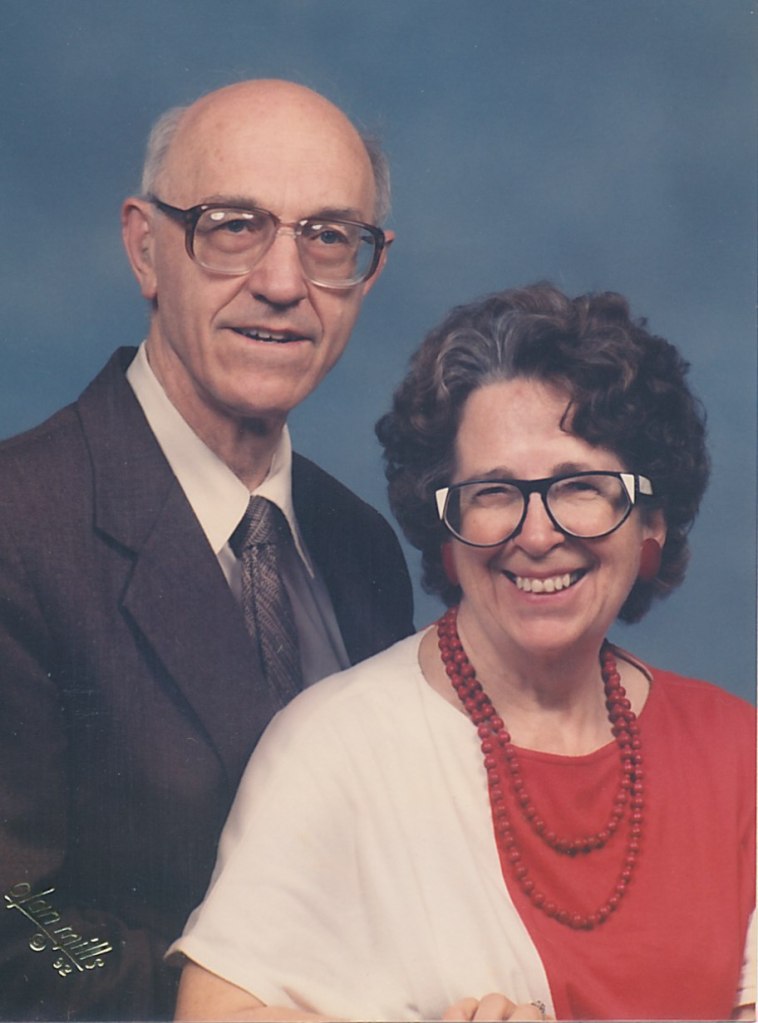
Drs. Francis & Lois Andersen

One of the great gifts during my undergraduate years at U.C. Berkeley was the presence of Dr. Francis I. Andersen at the Church Divinity School of the Pacific. His love of God was deeply infectious, his love of the Old Testament, equally so. His wit, patience, curiosity, laugh: all continue to be an inspiration. He entered into glory on May 12. “Let us pray with confidence to God, the Giver of life, that he will raise him to perfection in the company of the saints.”

Scripture

This blog focuses largely on Scripture. Why might that be worth the trouble? This post, which I expect to revise periodically, notes possible answers.

Madeline L’Engle

So what do I believe about Scripture? I believe that it is true. What is true is alive and capable of movement and growth. Scripture is full of paradox and contradiction, but it is true, and if we fallible human creatures look regularly and humbly at the great pages and people of Scripture, if we are willing to accept truth rather than rigidly infallible statements, we will be given life, and life more abundantly. And we, like Joseph, will make progress towards becoming human. (Sold into Egypt)

Thomas Merton

The truth is that the surface of the Bible is not always even interesting. And yet when one does finally get into it, in one way or other, when one at last catches on to the Bible’s peculiar way of saying things, and even more to the things that are said, one finds that he is no longer simply questioning the book but being questioned by it.

If we approach it with speculative questions, we are apt to find that it confronts us in turn with brutally practical questions. If we ask it for information about the meaning of life, it answers by asking us when we intend to start living? Not that it demands that we present suitable credentials, that we prove ourselves in earnest, but more than that: we are to understand life not by analyzing it but by living it in such a way that we come to a full realization of our own identity. And this of course means a full realization of our relatedness to those with whom life has brought us into an intimate and personal encounter.

…the understanding of the Bible is, and should be, a struggle: not merely to find meanings that can be looked up in books of reference, but to come to terms personally with the stark scandal and contradiction in the Bible itself. It should not be our aim merely to explain these contradictions away, but rather to use them as ways to enter into the strange and paradoxical world of meanings and experiences that are beyond us and yet often extremely and mysteriously relevant to us. (Opening the Bible)

Simone Weil

For it seemed to me certain, and I still think so today; that one can never wrestle enough with God if one does so out of pure regard for truth. Christ likes us to prefer truth to him because, before being Christ, he is truth. If one turns aside from him to go toward the truth, one will not go far before falling into his arms. (As cited in L’Engle’s And it was good)