Re the Daily Office Readings July 4 Anno Domini 2020

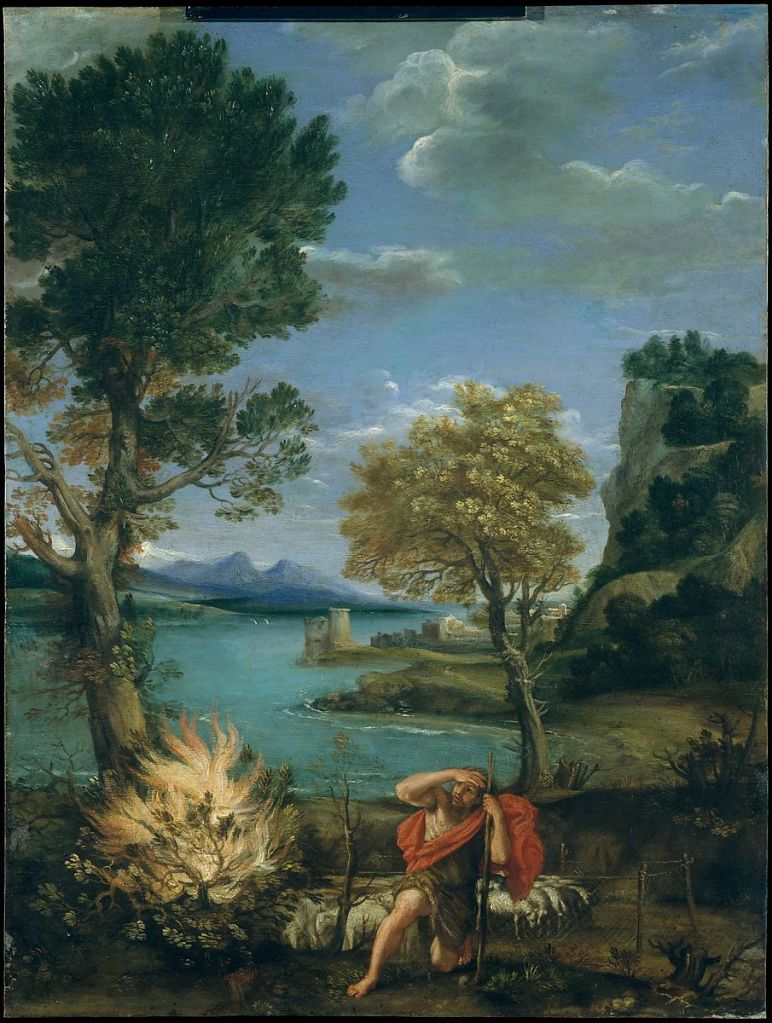
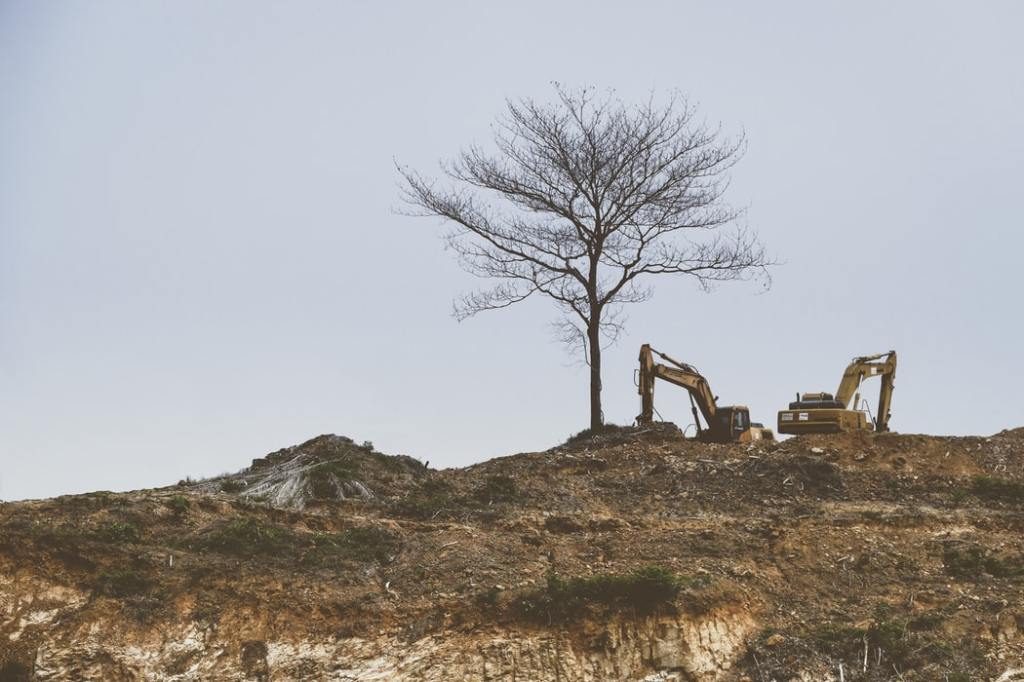
Photograph by qinghill

The Readings: Numbers 24:12-25; Romans 8:18-25; Matthew 22:23-40

Hear the word of the LORD, O people of Israel;
for the LORD has an indictment against the inhabitants of the land.
There is no faithfulness or loyalty,
and no knowledge of God in the land.
Swearing, lying, and murder,
and stealing and adultery break out;
bloodshed follows bloodshed.
Therefore the land mourns,
and all who live in it languish;
together with the wild animals
and the birds of the air,
even the fish of the sea are perishing. (Hos. 4:1-3)

As the ecologists remind us, everything is connected to everything, and so the effects of human rebellion ripple out through all creation. And in today’s Romans text Paul looks forward to the healing of the damage occasioned by the rebellion described in chapter 1. Notice the vocabulary links: ‘creation’ (1:20, 25; 8:20-22), ‘futility’ (1:21; 8:20), ‘to glorify’ (1:21; 8:30), ‘glory’ (1:23; 8:18, 21), ‘image’ (1:23; 8:29), ‘bodies’ (1:24; 8:24) (Dunn).

Meanwhile, creation groans; we groan. This text: an underutilized resource both for spirituality (checking any cheap triumphalism) and ecological ethics. Arguably, a single subject: we are ˀādām (human) from the ˀădāmâh (humus): how could our healing/redemption not be connected?

Meanwhile, for the current administration’s rollback of multiple environmental protections, here and here. Happy July 4th!

Re the Daily Office Readings July 3 Anno Domini 2020

Photograph by Patrick Hendry

The Readings: Numbers 24:1-13; Romans 8:12-17; Matthew 22:15-22

With Wright, the Romans text does sound like Exodus 2.0, with the people guided not by pillars of cloud and fire, but by the Spirit toward the promised inheritance, with Ex 4:2 (“Israel is my firstborn son”) one of the sources words like ‘adoption’ and ‘children’. The last is particularly striking: the Father “sending his own Son” (v.3) and us “in Christ Jesus” (v.1) described through another series of verbs with ‘sun’ (‘with’) prefixed (see June 27 post): inheriting with Christ, suffering with Christ, being glorified with Christ.

“Crying out ‘Abba [Aramaic] Patēr [Greek]’”—what would it take to recover this as a central celebration of our identity?

Re the Daily Office Readings July 2 Anno Domini 2020

Photograph by Thierry Chabot

The Readings: Numbers 23:11-26; Romans 8:1-11; Matthew 22:1-14

They say that there are two seasons in Wisconsin: Winter and Road Construction. That’s not a bad analogy for what Paul’s describing here. To recap, two epochs, Adam and Christ (5:12-21), and since the latter has invaded the former, we straddle both, with schizoid experiences of ourselves (delighting in the good, doing evil) and of Torah (a delight—“the law of the Spirit of life in Christ Jesus” and coopted by sin—“the law of sin and death”). But this straddling isn’t the last word, and the Spirit will supervise the construction until all is renewed.

“If the Spirit of him who raised Jesus from the dead dwells in you, he who raised Christ from the dead will give life to your mortal bodies also through his Spirit that dwells in you.” So road construction is a weak analogy; caterpillar to butterfly might be better—and only the beginning.

Re the Daily Office Readings July 1 Anno Domini 2020

Half Moon by Kévin Jiner

The Readings: Numbers 22:41––23:12; Romans 7:13-25; Matthew 21:33-46

Why are confession and absolution a permanent part of our worship, both in the Daily Office and in the Eucharist? Today’s Romans text may provide one of the more complete answers, although commentators are hardly of one mind. I find James Dunn’s approach helpful: Paul is talking about his present experience. It’s not simply a matter of the common human experience of acting in self-contradictory ways (“I see the better and approve it, but I follow the worse” Ovid, Metamorphoses 7:20-21) or of the rabbinic “good impulse” and “evil impulse” within each person. It’s a matter of, through Christ, straddling two ages. (Two ages: this age and the age to come. And God in Christ has begun to bring the age to come [the “last things,” the eschatological] into our present.) Here’s Dunn toward the end of his discussion:

“V.25b [“So then, with my mind I am a slave to the law of God, but with my flesh I am a slave to the law of sin.”] is a classic statement of the eschatological tension set up by the death and resurrection of Christ: through his death writing finis to the age of Adam and through his resurrection introducing the age of the last Adam. In Paul’s understanding the tension is not one that is natural to man, or one that is consequent upon the fall of man. The fallenness of man is one side of it, but the tension is only set up by the introduction of the eschatological ‘now’ in Christ. And it only becomes personal for Paul with conversion-initiation. The tension then is a tension not simply of redemption delayed, but precisely of a redemption already begun but not yet completed. The very fact that he can envisage a service of the law of God with the mind presupposes a renewed mind (cf. 12:2), a having died with Christ (6:2-11); while the continuing service of the law of sin with the flesh clearly indicates a dimension of the believer’s existence not yet caught up in the risen life of Christ (cf. 8:11, 23), a having-not-yet-been-raised with Christ (6:5, 8). The assurance of future deliverance does not itself bring to an end the eschatological tension in which believers find themselves caught.”

Pulling the camera back, Paul introduced himself as a slave (doulos) of Jesus Christ at the start of the letter, and set up a binary contrast between being slaves to sin or to righteousness in 6:15-23. Here (7:25b) bringing in the camera for a close-up, Paul uses the corresponding verb (douleuw): slave to the law of God and to the law of sin. No wonder in the next chapter we’ll hear “we ourselves…groan inwardly while we wait for adoption, the redemption of our bodies.”

In other words, today’s text encourages a rereading of chapters 5-6, in which we may notice that while some of the results of Jesus’ obedience are in the present, others are set in the future. This does give us the dignity of some agency—with today’s text a warning that our agency is more constrained than we’d like. So for the reader inspired by Paul’s exhortations in 6:12-23, today’s text warns against discouragement. Likewise, today’s text guards against an overly triumphalist reading of chapter 8!

Re the Daily Office Readings June 30 Anno Domini 2020

The Readings: Numbers 22:21-38; Romans 7:1-12; Matthew 21:23-32

Re Romans: In general terms Paul continues to lay out how life in the Messiah (Christ) works, now focusing on Torah. In 5:20 Torah appears—surprisingly—in the minus column; here Paul provides the rationale.

Coming at the text from the Old Testament with its profound appreciation for and delight in Torah, it’s extraordinary. What is Paul thinking? Dunn notes the then-prevalent opinion that covetousness was the root of sin (cf. James 1:15) and argues that the text is a close reading of Genesis 3:1-7—worth considering. Behind this reading, perhaps Paul’s experience of the temptation to arrogance vis à vis the gentiles Torah offered (Dunn again), or the misreadings of Torah that drove Jesus’ death and Paul’s persecutions of the churches.

Or perhaps a close reading of Ps 19:7-13. Beginning with v.7 there’s one of the most profound celebrations of Torah:

7 The law of the LORD is perfect, reviving the soul;
the decrees of the LORD are sure, making wise the simple;
8 the precepts of the LORD are right, rejoicing the heart;
the commandment of the LORD is clear, enlightening the eyes;

Similarly, vv.9-11. But then the surprising vv.12-13:

12 But can anyone know what they’ve accidentally done wrong?
Clear me of any unknown sin
13 and save your servant from willful sins.
Don’t let them rule me.
Then I’ll be completely blameless;
I’ll be innocent of great wrongdoing. (CEB)

Torah can name sin; it cannot check it—or vv.12-13 would be unnecessary. And this sounds rather like what Paul is arguing in Romans 7.

But vv.7-8: do we experience Torah, or, more broadly, the moral law, working this way? Byrne’s suggestion is perhaps worth considering: “What would seem to be in mind is the idea that the prohibition, stemming from God, awoke a latent human propensity to chafe and rebel at creaturely dependence upon the Creator. In this ‘I’ came to know and feel the fundamental ‘desire’ lying behind all concrete acts of wrongdoing: the desire to possess whatever I wish and to do whatever I choose without limit.”

Re the Daily Office Readings June 29 Anno Domini 2020

The Readings: Numbers 22:1-21; Romans 6:12-23; Matthew 21:12-22

Today’s Romans reading is perhaps the most counter-cultural in the entire book. Paul introduced himself in the book’s first verse as a slave of Jesus Christ; here his argument ends up saying that everyone is a slave, but with a choice re whom to obey.

Really? What about our national myth: the voyage across the Atlantic so that we could do whatever we wanted? What of the desire (a sign of privilege?) to sit this God-Satan conflict out, to watch it from the sidelines? What of William Ernest Henley’s poem “Invictus,” (which, perhaps surprisingly, does not appear in the best manuscripts of the New Testament)? What happens when we read it together with Romans 6:12-23?

Invictus
William Ernest Henley

Out of the night that covers me,
  Black as the Pit from pole to pole,
I thank whatever gods may be
  For my unconquerable soul.

In the fell clutch of circumstance
  I have not winced nor cried aloud.
Under the bludgeonings of chance
  My head is bloody, but unbowed.

Beyond this place of wrath and tears   
  Looms but the Horror of the shade, 
And yet the menace of the years   
  Finds, and shall find, me unafraid.   

It matters not how strait the gate,   
  How charged with punishments the scroll,   
I am the master of my fate:
  I am the captain of my soul.

“Who am I?” and “Whose am I?”: if we want to wonder more about that, here’s a possible soundtrack.

Re the Daily Office Readings June 28 Anno Domini 2020

The Readings: Numbers 21:4-9, 21-35; Acts 17:(12-21)22-34; Luke 13:10-17

One of the major challenges in interpreting Romans is Paul’s treatment of the law. Does ‘law’ always refer to Torah, the law of Moses? (Yes, I think.) And what of his contrasting statements?

“Do we then overthrow the law by this faith? By no means! On the contrary, we uphold the law.” (3:31)

“But law came in, with the result that the trespass multiplied; but where sin increased, grace abounded all the more,” (5:20)

“So the law is holy, and the commandment is holy and just and good.” (7:12)

Today’s Gospel offers another way of approaching this challenge, reminding us that observing Torah necessarily involves interpretation: which bit is relevant, and how is it relevant? And that’s what the synagogue leader and Jesus are arguing about. We might conclude that it’s often in the interpretation that—in Paul’s words—“the trespass multiplied.”

Re the Daily Office Readings June 27 Anno Domini 2020

Holy Trinity, Thornhill, California

The Readings: Numbers 20:14-29; Romans 6:1-11; Matthew 21:1-11

Today’s reading from Romans is an invitation to reflect on our own baptism. Recall the Celebrant’s prayer:

“We thank you, Almighty God, for the gift of water. Over it the Holy Spirit moved in the beginning of creation. Through it you led the children of Israel out of their bondage in Egypt into the land of promise. In it your Son Jesus received the baptism of John and was anointed by the Holy Spirit as the Messiah, the Christ, to lead us, through his death and resurrection, from the bondage of sin into everlasting life.

“We thank you, Father, for the water of Baptism. In it we are buried with Christ in his death. By it we share in his resurrection. Through it we are reborn by the Holy Spirit. Therefore in joyful obedience to your Son, we bring into his fellowship those who come to him in faith, baptizing them in the Name of the Father, and of the Son, and of the Holy Spirit.

“Now sanctify this water, we pray you, by the power of your Holy Spirit, that those who here are cleansed from sin and born again may continue for ever in the risen life of Jesus Christ our Savior.

“To him, to you, and to the Holy Spirit, be all honor and glory, now and for ever” (BCP 306-307).

This is New Exodus language, signaling the start of a journey to life in its fulness through an indissoluble bond (BCP 298) with Jesus. It mirrors what Paul received; what Paul wrote. The Greek language lets you tack a preposition onto the front of a verb, and Paul does this repeatedly with ‘sun’ (‘with’, as in ‘synapse’, ‘synchronic’, ‘syntax’, etc.): “buried with him” (v.4), “united with him” (v.5), “crucified with him” (v.6), “live with him” (v.8).

As Paul’s argument makes clear, this does not erase my agency. But I’m no longer in Egypt. I don’t have to listen to Pharaoh. And if I am not baptized, what am I waiting for?

Re the Daily Office Readings June 26 Anno Domini 2020

The Readings: Numbers 20:1-13; Romans 5:12-21; Matthew 20:29-34

From a distance the role of Rom 5:12-21 is tolerably clear. Paul has told the story of human disobedience with its resulting downward spiral and Jesus’ obedience with its resulting upward spiral. He now retells that story through a series of contrasts between Adam and Jesus Christ.

Close up, what to make of Paul’s reading of the law (vv.13, 20, i.e., the Torah)? This is not a new problem: see 3:19-20; 4:15. It’s a problem because it contrasts so sharply with Jewish testimonies that Torah is life-giving, e.g., Ps 19, 119. Is it the effect of the Judaizers breathing down his neck (“Gentile Christians must be circumcised and obey all the Torah”—recall the Acts 15:1-12 reading from June 21)? The effect of watching zeal for the law lead to Jesus’ death, Stephen’s death (Acts 7:58), Paul’s imprisonment of too many innocents (Acts 8:3)? The “why” question is probably unanswerable, and an interpretive dead-end. How else might we enter into it?

Close up, what to make of the repeated “much more” (vv. 15, 17), the sense of disproportion between Adam’s and Jesus’ work? Perhaps a number of contrasts are in play.

  1. Death vs. life. The teacher (in Ecclesiastes) would have liked this one. The two are really incommensurate!
  2. The virtual inevitability of aligning oneself with Adam’s disobedience vs. the freedom to align oneself with Jesus’ obedience?
  3. “Therefore just as one man’s trespass led to condemnation for all, so one man’s act of righteousness leads to justification and life for all” (v.18). Many readers ask whether this implies universal salvation. As James Dunn puts it, “How, after all, can grace be ‘so much more’ in its effect if it is less universal than the effect of death?” I think Paul leaves that question open because the future is open: notice the multiple references to the future, e.g., vv. 17, 19, 21.

What do you see?

Re the Daily Office Readings June 25 Anno Domini 2020

Plaque with the Crucifixion, Southern Italy, 11th Century

The Readings: Numbers 17:1-11; Romans 5:1-11; Matthew 20:17-28

Two texts for meditation:

A Hymne to God the Father
John Donne

Wilt thou forgive that sinne where I begunne,
Which is my sin, though it were done before?
Wilt thou forgive those sinnes through which I runne,
And do run still: though still I do deplore?
When thou hast done, thou hast not done,
For, I have more.

Wilt thou forgive that sinne by which I’have wonne
Others to sinne? and, made my sinne their doore?
Wilt thou forgive that sinne which I did shunne
A yeare, or two: but wallow’d in, a score?
When thou hast done, thou hast not done,
For I have more.

I have a sinne of feare, that when I have spunne
My last thred, I shall perish on the shore;
But sweare by thy selfe, that at my death thy sonne
Shall shine as he shines now, and heretofore;
And, having done that, Thou hast done,
I have no more.

Romans 5:8-10

But God proves his love for us in that while we still were sinners Christ died for us. Much more surely then, now that we have been justified by his blood, will we be saved through him from the wrath of God. For if while we were enemies, we were reconciled to God through the death of his Son, much more surely, having been reconciled, will we be saved by his life.