God is Love; The Holy Trinity: The Community of Love (Trinity Sunday, 6/15/2025)

Readings

Children’s Sermon

Can you play ping pong or tag by yourself? Tell yourself a joke?
Many of the things that give us the greatest joy, that express our humanity, we need to do together. Loving is another of those things.

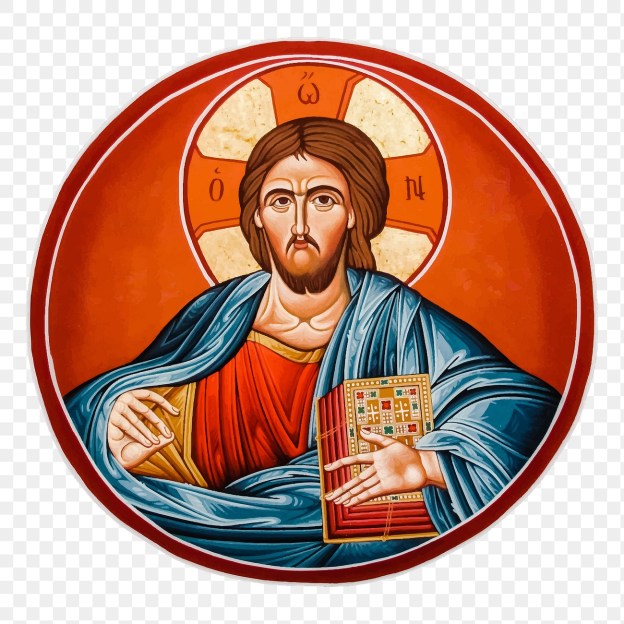
What we’re celebrating today, Trinity Sunday, is that that joy and love have been at the heart of reality even before God created anything. God is One. God is Father, Son, and Holy Spirit, an eternal community of joy and love.

And this God calls out to us: come join the party. That’s the invitation we share with our neighbors.

Adults’ Sermon

What I shared with the children is the core of what I’m sharing with you. Love, like telling a joke or playing tag, demands others. What we celebrate on Trinity Sunday is that the statement “God is Love” did not need to wait for creation to be true. And God, rather than putting up a wall around that community, has been calling out to us from the start: Come on in!

Today’s readings offer different ways of exploring this reality.

Our psalm: “you adorn him with glory and honor.” We heard the psalmist spell that out within the psalm’s horizon. Within the horizon of Scripture as a whole the core of that glory and honor is that divine invitation. We heard it a couple weeks ago in Revelation: “The Spirit and the bride say, ‘Come.’ And let everyone who hears say, ‘Come.’ And let everyone who is thirsty come. Let anyone who wishes take the water of life as a gift.” And we heard it in Jesus’ prayer: “The glory that you have given me I have given them, so that they may be one, as we are one, I in them and you in me, that they may become completely one, so that the world may know that you have sent me and have loved them even as you have loved me.” What is any glory or honor our nations can gin up in comparison to being the recipients of this invitation? (So the Doctrine of the Trinity ends up telling us who we are.)

In the Gospel we heard “When the Spirit of truth comes, he will guide you into all the truth,” or, as Raymond Brown translates it in his magisterial commentary “he will guide you along the way of all truth.” But here—sorry—we need a brief parenthesis about that word “truth.” We’re used to contrasting it with what’s factually false. But recall its first use in the Gospel to describe Jesus: “full of grace and truth.” We might better translate “abounding in steadfast love and faithfulness,” because John’s citing God’s self-definition at Sinai (Exod. 34:6). That’s who God is; that’s who Jesus is. And the truth in question is as much about being true in relationships (faithful) as being true to the facts.

The Spirit’s work, guiding “along the way of all truth,” is crucial in both senses. Jesus is alive, not dead. The Gentile believers don’t need to be circumcised. But how do the Jewish believers who keep kosher and the Gentile believers who don’t, live faithfully together? That’s equally important, so that the New Testament letters spend a great deal of energy on what truthful/faithful life together means—in the midst of our differences. Turns out there’s nothing automatic about “By this everyone will know that you are my disciples, if you have love for one another” (Jn. 13:35).

In today’s epistle we heard “and hope does not disappoint us, because God’s love has been poured into our hearts through the Holy Spirit that has been given to us.” Why doesn’t this hope disappoint us? If we asked Paul to unpack this, I suspect that I would have reminded us that all of this is directed to us in community rather than us as isolated individuals. We’ve received the Holy Spirit, who guides us into more faithful relations with each other. We can put our weight on that hope of sharing the glory of God because we’re getting a foretaste of that glory in what the Holy Spirit’s doing in our relationships in the parish.

We pray for this at every Eucharist. Recall the words from Prayer A: “Sanctify [the bread and wine] to be for your people the Body and Blood of your Son… Sanctify us also that we may faithfully receive this holy Sacrament, and serve you in unity, constancy, and peace.” Make these elements holy; make us holy. We need this holiness to live together in love.

What of wisdom’s words in our reading from Proverbs? They’re probably included because of their historical role in early conversations leading to Doctrine of Trinity. This morning, let’s hear them in context of other readings.

30b and I was daily his delight,
rejoicing before him always,
31 rejoicing in his inhabited world
and delighting in the human race.

What’s surprising about these lines is their contrast with wisdom’s words elsewhere in these first nine chapters. Wisdom has been offering to guide us “along the way of all truth.” But we humans are often a hard—if not hostile—crowd. Nevertheless, wisdom chooses to focus on what brings her delight, so “delighting in the human race.”

(Another quick parenthesis: as the portrait of the accuser—which comes into English as “Satan”—develops in the Old Testament, its core is arguably viewing humanity in the worst possible light: Job’s only serving God from self-interest. Or in the prophet Zechariah the accuser pointing out all the things that are wrong with the high priest. Delighting in or criticizing other folk: regularly choosing the latter—even when it’s more or less justifiable—is satanic.)

Proverbs’ portrait of wisdom participated in the Early Church’s conversations regarding the Trinity because what wisdom does sounds like what the Son or the Spirit do. In the light of our other readings, we can also observe that the Spirit’s guiding us along the way of all truth, strengthening our capacity to hope, also aligns us with wisdom’s stance so that we might echo wisdom’s words. So Trinity Baraboo might aim at:

We are daily God’s delight,
rejoicing before God always,
rejoicing in God’s inhabited world,
delighting in the human race.

Not a bad way to extend our celebration of Trinity Sunday into the rest of the year!

Renewing–not erasing–the face of the earth (Pentecost, 6/8/2025)

Readings (Genesis 11, Acts 2, John 14)

As a setup for a story of epic proportions it’s hard to beat that brief interchange between Jesus and his disciples at the beginning of the Book of Acts:

So when they had come together, they asked him, “Lord, is this the time when you will restore the kingdom to Israel?” He replied, “It is not for you to know the times or periods that the Father has set by his own authority. But you will receive power when the Holy Spirit has come upon you; and you will be my witnesses in Jerusalem, in all Judea and Samaria, and to the ends of the earth.” (Acts 1:6-8)

There’s some quiet humor in it. The apostles are ready to kick back, assuming that the ball’s in Jesus’ court. Jesus parries the question, talks about what they’re going to do: receive power, be Jesus’ witnesses “to the ends of the earth.”

Does anyone else think that sounds like a remarkably bad idea? Recall the stories Luke’s told about these apostles:

On their way they entered a village of the Samaritans to make ready for him; but they did not receive him, because his face was set toward Jerusalem. When his disciples James and John saw it, they said, “Lord, do you want us to command fire to come down from heaven and consume them?” (Lk. 9:52b-54)

John [again] “Master, we saw someone casting out demons in your name, and we tried to stop him, because he does not follow with us.” (Lk. 9:49)

People were bringing even infants to him that he might touch them; and when the disciples saw it, they sternly ordered them not to do it. (Lk. 18:15)

Give this group more power? How’s that going to work?

What’s at stake is captured by that verse in today’s psalm: “You send forth your Spirit, and they are created; / and so you renew the face of the earth.” Renew: how do you renew without erasing? Folk who work at restoring art constantly face this challenge, trying to remove the effects of smoke, dirt, etc. without losing the original creation.

The Day of Pentecost provides one model, in which the Spirit keeps a pretty tight reign on the apostles. “Are not all these who are speaking Galileans? And how is it that we hear, each of us, in our own native language?” How indeed? Perhaps the languages of the Parthians, Medes, Elamites, etc. came out of the mouths of the apostles. Perhaps—more likely—the Spirit provided simultaneous translation so that the Parthians etc. heard in their own native language. And even if it’s the former, it’s a one-off event.

“My witnesses… to the ends of the earth.” That’s a vision of frequently crossing cultures, of frequently learning. Recall the crash course the Spirit put Peter through so that he could share the Good News at the gentile Cornelius’ home. First that strange repeated vision of the sheet containing clean and unclean animals. “Get up, Peter; kill and eat.” Then, when Gentile messengers show up at the door the Spirit says“Look, three men are searching for you. Now get up, go down, and go with them without hesitation; for I have sent them.” Later, “While Peter was still speaking, the Holy Spirit fell upon all who heard the word,” and there they are, “speaking in tongues and extolling God.” It’s the conversion of Cornelius and Peter.

Regularly crossing cultures, regularly learning. No passport required, as anyone who’s parented knows: we’re almost constantly learning new languages.

So it’s perhaps no surprise that when Jesus talks about the role of the Spirit in today’s Gospel, the focus is on the Spirit as Teacher: “But the Advocate, the Holy Spirit, whom the Father will send in my name, will teach you everything, and remind you of all that I have said to you.” And from elsewhere in the same discourse: “When the Spirit of truth comes, he will guide you into all the truth” (Jn. 16:13).

Heard in isolation “guide you into all the truth” can sound abstract, even esoteric. Heard alongside the rest of the New Testament, it’s about renewing without erasing. Jesus, not the many Roman gods, is Lord. OK: so in the cities in which the meat markets are temples to these other gods, how do the Christians relate to these markets? Paul, writing to the Corinthians, spends a couple chapters on that question.

How do we renew without erasing? Some years ago a cartoon captured this nicely. All the characters are pigs, and they’re in a hospital waiting room. The doctor comes out smiling, saying to the anxious spouse “Your husband is cured.” Unfortunately, he’s carrying the sort of 10 pound shrink-wrapped package you’d find in the meat department.

How do we renew without erasing? Current arguments about how we steward the environment, how we respond to different experiences of sexuality, how we order our economic life suggest that “guide you into all the truth” still belongs on the front burner. And that—God having a stubborn regard for our freedom—the promise isn’t “coerce you into all the truth.”

So how does the Spirit guide? Three suggestions; perhaps they’ll echo your experience.

From one of my favorite theologians, Mark Twain: “Good decisions come from experience. Experience comes from making bad decisions.” Our Acts reading focused on language, so let’s stay with that. I learn a language by making mistakes. If I try to avoid making mistakes I learn much more slowly. I also learn more slowly—or not at all—if I insist that I’m not making mistakes. Feel free to transpose that to other areas of life.

From one of my favorite crime novelists, Louise Penny: her protagonist Inspector Gamache says this: “There are four things that lead to wisdom.… They are four sentences we learn to say, and mean.…  I don’t know. I need help. I’m sorry. I was wrong.” Four things that lead to wisdom; four things that makes it easier for the Spirit to guide.

Finally, this concern to renew, not erase. It’s at bottom an expression of love, loving the other enough to recognize the difference between renewing and erasing, loving the other enough to do the hard work of getting to know the other enough to begin to have some sense of what renewal might mean, loving the other enough that Gamache’s four sentences work their way into the core of our vocabulary.

God, so the Gospel tells us, “so loved the world.” The Spirit’s guiding us into all the truth is about being infected by that love. And so, in our best moments, we welcome the Day of Pentecost. Come, Holy Spirit.

About that exorcism in Philippi (7th Sunday of Easter, 6/1/2025)

Readings

I like a good story as much as anyone, so, perhaps predictably, we’ll spend most of our time in Acts, in one of Luke’s more open-ended stories. At the same time, our lectionary invites us to notice connections. On the one hand, this proud Roman colony of Philippi, on the other our Psalm’s celebration of the Lord’s kingship, Revelation’s repeated invitation to “come,” our Lord’s prayer that we all be one: what happens when these two hands meet?

So, to our first reading. We’re still in Philippi, where in last Sunday’s reading we met Lydia, that dealer in exclusive high-end purple cloth, who believed and was baptized. And what gets the story started is a slave girl with a “spirit of divination” who over “many days” follows Paul and Silas, crying out “These men are slaves of the Most High God, who proclaim to you a way of salvation.”

Luke tells us “But Paul, very much annoyed, turned and said to the spirit, ‘I order you in the name of Jesus Christ to come out of her.’ And it came out that very hour.” What’s intriguing about the story is Luke’s decision to name Paul’s motivation, and it’s not flattering. Not “Paul, filled with compassion…” or “Paul, recognizing an evangelistic opportunity…” but “Paul, very much annoyed…” That could have been the end of the story, but the slave girl’s owners know how the city operates, and Paul and Silas end up beaten and jailed.

And here’s where Jesus’ prayer that his disciples all be “one,” comes in. In that prison it’s not hard to imagine Silas saying to Paul, “Well done, mate! What were you thinking?” It may have started there, but by about midnight we’re hearing echoes of Jesus’ prayer: Luke: “About midnight Paul and Silas were praying and singing hymns to God, and the prisoners were listening to them.”

And whatever the Lord thought of Paul’s impromptu exorcism, the Lord at whose presence “the mountains melt like wax” (so today’s Psalm) is not above throwing in an earthquake. The effects of the earthquake are remarkably focused: it’s “so violent that the foundations of the prison were shaken; and immediately all the doors were opened and everyone’s chains were unfastened.” That pretty much invites Paul and Silas to segue into that bit from Isaiah that Jesus read in the Nazareth synagogue: “he has sent me to bring good news to the oppressed, to bind up the brokenhearted, to proclaim liberty to the captives, and release to the prisoners.” But no.

As Luke tells us, “When the jailer woke up and saw the prison doors wide open, he drew his sword and was about to kill himself, since he supposed that the prisoners had escaped. But Paul shouted in a loud voice, ‘Do not harm yourself, for we are all here’.”

It looks like Paul has learned from Peter’s experience, and maybe even from the events of the day. A while back Herod had had Peter imprisoned. At night an angel had sprung him, but in the morning, Herod had the guards “examined” and executed (Acts 12:1-19). Thankfully, that’s not repeated; Paul takes the more difficult path: ”Do not harm yourself, for we are all here.” The jailer also enters into Paul’s calculus, for the jailer is also a recipient of Revelation’s invitation to come and drink.

(Parenthetically, Paul’s response is echoed repeatedly in Martin Luther King Jr’s practice of non-violence. From various speeches: “the attack is directed against forces of evil rather than against persons who are caught in those forces… the nonviolent resister does not seek to humiliate or defeat the opponent but to win his friendship and understanding” [A Testament of Hope pp. 8, 12].)

So the story ends, as did last Sunday’s story, with a baptism. Last week, the baptism of Lydia, the dealer in purple cloth, and her household; this Sunday, the baptism of the jailer and his household. Folk near the opposite ends of the social spectrum: Revelation’s invitation to come and drink: Luke’s celebrating that that really is for everyone.

Luke chose to name Paul’s motive in exorcising the slave girl (“very much annoyed”) and that slave girl is the loose end in the story. Exorcised, she’s of less value to her owners, and we would not expect her story to end well. But we don’t know.

Paul’s role in her story is part of that loose end. I wonder about that, what Paul did with that. So I wonder whether, some time later, when Paul encountered the slave Onesimus, he did not recognize the opportunity to do it differently this time. He spent time with Onesimus, discipled him, took the trouble to write to his owner, Philemon, arguing—between the lines—that Philemon’s proper response was to receive Onesimus as a brother, not as a runaway slave.

“The Spirit and the bride say, ‘Come’. And let everyone who hears say, ‘Come’. And let everyone who is thirsty come. Let anyone who wishes take the water of life as a gift.” That’s our message. Sometimes we do a decent job of sharing it; sometimes not so much. We, too, are quite capable of sharing our annoyance, quite capable of failing to distinguish between the forces of evil and those caught in those forces. So, in the words of the Eucharistic Prayer we’ve been using this Easter season, “Deliver us from the presumption of coming to this Table for solace only, and not for strength; for pardon only, and not for renewal. Let the grace of this Holy Communion make us one body, one spirit in Christ, that we may worthily serve the world in his name.” Or, as the Revelation puts it, “And let everyone who is thirsty come. Let anyone who wishes take the water of life as a gift.”

A Two-Year Lectionary (Presentation)

Some years back, not finding scheme for regular reading of the Bible that I liked, I created (another) one. It includes all the books in the Western Canon, reading the books received as “apocryphal” at a somewhat faster clip. The two years are arranged in half-year blocks, each block starting with some of the Torah and including one of the major OT prophets (or the Book of the Twelve), one of the Gospels, and whatever else that fits. The Psalms are excluded so that they can be read more frequently.

In the following tables the columns are ordered by Month, the rows by the Day of the Month. (In Esther the letters refer to the additions in the Greek text.)

YEAR 1

Year 1
JFMAMJJASOND
1Gen1Chr2711612Exod1346v.2230
2332913713314675131
35530148Tobit51588v.3332
47731161037171195234
59933171159191310Lam35
61111341812710201411237
71312362013912221513338
81614Matt21151113231714v.3439
91816322161315241815440
10191752318Judth16261916541
11201962419318272017BarGal
122222725215201Sam221833
132424927237222232065
1425261028249243Mark22JobEph
1527281229251326532333
16282Chr1330271528742445
17293143229Esth2996266Dan
183051633303301172882
193171834315321393093
203291936Ezra733151031104
21341021373935161132125
22361322395A-C37181333146
23371524407D-F39201435157
24391825419Heb40211537178
2541202643Neh4Lev231639199
264221274537425Jer412110
2744232847596262432211
284625EzekProv7117283462312
29474381283044825S of 3
304964913102Sam54928Sus
315081012250Bel

YEAR 2

Year 2
JFMAMJJASOND
1Num9v.3917Nah13Deut171733176
23112183152191834Sir8
3412319Hab2Mac421193639
4513520335232037511
5715621Zeph56Judg1Jn38712
68167222783340915
710178243910454111Phil
81219926Hag111162-3Jn42133
914211027Zech13137Isa4315Col
10152211Hos415159244173
11162Kgs12381Cor1710345191Th
121731351031912546214
131941471262114648232Th
14215169Mal8231684925Phm
152261811Song10251795027Jm
16238191321227191052293
1724921Joel41428201154311Pet
18261022251529Ruth1356333
1927122337163131457352Pet
20291424AmEccl2Cor32John1558373
213016Acts333v.282185939Jude
2232183556334196041Rev
23331956793452161433
24352068911Josh62363456
251Kgs228Ob1113372565478
262239Jon1Mac1Tim6826664911
2732410Mic347928Wis5113
284Luke11352Tim911294Rom16
296135731112307318
3071479Titus13133110420
318161115151322

The Book of Psalms is not included in the calendar so that it can be read more frequently. There are a variety of ways to do this; I use the monthly cycle included in the Book of Common Prayer, summarized below. (Psalm 119 is split by verses from the evening of Day 24 to the evening of Day 26.)

DayMorningEveningDayMorningEvening
116167982
2912178689
31518189093
41922199598
5242720102104
6303221105106
7353722107108
8384123110114
9444724116119
10505325V33V73
11565926V105V145
12626527120126
13686928132136
14717329139141
15757830144147

END

The God Who would be at Home with Us (6th Sunday of Easter, 5/25, 2025)

Readings (Using the John 14 reading)

I hope you’ve not skimped on the coffee this morning, because we’re going to jump into the deep end, that reading from the Revelation. That, in turn, will set us up to think about what the Church is for—not a bad question since we’re only two weeks out from celebrating Pentecost.

Revelation likes images that shimmer, enigmatic images. John hears “the Lion of the tribe of Judah, the Root of David,” but what John sees is “a Lamb standing as if it had been slaughtered” (5:5-6). So here, toward the end of the book, John hears “the bride, the wife of the Lamb,” but what John sees is “the holy city Jerusalem coming down out of heaven from God” (21:9-10). This is something like what we encounter in Physics 101. Is light a particle or a wave? Yes, depending on what you’re trying to explain.

The new Jerusalem. No need for a temple, or a sun, for that matter: “for its temple is the Lord God the Almighty and the Lamb.… for the glory of God is its light, and its lamp is the Lamb.”

“The nations will walk by its light, and the kings of the earth will bring their glory into it.” Pull the camera back to include John’s Bible (our Old Testament) and it’s clear that this New Jerusalem is finally fulfilling the hopes for the original Jerusalem. Recall Isaiah:

In days to come
the mountain of the LORD’s house
shall be established as the highest of the mountains,
and shall be raised above the hills;
all the nations shall stream to it.
Many peoples shall come and say,
“Come, let us go up to the mountain of the LORD,
to the house of the God of Jacob;
that he may teach us his ways
and that we may walk in his paths.”
For out of Zion shall go forth instruction,
and the word of the LORD from Jerusalem. (2:2-3)

Something beautiful is happening, and the nations want in on it.

Then there’s that river the prophet Ezequiel saw flowing from God’s presence: “On either side of the river is the tree of life with its twelve kinds of fruit, producing its fruit each month; and the leaves of the tree are for the healing of the nations.” So healing is needed—still! The city has gates, the classic means of controlling access, but the gates are never shut. A bit later we’ll hear “The Spirit and the bride say, ‘Come.’ And let everyone who hears say, ‘Come.’ And let everyone who is thirsty come. Let anyone who wishes take the water of life as a gift” (22:17). Jerusalem is finally fulfilling its role, being the place where God’s glory is visible and healing is freely available.

I mentioned enigmatic images a bit ago, and in its final chapters the Revelation takes these to a different level in the form of two juxtaposed stories. In the one, a decisive battle in which evil is destroyed and the great white throne before which everything is sorted out. On the other hand, open-gated Jerusalem offering glory, joy, and healing to all who would enter. Well, which is it? What the Revelation may want to show us is that within the limits of human language and human understanding our clearest picture is this pair of starkly contrasting images.

Perhaps this should not be surprising. Recall how our story starts. Genesis gives us not one, but two creation stories. In one everything is good from the start, the humans play no active role, the seven days are as much liturgy as anything. In the other God works by trial and error, Adam plays an important role, and the good emerges at the end of the process: “This at last is bone of my bones and flesh of my flesh; this one shall be called Woman, for out of Man this one was taken” (2:23). To capture the reality of the beginning and ending of human history Scripture gives us pairs of stories.

What may be at stake in these pairs of stories is the challenge of doing justice to God’s sovereignty and human freedom. There’s a popular saying attributed to various folk (Augustine, Ignatius, etc.) “Pray as though everything depended on God. Work as though everything depended on you.” Maybe, but it could be heard as a call to run ourselves ragged. I like what the Ignatian author Jim Manney does with it:

“I prefer to reverse it: ‘pray as if everything depends on you, and work as if everything depends on God.’ This means that prayer has to be urgent: God has to do something dramatic if everything depends on me. It also puts our work in the right perspective: if it depends on God, we can let it go. We can work hard but leave the outcome up to him. If God is in charge we can tolerate mixed results and endure failure.”[1]

OK, what of the Church? In John’s vision there’s the New Jerusalem, finally doing its job. Sounds pretty good. What happens until then? Let’s circle back to the angel’s words: “Come, I will show you the bride, the wife of the Lamb.” “The bride, the wife of the Lamb:” that sounds like the language used elsewhere in the New Testament for Christ as bridegroom and the Church as bride. Or, to come at John’s vision from another angle, from 1st Corinthians: “Do you not know that you are God’s temple and that God’s Spirit dwells in you (3:16)?” Or, more extensively in Ephesians, “So then you are no longer strangers and aliens, but you are citizens with the saints and also members of the household of God, built upon the foundation of the apostles and prophets, with Christ Jesus himself as the cornerstone. In him the whole structure is joined together and grows into a holy temple in the Lord; in whom you also are built together spiritually into a dwelling place for God” (2:19-22).

Because God desires that all enter freely into joy, into God’s presence, God really needs a place where God can be at home, where God’s healing glory is visible, and that is the Church. That’s the dynamic in this morning’s psalm, God’s blessing here that ripples out to the corners of the earth. That’s at the core of today’s Gospel: “we will come to them and make our home with them.” This is why, by the way, the New Testament letters devote virtually no attention to evangelism and virtually all their attention to the elements in congregational life that make God’s healing glory easier or harder to see.

And this sweeping vision plays out in the decisions of specific women and men, folk like Lydia, that dealer in purple cloth from our first reading, folk like you and me.

We’re here, God knows, because we need to be here. And in the larger story that the Revelation brings into focus, we’re here because God needs places where God’s at home, where God’s healing glory can be visible in the common life of God’s people, whether gathered together or scattered through our communities during the week. A tall order, yes, which is why Jesus speaks of the Holy Spirit on approach, the flaps extending, wheels down.


[1] https://www.ignatianspirituality.com/work-as-if-everything-depends-on-god/ (accessed 5/16/2022).

Why The Revelation thinks we need courage (5th Sunday of Easter, 5/18/2025)

Readings (The Revelation reading is extended to include vv.7-8: “Those who conquer will inherit these things, and I will be their God and they will be my children. But as for the cowardly, the faithless, the polluted, the murderers, the fornicators, the sorcerers, the idolaters, and all liars, their place will be in the lake that burns with fire and sulfur, which is the second death.”)

At Baptism there’s a prayer for the newly baptized, part of which runs “Sustain them, O Lord, in your Holy Spirit. Give them an inquiring and discerning heart, the courage to will and to persevere, a spirit to know and to love you, and the gift of joy and wonder in all your works” (BCP 308). Today’s readings, with the baptism of the Gentile Cornelius with his family and friends in the background, can help us hear this prayer more clearly, particularly that ‘courage’ bit. Let’s dive in.

Our Revelation reading gives us John’s vision of a new heaven and a new earth. But in what sense ‘new’? Here—as in most of the book—John is playing off particular Old Testament texts, specifically the announcement of a new heaven and earth toward the end of Isaiah. Here’s a bit of it: “They shall build houses and inhabit them; they shall plant vineyards and eat their fruit. They shall not build and another inhabit; they shall not plant and another eat; for like the days of a tree shall the days of my people be, and my chosen shall long enjoy the work of their hands” (Isa. 65:21-22). That may sound underwhelming until we remember that for Isaiah’s audience, as for most people in most times and places, it’s revolutionary. The normal in most times and places is that you have your house or vineyard only until someone more powerful decides they want it. So the new heaven and new earth is this heaven and earth—with justice. And already we get a sense of why ‘courage’ might be relevant, because the powerful tend to be happy with things as they are.

Well, how do we get from here to there (pretty much the question that drives the whole Book of Revelation)? Revelation answers by rereading the Old Testament, thereby challenging popular misreadings. Last Sunday we noticed two of John’s rereadings: he hears “the Lion of the tribe of Judah” but sees “a Lamb standing as if it had been slaughtered.” He hears of 144,000 Israelites being sealed (probably for violent battle) but sees “a great multitude that no one could count, from every nation, from all tribes and peoples and languages.” The slaughtered Lamb wins the new heaven and new earth; that great multitude follows His lead.

So, in today’s text, “See, I am making all things new.” But lest we assume that we’re just passive beneficiaries, there are the last two verses that focus on our responses, conquering or not.

“Those who conquer will inherit these things, and I will be their God and they will be my children.” “Those who conquer” echoes the promises that end each of the messages to the seven churches in chapters 2 and 3. The first: “To everyone who conquers, I will give permission to eat from the tree of life that is in the paradise of God” (2:7). The last: “To the one who conquers I will give a place with me on my throne, just as I myself conquered and sat down with my Father on his throne” (3:21). “Those who conquer” is another one of John’s reinterpretations. It’s the language of holy war, but interpreted by the slaughtered Lamb: to conquer is to give faithful witness—as did the Lamb—despite the dangers. In a world too often enslaved by lies, witnessing to the truth can be liberating—and dangerous.

So “those who conquer” theme highlights the virtue of courage, “the cowardly” head John’s list of those excluded. That, of course, is a deeply troubling list, troubling enough that the Revised Common Lectionary ends the reading two verses earlier. But John’s been arguing throughout the book that our choices now matter, whether we accept God’s generosity matters, whether there are witnesses to the truth in the midst of lies matters, whether we’re finally about “Your will be done” or “My will be done” matters. As for that “lake that burns with fire and sulfur,” it’s an image within a vision; it would be pointless to look for it using Google Maps. Nor is Scripture sure that anyone actually ends up there. God, as Paul writes to Timothy “desires everyone to be saved” (1 Tim. 2:4). But John doesn’t want us to forget that our choices matter.

How do we get from here to there? There’s another dimension to that question that sets us up for our other readings. “See—John hears—the home of God is among mortals.” But since it’s the New Jerusalem that’s coming down, why isn’t it “the home of God is among the Jews?” Back toward the start of the story God had promised Abraham “You shall be the ancestor of a multitude of nations” (Gen. 17:4). But how that was going to work was never clear. Notice how today’s psalm ends: “He has raised up strength for his people / and praise for all his loyal servants, / the children of Israel, / a people who are near him. / Hallelujah!” It was easy to assume that the distinction between the children of Israel and everyone else was baked into creation itself, so that the only way to become part of God’s people is to become Jews. Which is why Peter got an earful in our first reading.

Peter had had a disquieting vision. Before he could digest it the messengers from the gentile centurion Cornelius showed up looking for him, and the Spirit said “Go!” Peter preached to Cornelius and his family and friends, and the Holy Spirit descended. These gentiles spoke in tongues, praised God; Peter had them baptized.

And, as our text tells us, the “circumcised believers” criticized him. Why? Well, following their reading of texts like Psalm 148, Peter should have first circumcised them, then discussed baptism. But the Spirit decided otherwise. Cornelius’ house is where the question of how Abraham becomes “the ancestor of a multitude of nations” got decided.

As you may recall, those favoring an exclusivist reading of texts like Psalm 148 did not give up easily. So Peter’s hearers’ conclusion “Then God has given even to the Gentiles the repentance that leads to life” is deeply problematic in what it doesn’t acknowledge. First, God gave both Peter and the Gentiles repentance. “By no means, Lord; for nothing profane or unclean has ever entered my mouth.” Had Peter stayed stuck there, no story. Second, God gave to the Gentiles repentance as Gentiles: they didn’t need to become Jews first.

It’s hard to overestimate the importance of this story. Bishop Lesslie Newbigin uses this story to capture the difference between evangelism and proselytism: in proselytism only the hearers are supposed to change. Here it’s a Jewish problem, but it quickly becomes a Gentile problem, with the Gentile Christians saying to the Jewish Christians “If you don’t eat pork you’re not a real Christian.” And any group with a bit of power can play this game: “You’re not a real Christian until you’re like us. We decide what your repentance needs to look like.”

In terms of John’s vision, Peter is one who conquers, not by demanding that Cornelius with his family and friends become like him, but by courageously following the lead of the Spirit, despite the flak he knows he’s going to get from Jerusalem. He conquers because he understands that repentance is an ongoing project. Our brother Martin Luther nailed it in the first of his 95 theses: “When our Lord and Master Jesus Christ said, “Repent” (Mt 4:17), he willed the entire life of believers to be one of repentance.” (And recall that in the Episcopal tradition the core of repentance is not simply feeling sorry about what one’s done, but changing one’s behavior.)

Our Gospel text’s “I give you a new commandment, that you love one another” takes John’s “Those who conquer” in a related direction. We don’t need that commandment when we’re in agreement; it’s when we disagree seriously that “love one another” needs to kick in. “Those who conquer” are not those who’ve brought everyone else around to their way of thinking, but those whose love keeps the circle unbroken. Like the apostles did during Easter week. They were all “Alleluia” and Thomas “I really would like to see some, you know, evidence,” and they’re still together when Jesus appears again. That’s love, courageous love. That’s conquering.

So, picking up the baptismal prayer, “Sustain us, O Lord, in your Holy Spirit. Give us an inquiring and discerning heart, the courage to will and to persevere, a spirit to know and to love you, and the gift of joy and wonder in all your works.”

About that “valley of the shadow of death” (4th of Easter, 5/11/2025)

Readings

“Listen to what the Spirit is saying to the churches.” Today’s texts keep us on our toes, zooming in on the individual, zooming out to capture the whole course of our history with God. Of the texts, Psalm 23 is the best known, so we’ll start there.

Formally, it’s an extended, an exuberant, affirmation of trust. It’s often set to soothing music. That’s not bad, but it doesn’t help us notice the drama. That line, “guides me along right pathways.” And we always follow the guidance we’re given?  So, toward the end: “Surely your goodness and mercy shall follow me…” That’s a head-scratcher of a translation; normally we’d translate the verb ‘pursue.’ There are times when I’ve blown off the guidance and God’s goodness and mercy need to pursue me. In other words, that one sheep that goes astray in Jesus’ parable: that would be most of us from time to time.

“Though I walk through the valley of the shadow of death, / I shall fear no evil; / for you are with me.” Just what is the psalmist trusting? That things will always be placid? This year our Great Vigil again included Shadrach, Meshach, and Abednego in the fiery furnace: “for you are with me” indeed!

And here we’re at the border between the individual and the global perspectiver, because there’s that popular response to the psalmist’s words: “Though I walk through the valley of the shadow of death, / I shall fear no evil; / for I’m the baddest *** in the valley.” What does it mean to live smart, in full awareness of the world as it is?

Which brings us to our text from the Revelation, whose central question is—arguably—how God conquers evil. The Revelation answers that question by transforming popular religious symbols in the light of Christ. It contrasts what John hears and what John sees. We heard part of one of those contrasts last Sunday. John hears “the Lion of the tribe of Judah, the Root of David, has conquered.” And we expect that John will see a mighty warrior. But no: “Then I saw… a Lamb standing as if it had been slaughtered.” God conquering evil doesn’t play out as we expect.

Today’s reading gives us another contrast. Just before the verses we heard John hears the command to mark out twelve thousand from each of the twelve tribes, the “one hundred forty four thousand,” implying preparation for a holy war. What John sees (today’s reading): “a great multitude that no one could count, from every nation, from all tribes and peoples and languages.”

Who are they? John’s told: “These are they who have come out of the great ordeal; they have washed their robes and made them white in the blood of the Lamb.” The description suggests martyrdom, and that would make sense, because the Revelation is warning its hearers that the psalmist’s “right pathways” could result in martyrdom (recall Shadrach, Meshach, and Abednego). But if martyrs, martyrs because they are first witnesses. In that, they follow Jesus, for ‘witness,’ as we heard two Sundays ago, is the first thing the Revelation needs to say about Jesus: “the faithful witness.”

How does God conquer evil? The Revelation’s answer: “a Lamb standing as if it had been slaughtered.” And we’re the witnesses, we who—in the words of the Great Vigil—“once renounced Satan and all his works, and promised to serve God faithfully in his holy Catholic Church” (BCP 292). Perfect witnesses? No, hence the pursuing goodness and mercy.

And in all this the Revelation slips in another transformation. Who does the shepherding? The Lamb. The Lamb is the Shepherd, and it is with that glad affirmation that we continue to use and put our weight on Psalm 23.

A couple comments on the other readings and I’ll close. The reading from John chapter 10 continues the theme of Jesus as the Good Shepherd, introduced at the beginning of that chapter. Verse 26 might awaken some Calvinistic anxiety: “but you do not believe, because you do not belong to my sheep.” So there are Jesus’ sheep and not Jesus’ sheep, forever divided? That would make nonsense of John’s Gospel, written, as we heard two Sundays ago, “so that you may come to believe that Jesus is the Messiah, the Son of God, and that through believing you may have life in his name.” So we might better hear v.26 as “but you do not believe, because you do not [yet] belong to my sheep.”

Tabitha’s story in Acts does a number of things. First, it reminds us that the psalmist’s “right pathways” do not always lead to an interview with Nebuchadnezzar, Pilate, etc. Witness, whether borne by Jesus, that great multitude, or Tabitha, is life-giving, thus all the widows “weeping and showing tunics and other clothing that Dorcas had made while she was with them.” Her resurrection (that’s the verb behind the NRSV’s “get up”) witnesses that the psalmist’s trust was well-founded: “and I will dwell in the house of the Lord forever.”

And, perhaps most importantly, this shepherding role is not confined to Jesus. Tabitha, with her “good works and acts of charity” shepherded. “My sheep hear my voice…and they follow me” said Jesus. After stories like Tabitha’s we might paraphrase: “My sheep hear my voice, they follow me, they shepherd.” And so her story gives us one enfleshment of the Revelation’s vision: How does God conquer evil? One tunic at a time.

Be prepared for him who knows how to ask questions (3rd Sunday of Easter, 5/4/2025)

Readings

Our second lesson picks up in the middle of one of John’s visions: a scroll in God’s hand, sealed with seven seals, and the question “Who is worthy to open the scroll and break its seals?” And whether in heaven or on earth or under the earth—the classic way of dividing up creation—no one was able, and John begins to weep bitterly.

So what’s in the scroll? John doesn’t tell us. Not, I think, because he doesn’t know, but because the scroll as a symbol can do more if it shimmers a little, if it points to a number of possibilities. That scroll might remind us of the collection of scrolls that was Holy Scripture. Who can open that, offer a trustworthy and authoritative interpretation? All the divergent voices, all the dead ends: what does it come to in the end? Or, to worry about more than the Jews, the scroll might remind us of our problem of getting our head around human history. History: “one damn thing after another”? Or, closer to home, that well-sealed scroll might remind us of the challenge of understanding our own selves, our own histories. Take it in any or all of those ways, and we don’t have much difficulty joining John as he weeps.

And then one of the elders says to John, “Do not weep. See, the Lion of the tribe of Judah, the Root of David, has conquered, so that he can open the scroll and its seven seals.” Those two titles, ‘Lion of the tribe of Judah’, and ‘Root of David’ had been used in the centuries leading up to Jesus’ birth for the Messiah, and both promised strength, victory, conquest. With that sort of introduction, what we expect John to see is something or someone like Schwarzenegger. But what John sees is “a Lamb standing as if it had been slaughtered.”

The elder announces a Lion; what John sees is a Lamb. So what’s going on? A divine bait & switch? That’s perhaps what the crowd who cried “Crucify him!” thought. Or perhaps the most profound statement of what God’s power looks like: Jesus of Nazareth, the one who had every right to demand service, but who came to serve and to give his life—this is the slain Lamb part—a ransom for many.

And it is this Lion/Lamb who is worthy to take, open, and read that scroll in all the possible senses we noticed. Jesus, the one whose life and work is the fulfillment of that strange assortment of loose ends that we now call the Old Testament. Jesus, the one who has entered our history, and so given us the hope that it may end with something more than a bang or a whimper. As followers of the slaughtered Lamb, we live from the hope that God will bring good also out of the evils we encounter. Jesus, the one who can open the scroll that is my own life.

Jesus, the slaughtered Lamb, opening the scroll that is my life. Our other two readings give us some help imagining what this looks like, and in both cases it’s by asking questions. Jesus, of course, does more than ask questions. He gives commands (“love one another”, “Go therefore and make disciples of all nations”), describes our world, tells very odd stories, weeps, laughs. But Jesus does ask questions, and that’s maybe when Jesus is most… dangerous.

Let me digress. My favorite poems are a collection of choruses T. S. Eliot wrote for a pageant play called “The Rock.” Friends in Berkeley introduced me to them; I found them in one of Berkeley’s many used bookstores in 1971. A few lines for the sheer joy of it:

We build in vain unless the Lord build with us.
Can you keep the City that the Lord keeps not with you?
A thousand policemen directing the traffic
Cannot tell you why you come or where you go.
A colony of cavies or a horde of active marmots
Build better than they that build without the Lord….
When the Stranger says: “What is the meaning of this city?
Do you huddle close together because you love each other?”
What will you answer? “We all dwell together
To make money from each other”? or “This is a community”?
And the Stranger will depart and return to the desert.
O my soul, be prepared for the coming of the Stranger,
Be prepared for him who knows how to ask questions.

So Saul, en route to Damascus, encounters a very bright light and a voice: “Saul, Saul, why do you persecute me?” And that question is the beginning of the transformation of his world.

And maybe only a couple of years earlier at the Sea of Galilee, the disciples after a fruitless night of fishing hear the voice of a stranger on the shore: “Children, you have no fish, have you?” They follow his instructions and end up with a net too full to bring into the boat.

Later, after breakfast:
—Simon son of John, do you love me more than these?
—Yes, Lord; you know that I love you.
—Feed my lambs.
—Simon son of John, do you love me?
—Yes, Lord; you know that I love you.
—Tend my sheep.
—Simon son of John, do you love me?
—Lord, you know everything; you know that I love you.
—Feed my sheep.

Readers have long noticed that these three questions correspond to Peter’s three denials the night of Jesus’ arrest; the denials were in public, so too these affirmations. But there’s also something very intimate going on here. Peter’s responses matter to Jesus. Jesus loves Peter, and so Peter’s responses matter on a personal level. As do your responses, as do your responses, as do mine. That’s the sort of vulnerability that love brings, even and particularly to this slaughtered Lamb.

So, what questions is Jesus asking me? What questions is Jesus asking you? “Well, I don’t hear Jesus asking any questions!” Nor does someone who’s got the sound system cranked all the way up hear the call to dinner. Some noise we can’t control; some we can, and only after we’ve minimized the noise we can control are we in a position to complain “Well, I don’t hear Jesus asking any questions!”

The Lion of the tribe of Judah, the slaughtered Lamb, asking me, asking us, the questions that will open and render intelligible our lives, our world.

“Worthy is the Lamb that was slaughtered to receive power and wealth and wisdom and might and honor and glory and blessing!”

The Good Lord’s Decision (The 2nd Sunday of Easter, 4/27/2025)

Readings

After a very full Holy Week in which it’s easy for the brain to go on overload, this Sunday, a.k.a. “Low Sunday,” is a welcome opportunity to catch our breath and ask what all that was about. That pretty much sets the agenda for this sermon.

In our first reading we heard Peter address the Jewish leadership in Jerusalem: “The God of our ancestors raised up Jesus… God exalted him at his right hand as Leader and Savior that he might give repentance to Israel and forgiveness of sins.” That’s the core of Easter: the divine decision to raise Jesus, to vindicate Jesus.

At Jesus’ baptism Luke recounts: “And a voice came from heaven, ‘You are my Son, the Beloved; with you I am well pleased.’” Some time later, as some of Jesus’ disciples watched him talk with Moses and Elijah, that same heavenly voice: “This is my Son, my Chosen; listen to him!” Wistful thinking? A trick of the wind? God’s raising Jesus from the dead: the exclamation point!

But why raise Jesus after three days rather than waiting to sort everything out at the Last Judgment? Because there’s work to be done on earth now, and it’s not only Jesus’ work. The poorneed good news now; the Pilates, Herods, Caiaphases of this world are—shall we say—underperforming. Recall Peter’s words: “that he might give repentance to Israel and forgiveness of sins.” It doesn’t take much unpacking of those words to see that they include the disciples, Peter’s audience, and us. That’s seconded by our second reading from Revelation: “To him who loves us and freed us from our sins by his blood, and made us to be a kingdom, priests serving his God and Father…”

Recall what we heard on Maundy Thursday: [Jesus:] “Having loved his own who were in the world, he loved them to the end.” “This is my body that is for you… This cup is the new covenant in my blood.” Without Easter we wouldn’t be recalling those words, or at best recalling them as another example of crazy hopes cancelled by a Roman cross. With Easter: even that cross is part of their fulfillment (“and freed us from our sins by his blood”).

In other words, Easter is God’s decision regarding Jesus and God’s decision regarding us. Rather than fire and brimstone, going full momma bear, the offer of repentance and forgiveness. The Easter Vigil—one of the jewels of the 1979 prayer book revision—makes this clear in including the renewal of our baptismal vows “by which [as the BCP puts it] we once renounced Satan and all his works, and promised to serve God faithfully in his holy Catholic Church” (p.292). God raises Jesus and then turns to us: whose side are you on?

Back to our reading from Revelation: “To him who loves us and freed us from our sins by his blood, and made us to be a kingdom, priests serving his God and Father, to him be glory and dominion forever and ever.” That’s what the baptismal vows are about, not one more card among many (driver’s license, Social Security card, MasterCard, etc.) but as the guide for how we use all the rest.

Peter: “And we are witnesses to these things.” Witnesses. Not the judge, not the jury, not even the bailiff. Witnesses, who by definition are not expected to know anything beyond their own experience, and not even expected to understand that. “God raised Jesus from the dead, and this is what Jesus has been doing among us:” that’s more than enough to keep us focused.

Witness, of course, often happens as much by action as by word, and two examples from today’s readings are worth noticing.

Recall again Peter before the Council. He doesn’t mince words: “Jesus, whom you had killed.” But God exalted Jesus as Leader and Savior not for payback, but for repentance and forgiveness—precisely what Peter offers to the Council members. Bless him, Peter’d learned something from Jesus.

Then today’s Gospel reading. There are two surprises in that second encounter between Jesus and the disciples. The first is that Jesus shows up again. The second is that the other disciples were still willing to be in the same room as Thomas. For a whole week they’d been all “Alleluia!” and Thomas “I need some evidence.” The disciples witnessed to Jesus’ resurrection also by not writing Thomas off. Bless them, they’d learned something from Jesus. Given the Church’s history of splitting over much smaller issues, if we’re looking for a way of witnessing to Jesus’ resurrection this isn’t a bad place to start.

In these two examples Easter is an invitation to dial back our fear, whether of external enemies (Acts) or of potential internal enemies (the Gospel). It’s Jesus whom God has exalted as Leader and Savior, not whoever is currently claiming those titles. Even the State looks a little different when the Crucified doesn’t stay dead.

Easter: The Lord God’s decision: Jesus got it right. Jesus’ project is just getting started, and Jesus has no interest in doing it alone. “The harvest is plentiful, but the laborers are few; therefore ask the Lord of the harvest to send out laborers into his harvest.” We celebrated that at the Easter Vigil; as we hear the stories from Acts and approach Pentecost we have the opportunity to wonder afresh what else it might mean. Joyous Easter!

Bread, Wine, Feet (Maundy Thursday, 4/17/2025)

Readings

Passover. Our first reading marks its beginning. It celebrates the Lord’s power to save, to make a way where there is no way. It celebrates this God as champion of liberty, enemy of slavery. And here we are tonight, remembering how Jesus observed Passover that night.

Jesus did at least two things. He reinterpreted two of Passover’s symbols, the bread and the wine, to point to his coming death. Liberty, passing from slavery into freedom, demands more than defeating the current human Pharaoh. The underlying problem: our ancestral rebellion and distrust of God, and Jesus’ death deals with that. So, at every Eucharist, “Christ our Passover is sacrificed for us.”

That, it turns out, is the easy part. The harder part: changing our behavior so that we stop acting like little Pharaohs at every opportunity. So Jesus starts washing their feet and caps it with “If I, your Lord and Teacher, have washed your feet, you also ought to wash one another’s feet.”

“This is my body that is for you.… This cup is the new covenant in my blood.” “You also ought to wash one another’s feet.” Two sides of the same coin.

What’s going on here? Toward the end of the Gospel reading we heard “I give you a new commandment, that you love one another. Just as I have loved you, you also should love one another.” Washing each other’s feet, leaving behind the endless competition for status: that’s finally about love. As is, for that matter, “This is my Body; this is my Blood.” As the Gospel of John says elsewhere “God so loved the world…”

Toward the end of the Song of Songs we hear “Set me as a seal upon your heart, / as a seal upon your arm; / for love is strong as death, passion fierce as the grave” (8:6a). Pharaoh’s kingdom is powered by death; only love will defeat it.