“Surely the Lord is in this place—and I did not know it” (Gen 28:16). Here we wonder about encountering G-d at the intersection of Bible and Life–typically prompted by the (Episcopal) Book of Common Prayer.
Since the Lectionary omits much of the following chapters, a quick overview. Exodus 25-31 records the instructions Moses receives during his 40 days on the mountain regarding the portable shrine (the Tabernacle; chapters 25-27) its personnel (chapters 28-29), and related arrangements (chapters 30-31). Execution of the instructions follows (Exodus 35-40) but only after the unfortunate business of the Golden Calf and its aftermath.
“And have them make me a sanctuary, so that I may dwell among them.… There I will meet with you, and from above the mercy seat, from between the two cherubim that are on the ark of the covenant, I will deliver to you all my commands for the Israelites” (vv.8, 22).
Centuries later at the dedication of the temple, Solomon prays: “But will God indeed dwell on the earth? Even heaven and the highest heaven cannot contain you, much less this house that I have built!” (1 Kings 8:27). But there it is.
The Celtic Christians talked of thin places, places where heaven and earth met. The Tabernacle, a portable thin place, not in some remote place, but at the center of the camp. And, as Israel’s long history will show, G-d will sometimes reside in, sometimes bypass the Tabernacle/Temple. Charles Williams: “the sacrifice must be made ready, and the fire will strike on another altar.”
In our experience, where has G-d shown up expectedly? Unexpectedly?
Coda
What happens if we come to the second reading with the first still ringing in our ears?
Exodus starts with a list of raw materials for the tabernacle (vv.3-7); Paul sorts through the raw materials appropriate for the Colossians as tabernacle (vv.5, 8-9, 12-14). (Now it’s the peace of Christ ruling the hearts, the word of Christ dwelling “richly”).
But the dominant metaphor seems to be clothing—perhaps recalling how baptisms were done—what’s to be stripped off (v.9), what’s to be put on (vv.12, 14).
Half awake, I’m headed for the coffee. Perhaps what the text wants me to notice is that even half awake I’m making choices: what to put on, what to leave in the wardrobe.
Exodus 24 narrates the ratifying of the covenant (treaty) announced in Exodus 19 (“if you obey my voice and keep my covenant, you shall be my treasured possession out of all the peoples. Indeed, the whole earth is mine, but you shall be for me a priestly kingdom and a holy nation”). After God addresses the people directly (the “Ten Commandments”), the people ask that Moses receive subsequent instruction and pass it on. The subsequent instruction occupies Exodus 20:22-23:33; Moses passes it on to the people; the people respond—as they had in 19:8—“All the words that the LORD has spoken we will do;” now the two-part ratification.
All the people participate in the first part, involving pillars, sacrifices, blood, reading, declaration, more blood, ending with Moses’ “See the blood of the covenant that the Lord has made with you in accordance with all these words.” Ritual is language, often—like here—performative language, evocative, more like poetry than prose, only somewhat translatable. Blood, one of our most potent symbols for life, death, identity. The blood of circumcision, the ram’s blood (not Isaac’s!) shed on that other mountain, the lamb’s blood at Passover, this blood… The New Testament references to the blood of Christ draw on all this, and we Gentiles must work backwards, not so much to understand as to get a sense of the mystery to which we’re being pointed.
A representative group participates in the second part: “Then Moses and Aaron, Nadab, and Abihu, and seventy of the elders of Israel went up, and they saw the God of Israel. Under his feet there was something like a pavement of sapphire stone, like the very heaven for clearness. God did not lay his hand on the chief men of the people of Israel; also they beheld God, and they ate and drank.”
That may be a scene to let sink deep into our imaginations. The stories Israel’s neighbors told about their gods help us recognize that if it’s treaty-making, it’s also a victory celebration. I wonder how it might have worked in Isaiah’s imagination.
“On this mountain the LORD of hosts will make for all peoples a feast of rich food, a feast of well-aged wines, of rich food filled with marrow, of well-aged wines strained clear. And he will destroy on this mountain the shroud that is cast over all peoples, the sheet that is spread over all nations; he will swallow up death forever.” (25:6-8a)
How might this (Exodus) scene shape our participation in the Eucharist? The Body of Christ, the Blood of Christ: how like or unlike their beholding God?
Moses thinks the special effects are to instill fear to prevent Israel sinning (v.20). Perhaps he is right; God is not above using fear. But training wheels are designed to be temporary.
Commands. Better, perhaps, than a fickle deity with constantly changing priorities, or a coy deity demanding that we guess.
“I am the LORD your God, who brought you out of the land of Egypt, out of the house of slavery.” Perhaps the most important part of the text: this is who God is, this is what this God has already done.
January 6, 1941, Franklin Roosevelt gave the “Four Freedoms” speech. We could as easily call today’s text the “Ten Freedoms” speech. Examples: #1: free not to worry about keeping Anubis, Anum, Atum, Bastet, Geb, Horus, Nephthys, Nut, Osiris, Isis, Ra, Seth, Shu, and Tefnut happy. #4: free to rest every seventh day. #6ff: free not to have to murder, commit adultery, steal, etc. to maintain one’s standing or satisfaction.
Matthew lets us watch the spirit of the Exodus text in action. Because the LORD is Jesus’ God, Jesus is free to send the tempter packing, free not to diminish his own humanity, free to devote his attention to restoring ours.
O God, the author of peace and lover of concord, to know you is eternal life and to serve you is perfect freedom: Defend us, your humble servants, in all assaults of our enemies; that we, surely trusting in your defense, may not fear the power of any adversaries; through the might of Jesus Christ our Lord. (BCP 99)
From Martin Wallace’s Pocket Celtic Prayers, not unrelated to today’s Exodus reading.
Christ be with me, Christ within me, Christ behind me, Christ before me, Christ beside me, Christ to win me, Christ to comfort and restore me, Christ beneath me, Christ above me, Christ in quiet, Christ in danger, Christ in hearts of all that love me, Christ in mouth of friend and stranger. Attributed to St. Patrick (5th Century)
I rise up clothed in strength of Christ. I shall not be imprisoned, I shall not be harmed; I shall not be downtrodden, I shall not be left alone; I shall not be tainted, I shall not be overwhelmed. I go clothed in Christ’s white garments; I go freed to weave Christ’s patterns; I go loved to serve Christ’s weak ones; I go armed to rout out Christ’s foes. Community of Aidan and Hilda
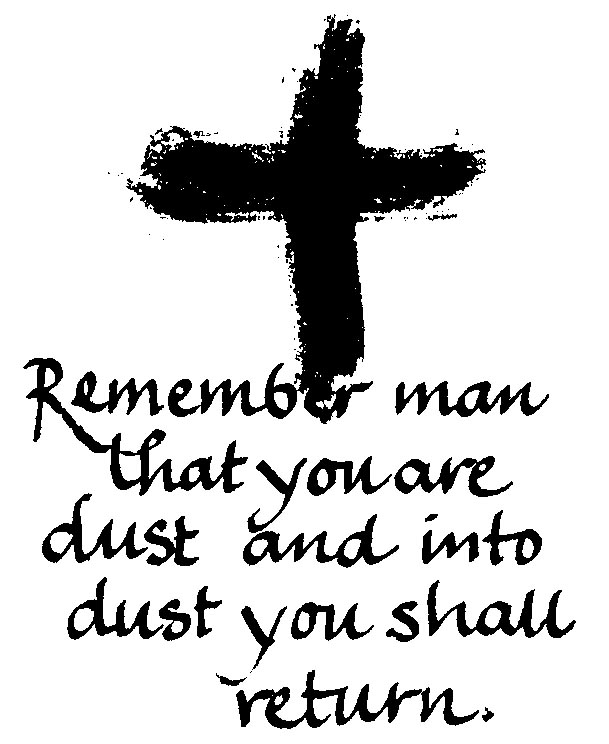
On Ash Wednesday—what a long time ago—we heard those words. Dust, so fragile that any too direct contact with G-d can unmake us, scatter us. So G-d in the first reading errs on the side of caution to insure that that doesn’t happen on the slopes of Sinai.
The surprise: G-d’s project to transform us into creatures who can without fear and with joy “dwell in the house of the LORD forever” (Psalm 23:6). This takes some active participation on our part. (In passing, is Paul, who elsewhere (1 Corinthians 13:13) highlighted faith, hope, and love, making these the backbone of our participation in Colossians 1?) This takes a long series of surprising roles on G-d’s part: solicitous bouncer (first reading), sacrificial victim (second reading), bull in the china shop (with respect to our notions of ‘righteousness’; third reading).
Since we’re going to be reading Matthew for a good stretch, I wonder if the definition of ‘righteousness’ (dikaiosunē) is not at the heart of Jesus’ arguments with the religious leaders. The first story Matthew tells involves Joseph, whom Matthew describes as ‘righteous’ (dikaios), whose righteousness implies breaking his engagement with the now-pregnant Mary. An angel must intervene. Jesus (later): “unless your righteousness exceeds that of the scribes and Pharisees, you will never enter the kingdom of heaven” (Matthew 5:20). And, of course, our third reading, where Jesus’ notion of righteousness upends John’s—and our—assumptions about who should be baptizing whom. So watch for it.
Athanasius: “For the Son of God became man so that we might become God.” From dust to divinity: how’s that for a road trip?
Today’s readings align in striking ways, so that we might profitably print out the following excerpts and mark them up, noticing common themes…
Now therefore, if you obey my voice and keep my covenant, you shall be my treasured possession out of all the peoples. Indeed, the whole earth is mine, but you shall be for me a priestly kingdom and a holy nation. These are the words that you shall speak to the Israelites.” (Exodus 19:5-6)
For this reason, since the day we heard it, we have not ceased praying for you and asking that you may be filled with the knowledge of God’s will in all spiritual wisdom and understanding, so that you may lead lives worthy of the Lord, fully pleasing to him, as you bear fruit in every good work and as you grow in the knowledge of God. (Colossians 1:9-10)
Bear fruit worthy of repentance. Do not presume to say to yourselves, ‘We have Abraham as our ancestor’; for I tell you, God is able from these stones to raise up children to Abraham. Even now the ax is lying at the root of the trees; every tree therefore that does not bear good fruit is cut down and thrown into the fire. (Matthew 3:8-10)
What do you notice? I notice:
The first reading—as long noticed by Jewish readers—is like the culmination of a courtship, in which G-d pops the question. Divine vulnerability, on full display, and equally present in the other readings.
So much of creation is glorious—and we might pause here to recall our own short list of examples. G-d desires that humanity’s glory be no less heart-stopping. (Why do we settle for less?)
With John the Baptist divine desire comes out as demand. This is the G-d of the Exodus, and humans are powerful enough that the alternative to glory is desolation and oppression.
So here’s Moses, of whom Deuteronomy says “Never since has there arisen a prophet in Israel like Moses, whom the LORD knew face to face” (34:10), taking advice from a pagan priest. A little odd?
Propp (The Anchor Yale Bible) puts the scene in context, which augments the oddity: “As Jethro observes, Moses and Yahweh are dispensing judgement piecemeal, and Torah is ad hoc. A just and efficient administration requires a legitimate judiciary and a comprehensive law code. The former is established in Exodus 18; the code will occupy most of the remainder of the Pentateuch.” The story might make us wonder if both Moses and YHWH listen to Jethro!
Be that as it may, the story recognizes in a quite matter-of-fact way that human wisdom is important for the people of God. Childs (Old Testament Library): “the basic problem of relating the divine law as given in the Pentateuch with the knowledge of God as found in wisdom has already been posed within Ex. 18.”
Anglicanism has classically spoken of Scripture, reason, and tradition. Here’s Richard Hooker, writing at the end of the 16th Century: “What Scripture doth plainly deliver, to that the first place both of credit and obedience are due; the next whereunto, is what any man can necessarily conclude by force of Reason; after this, the voice of the church succeedeth. That which the Church by her ecclesiastical authority shall probably think and define to be true or good, must in congruity of reason overrule all other inferior judgements whatsoever” (Lawes of Ecclesiastical Politie V,8,2).
Sorting out how Scripture, reason, and tradition guide us can be challenging; acknowledging the role of all three is no small gift. And with Jethro’s witness to reason there is—witnessing to the challenge—Thomas More’s, as interpreted in Bolt’s A Man for all Seasons: “God made the angels to show him splendor—as he made animals for innocence and plants for their simplicity. But Man he made to serve him wittily, in the tangle of his mind.”
Who are the contemporary Jethros to whom we should be listening?
Christina Rossetti
Apropos of none of the readings, today we remember Christina Rossetti (1830-1894). Facing afresh our own mortality, here’s her “Easter Monday:”
Out in the rain a world is growing green, On half the trees quick buds are seen Where glued-up buds have been. Out in the rain God’s Acre stretches green, Its harvest quick tho’ still unseen: For there the Life hath been.
If Christ hath died His brethren well may die, Sing in the gate of death, lay by This life without a sigh: For Christ hath died and good it is to die; To sleep when so He lays us by, Then wake without a sigh.
Yea, Christ hath died, yea, Christ is risen again: Wherefore both life and death grow plain To us who wax and wane; For Christ Who rose shall die no more again: Amen: till He makes all things plain Let us wax on and wane.
This chapter of Exodus, a sleeper, with much to wonder about. We met its virtual protagonist, Jethro, after young Moses’ flight from Egypt; he does not appear elsewhere in the Old Testament.
Today’s text together with the battle with Amalek (Exodus 17:8-16) form a sort of diptych, sharply contrasting non-Israelite responses to YHWH’s deliverance (for detail, Robert Alter’s notes in his translation). The Evangelists do something similar in the birth/infancy and passion narratives, juxtaposing different responses to Jesus (Raymond Brown). Perhaps Exodus 17:8-18:12 needs to be read together for the full effect.
We may find the author’s treatment of Zipporah and the sons quite jarring (How did Moses receive them? What did they make of all this?). The author—necessarily—chooses which stories to tell, which not to tell.
The end of v.11 is obscure in Hebrew and receives varied translations: “when they dealt arrogantly with them” (NRSV); “by the result of their very schemes against the people” (NJPS). The NRSV might encourage us to reflect on arrogance/presumption as something to be avoided (cf. Nehemiah 9: 10, 16, 29); the NJPS (new Jewish Publication Society) perhaps recalls Targum Onkelos’ interpretation: “the Egyptians plotted to destroy the Hebrews by drowning and they themselves were then drowned” (Alter’s summary).
“And Jethro, Moses’ father-in-law, brought a burnt offering and sacrifices to God; and Aaron came with all the elders of Israel to eat bread with Moses’ father-in-law in the presence of God” (v.12).The local is “at the mountain of God” (v.5); this may be the fulfillment of the divine promise given at Moses’ call (Exodus 3:12). Eating “in the presence of God” sounds like the language Deuteronomy uses to describe various sacrifices in (unnamed) Jerusalem (Deut. 12:7, 18; 14:23, 26; 15:20; 16:7), perhaps an example of Deuteronomy coalescing Horeb (Sinai) and Jerusalem. Is it a sort of victory banquet?
Jethro does not become a Jew. But from his own perspective he freely acknowledges and celebrates YHWH’s action in his world. Is this also part of “and in you all the families of the earth shall be blessed” involves (Genesis 12:3b)?
In the years that I served as rector of St Peter’s in Ripon I often bicycled through the surrounding countryside. South of the city a farm had that small sign in their front yard. It doesn’t do a bad job of capturing today’s readings in celebration of St Mark the Evangelist.
I slowed down at two points in the readings:
“Accept whatever befalls you, and in times of humiliation be patient. For gold is tested in the fire, and those found acceptable, in the furnace of humiliation” (Sir. 2:4-5). Adversity (generally) and humiliation (specifically) tempt us to devalue ourselves. Ben Sira’s gold metaphor can counterbalance that.
“Upon your walls, O Jerusalem, I have posted sentinels; all day and all night they shall never be silent. You who remind the LORD, take no rest, and give him no rest until he establishes Jerusalem and makes it renowned throughout the earth” (Isa. 62:6-7). Give God no rest. Is this where Jesus got his widow and unjust judge parable? Adversity can narrow our focus; the text encourages us not to let that happen.
Multiple themes in these texts; what holds them together? I ended up recalling Billie Holiday’s rendition of Sigman & Russell’s “Crazy,” describing a love that empowers the final couplet “The difficult I’ll do right now / The impossible will take a little while.” Enjoy.
Toward the end of the Who’s iconic “Won’t get fooled again” there’s a line that captures repeated human experience: “Meet the New Boss. Same as the Old Boss.” So what is Israel going to discover, free from Pharaoh, now dependent on YHWH? Yesterday’s stories of manna (“whatsit”) and quail provide part of the answer, today’s story about the seventh day, another part.
As the story’s told, on the sixth day the people are surprised to discover that they’ve gathered twice the normal amount, and look to Moses for an explanation. Moses: “This is what the LORD has commanded: ‘Tomorrow is a day of solemn rest, a holy sabbath to the LORD; bake what you want to bake and boil what you want to boil, and all that is left over put aside to be kept until morning.’” Israel is miles (and chapters) away from Sinai (the Ten Commandments). But the LORD does not wait for Sinai, and surprises Israel here with the gift of the sabbath. (‘Sabbath’ appears for the first time in this text.) Under Pharaoh seven days of labor might yield seven days’ worth of food. Under the LORD, six days of labor, seven days of food. The Sovereign qualitatively more powerful than Pharaoh invites Israel into a weekly day of rest and renewal. Here the Who’s lyrics do not apply.
Jesus and the New Testament writers pick up the manna story and employ it, figuratively, in powerfully ways. Jesus, in the conversation with the crowd the day after the feeding of the five thousand: “I am the bread of life. Your ancestors ate the manna in the wilderness, and they died. This is the bread that comes down from heaven, so that one may eat of it and not die. I am the living bread that came down from heaven. Whoever eats of this bread will live forever; and the bread that I will give for the life of the world is my flesh” (John 6:48-51). Hallelujah—and looking forward to again celebrating that together.
The Jesus who speaks these words is also the Jesus who constantly reminds us of God’s generosity. “Therefore do not worry, saying, ‘What will we eat?’ or ‘What will we drink?’ or ‘What will we wear?’ For it is the Gentiles who strive for all these things; and indeed your heavenly Father knows that you need all these things. But strive first for the kingdom of God and his righteousness, and all these things will be given to you as well” (Matt. 6:31-33)—as evidenced also in the manna story.
God is generous. How generous? God’s creation has enough for all. In that creation six days’ labor yields seven days of food. Obscenely, too few experience this today, with modern pharaohs subverting creation and insulting the Creator.
Gratitude and anger, perhaps both are necessary responses to this reading.
Part II: Why read the text this way?
Not that this is (God forbid) the only or best reading—but why hear it this way at all?
The above reading takes Exodus 16 to be economically paradigmatic: before arriving at the land, God shows Israel how the land’s resources are to be received and used. Other readings often take the text as simply a story of God’s provision in the wilderness, and, if there’s a lesson for other times and places, it’s a general one: trust God. (We don’t go around talking to or striking rocks to get our water—in contrast to Moses (Exodus 17:1-7; Numbers 20:1-13). So why this reading?
Big picture: God calls Israel for the sake of the nations (Genesis 12:1-3). How’s that supposed to work? Israel as regional (global?) superpower enforcing compliance? When I worked with World Vision’s development projects, agricultural innovation was often a part of the mix. Farmers tend to be conservative, so innovation is not an easy sell. It turns out that a good strategy is to find one or two farmers willing to try the innovation. If it works, other farmers will notice, ask questions, and the innovation sells itself. That seems to be the primary strategy God employs with Israel vis à vis the nations, reflected in texts like this from Isaiah:
In days to come the mountain of the LORD’s house shall be established as the highest of the mountains, and shall be raised above the hills; all the nations shall stream to it. Many peoples shall come and say, “Come, let us go up to the mountain of the LORD, to the house of the God of Jacob; that he may teach us his ways and that we may walk in his paths.” For out of Zion shall go forth instruction, and the word of the LORD from Jerusalem. He shall judge between the nations, and shall arbitrate for many peoples; they shall beat their swords into plowshares, and their spears into pruning hooks; nation shall not lift up sword against nation, neither shall they learn war any more. (2:2-4)
Israel is the test plot. Its ways are potentially paradigmatic for the nations. As a psalm celebrates:
The LORD works vindication and justice for all who are oppressed. He made known his ways to Moses, his acts to the people of Israel. (Ps. 103:6-7)
Which of Israel’s ways? That’s the tricky question, whose answer depends on (and sometimes reveals) our (limited, fallible) understanding of the shape and thrust of Holy Scripture. The traditional ceremonial/civil/moral distinction (enshrined also in #VII of the Articles of Religion (BCP 869) is not a bad starting point, but not designed to identify which precepts are ceremonial, civil, or moral. Here I’ve read Exodus 16 as economically paradigmatic because I perceive this reading to fit well both with Scripture’s portrayal of divine generosity and its prophets’ portrayal of human greed.
Part III: A hat-tip to Christopher J. H. Wright
While the inevitable errors in the above are my own, I’ve been encouraged by and engaged with Wright’s work, laid out in various books and articles (e.g., An Eye for an eye: The Place of Old Testament Ethics Today [InterVarsity Press 1983]). Wright illustrates his interpretive model with the following (p.100):
Very briefly, the creation stories present a thick set of relationships between God, humanity, and the earth. Human disobedience fractures all of these relationships. Israel in the Land of Israel is God’s pilot project so show the nations what restored relationships look like. (Note: this says nothing about how one might reflect on the current state of Israel.) Jesus renews and expands the Israel project, with koinonia (the Greek word often translated ‘fellowship’ but in some contexts perhaps more appropriately translated as ‘solidarity’) naming our mediated relationships with the earth. Both Israel 1.0 and 2.0 (the numbering not to be interpreted in a supersessionist way) witness to humanity’s future in a renewed creation.





 With Jacob at Bethel