Tag Archives: Ashes

About those ashes… (Ash Wednesday, 2/25/2026)

Readings

Ash Wednesday, the year of our Lord 2026. Here we are again. How might we hear the appointed readings this evening?

Our Isiah reading: we might hear some exasperation in the Lord’s words: too much of the people’s current behavior is a distraction from the serious work that needs doing. Our text points to that work:
“Your ancient ruins shall be rebuilt;
you shall raise up the foundations of many generations;
you shall be called the repairer of the breach,
the restorer of streets to live in.”

Lent: time to notice what distracts us, to set it aside. That “what” is different for each individual or community; our readings direct my attention to discouragement and fatigue. Recall how the conversation between the Lord and Israel begins back in that section of Isaiah from which many of our recent readings have been taken.

Why do you say, O Jacob,
and speak, O Israel,
“My way is hidden from the Lord,
and my right is disregarded by my God.” (Isa 40:27)

Or today’s psalm:

…we are but dust.
Our days are like the grass;
we flourish like a flower of the field;
When the wind goes over it, it is gone,
and its place shall know it no more.

What’s the point?

And here the good news kicks in: God assumed our dust. Jesus: fully God, fully dust.

So Paul in our second reading can pick up Isaiah’s words:

In a time of favor I have answered you,
on a day of salvation I have helped you;

And Isaiah’s words continue:

I have kept you and given you
as a covenant to the people,
to establish the land,
to apportion the desolate heritages;
saying to the prisoners, “Come out,”
to those who are in darkness “Show yourselves.” (Isa 49:8-9a)

Jesus has gotten God’s project of healing the world back on track.

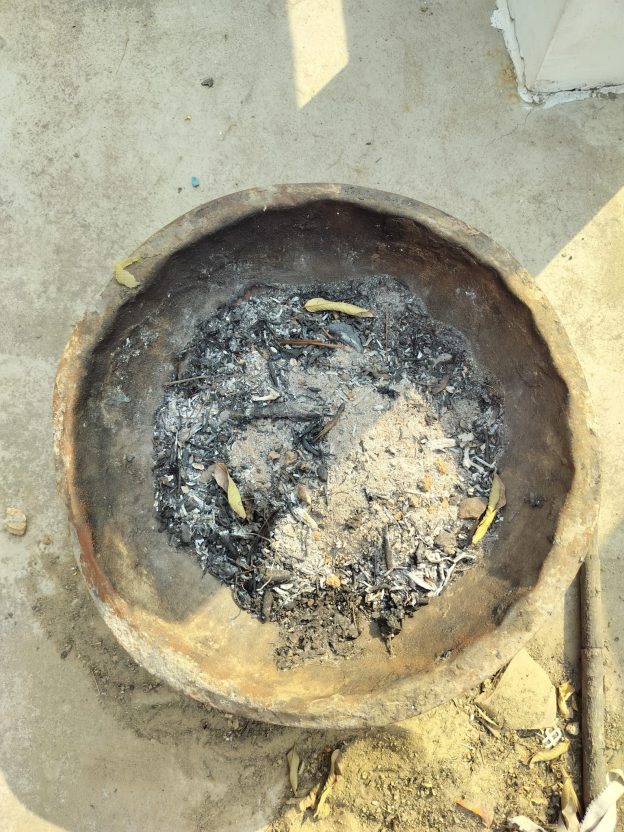
So, the imposition of ashes in the form of a cross in a couple minutes. We’re dust; some years we’re more in touch with that than others. But ashes in the form of a cross. We’re reading Matthew this year, so recall how Matthew begins and ends his account.

The first scene at the end of the angel’s encounter with Joseph: “All this took place to fulfill what had been spoken by the Lord through the prophet: ‘Look, the virgin shall conceive and bear a son, and they shall name him Emmanuel,’ which means, ‘God is with us’” (1:22-23).

The last scene on a mountain in Galilee: “And remember, I am with you always, to the end of the age” (28:20b).

Ashes in the form of a cross: we’re not walking alone. That’s a good thing. There are breaches to be repaired, streets to be restored, a world to be healed.

Ash Wednesday: “Ash”? (March 5, 2025)

Readings

Well, here we are again at Ash Wednesday with its “Remember that you are dust.” As I wondered how we might enter Lent this year that dust image got my attention, an image Scripture uses in a variety of ways.

The words that accompany the ashes echo that text from Genesis’ Garden of Eden story: “By the sweat of your face you shall eat bread until you return to the ground, for out of it you were taken; you are dust, and to dust you shall return.” But ‘dust’ is not always the best translation of Hebrew עָפָר, so the Common English Bible reads “until you return to the fertile land, since from it you were taken; you are soil, to the soil you will return.” Not good news, but it recognizes an ongoing relatedness: adam (humankind) from the adamah (the fertile land). That relatedness is good news—and easy to forget. So I’m grateful for the various initiatives our parish is taking.

Dust. From this evening’s psalm: “For he himself knows whereof we are made; / he remembers that we are but dust.” Hashtag ‘dust’ positions us for God’s mercy. And the prophet Isaiah recognizes that not even death can get in the way: “Your dead shall live, their corpses shall rise. / O dwellers in the dust, awake and sing for joy! / For your dew is a radiant dew, / and the earth will give birth to those long dead.”

So there’s an implicit promise in “Remember that you are dust…” The year I was in the middle of a hospital chaplaincy program I made the promise explicit: “Remember that you are dust, and to dust you shall return, and from the dust you shall be raised.” And every year I remember that.

The raised part isn’t automatic, of course, which is why imposing the ashes in the shape of the cross is as important as the ashes themselves. The cross: Jesus’ path, Jesus’ way, our way with Jesus through death into life.

Our faithfulness to Jesus’ way is usually—shall we say—ambiguous, which is why Paul regards being reconciled to God as an ongoing project, why the BCP’s invitation to a holy Lent emphasizes repentance. ‘Repentance’: a $50 word for changing course, for changing.

Back in 1957 they made a short movie featuring the cellist Pablo Casals. The director asked him why at age 80 he continued to practice for hours each day. Casals answered: “Because I think I am making progress.”

That’s a lovely model for repentance. We often assume that repentance is about what goes on in the head or heart. But recall our Isaiah reading: “to loose the bonds of injustice, to undo the thongs of the yoke, to let the oppressed go free, and to break every yoke.” Repentance needs to move to Casal’s fingers, to our hands and feet, to have any lasting value. And in any case, as Jesus points out, the heart pretty much just tags along after the treasure.

“Because I think I am making progress.” OK. “Making progress on loving God and neighbor:” where does that fall among my priorities?

There’s probably an unavoidable element of altruism here. Rowan Williams talks about decentering, abandoning—as often as I need to—that oh-so-attractive idea that I’m the natural center of the universe. But altruism isn’t the point.

Recall these lines from the Song of Songs that didn’t (alas!) make it into tonight’s readings:

10 My beloved speaks and says to me:
“Arise, my love, my fair one,
and come away;
11 for now the winter is past,
the rain is over and gone.
12 The flowers appear on the earth;
the time of singing has come,
and the voice of the turtledove
is heard in our land. (Cant. 2:10-12)

The noise and worries of the day-to-day can easily drown out that voice. Lent is our time to remember that for quite selfish reasons that’s the voice we want to hear, that hearing it more clearly, more often, might be worth some change.

Parenthetically, here’s one reason I want to hear that voice. Whether it’s Jesus’ “But strive first for the kingdom of God and his righteousness” (Matt. 6:33) or the BCP’s “self-examination and repentance,” our responses often leave us overly serious and wound very tight. Jesus, in the midst of the Roman occupation and the multiple Jewish factions each claiming the Lord’s stamp of approval, responds with joy and generosity. There’s a lot I could learn from that voice.

Earlier I said that Scripture uses the dust image in a variety of ways. Here’s another, with which I’ll close. At one point the Lord said to Abram: “I will make your offspring like the dust of the earth; so that if one can count the dust of the earth, your offspring also can be counted” (Gen. 13:16). And in Scripture’s last book John gets a glimpse of the fulfillment of that promise: “After this I looked, and there was a great multitude that no one could count, from every nation, from all tribes and peoples and languages, standing before the throne and before the Lamb, robed in white, with palm branches in their hands. They cried out in a loud voice, saying, ‘Salvation belongs to our God who is seated on the throne, and to the Lamb!’” (Rev. 7:9-10). May we be numbered with that dust.