Tag Archives: christianity

Learning with the Astrologers (The Feast of the Epiphany, 1/6/2025)

Readings

Sometime in early Spring, shortly after what we celebrate as the Feast of the Annunciation, Mary had sung:

He has cast down the mighty from their thrones,
and has lifted up the lowly.
He has filled the hungry with good things,
and the rich he has sent away empty.
He has come to the help of his servant Israel,
for he has remembered his promise of mercy,
The promise he made to our fathers,
to Abraham and his children for ever.

We might mentally loop this song and let it play in the background throughout this sermon, for it provides an appropriate soundtrack for our Gospel reading, and the Gospel reading in turn shows the surprising ways in which it plays out.

And the Gospel reading, in turn, also looks like it’s playing off the texts we heard from Isaiah and our psalm. There’s the foreigners bringing gifts theme. Further, Matthew’s identified Jesus as Son of David in the opening verse of the Gospel, and here the quote from the prophet Micah identifies Jesus as the Messiah. Psalm 72’s gifts to the King’s Son fit right in. Gold and frankincense as gifts show up twice the the Bible: Isa 60 and Matt 2. Matthew’s interested in both the continuity (Ps 72) and discontinuity (Isa 60) of these texts with his story.

Our Isaiah text. For a sense of the situation, recall that when the returning exiles laid the foundation for the second temple, we’re told “many of the priests and Levites and heads of families, old people who had seen the first house on its foundations, wept with a loud voice when they saw this house, though many shouted aloud for joy” (Ezra 3:12). This temple: such an impoverished version of Solomon’s temple. But, proclaims the prophet: that’s not the last word. You will shine. Nations will come to your light. Nations, bringing gold and frankincense to the temple. Jesus’ “You are the light of the world” might come to mind.

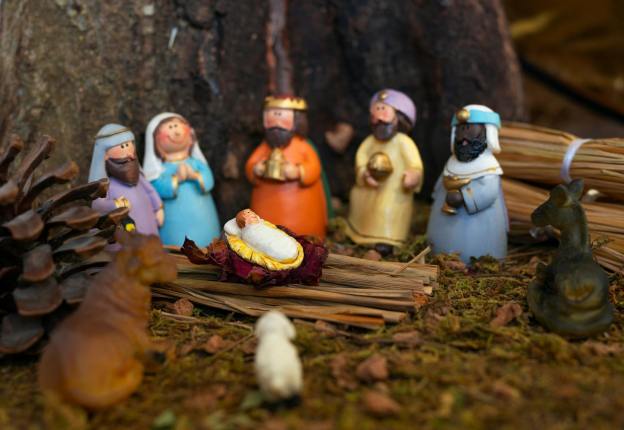
So, enter the Magi, the astrologers. In Matthew’s world folk assumed that important events—like the birth of powerful kings—would be heralded in the heavens. Even the Book of Numbers recalled the pagan prophet Balaam’s words “I see him, but not now; I behold him, but not near– a star shall come out of Jacob, and a scepter shall rise out of Israel” (Num. 24:17a). The Magi have seen the star; they head for the capital.

We heard what happened: they’re redirected to Bethlehem. The gold and frankincense end up in Bethlehem. So Isaiah got it wrong? Not according to Matthew: if you’re looking for the true temple, it’s currently in Bethlehem. The Gospel of John made the same point with Jesus’ words “”Destroy this temple, and in three days I will raise it up” (Jn. 2:19); Matthew does it with this story.

Pulling back the camera, the Magi story reminds us of why we gentiles are celebrating this Jewish King’s birth. So in our second reading we heard “the Gentiles have become fellow heirs, members of the same body, and sharers in the promise in Christ Jesus through the gospel.” Jews and Gentiles, then (and now?) like the proverbial Hatfields and McCoys: and Jesus is uniting them. Matthew’s Gospel ends with the command to disciple all nations; the Magi story is the set-up.

The Magi. We met their counterparts in the competitions between Moses and Pharaoh’s magi and between Daniel and the Babylonian magi. The Jews (so to speak) get it right; the Gentiles get it wrong. And here the script gets reversed? Maybe. What doesn’t change is that in all three situations (Pharaoh’s court, the Babylonian court, Herod’s court) it’s the powerless who get it right.

That’s the warning both here and in Mary’s song. “He has come to the help of his servant Israel,” yes. But servant Israel—like servant Church—can be asleep at the switch. Not one of the chief priests or scribes accompany the Magi down to Bethelem. Better, I suppose, than Herod, who’s quite awake to any threat to his understanding of God’s kingdom. Being part of Israel or the Church: no guarantee that we’ll get it right. And the more power we have, the more careful we need to be.

Coming at this another way, in Mary’s song it sounds like God is making all the decisions. “He has filled the hungry with good things, / and the rich he has sent away empty.” In Matthew’s story the rich (so to speak) exclude themselves, the chief priests and scribes through some combination of sleep and inertia, Herod through fear.

Let’s return to Isaiah’s image of light.

Arise, shine; for your light has come,
and the glory of the LORD has risen upon you.
For darkness shall cover the earth,
and thick darkness the peoples;
but the LORD will arise upon you,
and his glory will appear over you.
Nations shall come to your light,
and kings to the brightness of your dawn.

No shortage of thick darkness these days. Isaiah—and Paul—don’t want us to be surprised by that. But precisely in the midst of that: “so that through the church the wisdom of God in its rich variety might now be made known to the rulers and authorities in the heavenly places.” And what is this wisdom that Paul is celebrating? That the Gentiles—all peoples—are now through the Messiah invited to full participation in God’s project of world healing initiated with Abraham and Sarah. Is this project of uniting all peoples in Christ sustainable? Is the water of baptism more potent than the inertia of ethnicity and culture? Did Mary and her song get it right? That’s what the Church—despite all its failings—is to demonstrate. “You are the light of the world.”

“Then the eyes of the blind [disciples] shall be opened” (24th Sunday after Pentecost, 11/3/2024)

Readings (Track 1)

Centuries before Jesus, when Solomon’s temple was still standing, the prophet Isaiah, surrounded by the folly that passed for wisdom, spoke of God’s coming salvation. One of his images: “Then the eyes of the blind shall be opened, and the ears of the deaf unstopped” (35:5). What might that look like? Today’s Gospel provides one answer, Jesus working at opening the eyes of the disciples.

“As he taught, he said, ‘Beware of the scribes, who like to walk around in long robes, and to be greeted with respect in the marketplaces, and to have the best seats in the synagogues and places of honor at banquets! They devour widows’ houses and for the sake of appearance say long prayers. They will receive the greater condemnation.’”

What do the disciples see when they see a scribe? All the outward signs proclaim honor, but open eyes don’t stop with appearances. Where does Jesus get this? Maybe through recalling stories like the one about the prophet Samuel, sent to anoint Israel’s next king. The Lord to Samuel: “Do not look on his appearance or on the height of his stature, because I have rejected him; for the LORD does not see as mortals see; they look on the outward appearance, but the LORD looks on the heart” (1 Sam. 16:7). So, not Eliab, but David. Or maybe through the multiple texts in Proverbs we noticed a few weeks back. A rich man: rich through diligence or theft? A poor man: poor through sloth or oppression? Based on appearances we don’t know. Or maybe from having grown up in the North, where scribes who copy and interpret the legal documents can be seen rather differently than in the capital.

Is Jesus talking about every scribe? Of course not. He is talking about what we see, what assumptions inform what we see.

And, of course, Jesus’ words continue to be passed down also because they speak to new situations. Soon the new churches have bishops, priests, deacons—and the temptations of long robes, preferred seating, etc. are as relevant as ever. But that would be another sermon.

“Then the eyes of the blind shall be opened.” Jesus keeps working the problem.

“He sat down opposite the treasury, and watched the crowd putting money into the treasury. Many rich people put in large sums. A poor widow came and put in two small copper coins, which are worth a penny. Then he called his disciples and said to them, ‘Truly I tell you, this poor widow has put in more than all those who are contributing to the treasury. For all of them have contributed out of their abundance; but she out of her poverty has put in everything she had, all she had to live on.’”

What do the disciples see? Which gifts look impressive? Jesus’ mother had sung “He has cast down the mighty from their thrones, / and has lifted up the lowly.” Perhaps Jesus is remembering that too. In any case, what they see, what we see, is important also because it determines what we do. We heard Jesus’ brother James a few weeks back: “For if a person with gold rings and in fine clothes comes into your assembly, and if a poor person in dirty clothes also comes in…” (2:2).

Salvation: Jesus working on our vision—on our hearing, for that matter—so that we treat each other well. A surprising number of our acts of seeing and hearing reflect who we are, who we are becoming.

And sometimes the rich get it right, as our first reading reminds us. It would have been easy for Boaz to write Ruth and Naomi off. He doesn’t. He listens. And as the parts of the text we didn’t hear in the assigned readings make clear, he makes decisions that are financially costly to do right by the women. One result, as the text reminds us in a delightfully understated postscript, King David.

We can close by noticing an additional layer to the contributions to the temple treasury story. Mark puts the story right at the entrance to Passover/Holy Week. At Passover the High Priest, richly attired, accompanied by all the pomp and ceremony Jerusalem can muster, will offer the prescribed sacrifices. At that same Passover, a prisoner stripped of everything, will stretch “out his arms upon the cross.” As we heard in our second reading, the author of Hebrews has no doubt which sacrifice was the more efficacious, the more worthy of honor. If our eyes are open enough to see the value of the widow’s two small copper coins, we just might be able to see the value of that prisoner’s self-offering.

“Then the eyes of the blind shall be opened, and the ears of the deaf unstopped.” So in the coming week who knows when the Lord might nudge us: “What do you see? What do you see?”

Love complicates things (3rd Sunday after Pentecost)

Readings (Track 1)

In the middle of Jesus’ argument with the scribes he tells this short parable: “But no one can enter a strong man’s house and plunder his property without first tying up the strong man; then indeed the house can be plundered.” Plunder: that’s an intriguing image for what Jesus is about. For what God’s about, for that matter. The Exodus: plunder on a national scale. The mob stirred up by Paul and Silas’ presence in Thessalonica didn’t get it entirely wrong: “These people who have been turning the world upside down have come here also” (Acts 17:6). No wonder Paul’s regularly in trouble—as we heard in our second reading.

But it’s not plunder for the sake of plunder (“My pile of loot’s bigger than yours!”), but, whether at the Exodus or in Galilee, for human freedom, restoring it so that it can be used well. Pulling back the camera to take in all of Mark’s Gospel, whether in the exorcisms, the healings, the conversations or the proclamation, that plundering is about restoring human freedom and encouraging us humans to use it well. The first thing out of Jesus’ mouth in that Gospel: “The time is fulfilled, and the kingdom of God has come near; repent, and believe in the good news” (1:15).

The kingdom/reign of God, with two divine desires in play: that we be free, that we choose well. Either one of these would be easy to fulfill; both—that quickly gets complicated. Consider our first reading from Samuel’s time, a few centuries after the Exodus. The people have repeatedly used their freedom badly, and now they want a human king. A king: they’d celebrated the Lord as their king back at the Exodus (Exodus 15:18). But now, no, a human king “so that we also may be like other nations.” If God’s desire were simply that the people choose well, well, so much for freedom: no human king. But God desires both that they be free and that they choose well. So God tells Samuel to give the people what they want; we’ll do it the hard way.

That’s a pretty good illustration of God’s love. God loves us too much either to compromise our freedom or to stop caring about our choices. Love—as any parent knows—complicates things. God can bring good out of our bad choices (the king is the template for the Messiah), but the price is high (“King of the Jews” was the sign on Jesus’ cross).

Does God always get what God wants? Since what God wants is that we be free and that we choose well, the answer is pretty clearly no. (That’s one of the main reasons why the Bible is a lengthy book!) And one of the recurrent challenges in worshipping this God is to respect both of these divine desires. If we think the people are choosing badly is their freedom really all that important?

Bad choices bring death. Adam and Eve choose badly in Genesis chapter 3; only one of their sons (Cain and Abel) is alive by the end of chapter 4. Death ends the story; death ends all stories. In the psalms one of the most frequent arguments the psalmists make for deliverance: rescue me, because in Hades no one praises you; that’s the lose-lose option. Shakespeare nails it in MacBeth:

Life’s but a walking shadow, a poor player,
That struts and frets his hour upon the stage,
And then is heard no more. It is a tale
Told by an idiot, full of sound and fury,
Signifying nothing.

So if there were ever a game-changer, it’s Jesus’ resurrection (the motor for Paul’s reflections in our second reading). Death isn’t the end. Jesus’ transformed body grounds our hope for a similarly transformed body, “an eternal weight of glory,” as Paul put it.

How to tie this together? At least three ways come to mind. “God desires our freedom and that we use it well.” That, of course, is only one of many ways we might summarize what God’s up to. But play with it; wonder how it might serve to guide our outreach budget and activities.

Second. God desires our freedom and that we use it well. Because neither desire is negotiable God’s history with us is as messy as it is (recall, again, Holy Week) and Mick Jagger’s “You can’t always get what you want” turns out to apply to God as well. So we don’t know how all this will play out in the end. Will all be saved? We do know that it comes down to a fairly simple question: is my character such that I’d enjoy spending eternity with this God who keeps making hard choices and who loves my enemies as much as me?

In this respect heaven and hell reflect who we are. Recall that old analogy: a large banquet hall, the tables loaded. The complication is that our arms no longer bend at the elbows. At some tables, despair: despite increasingly acrobatic strategies no one can feed themselves. At other tables, delight: everyone feeding their neighbor.

A third way of tying this together: C. S. Lewis’ luminous sermon “The Weight of Glory” that draws on our second reading. After imagining what this weight of glory might mean, he pivots:

…it may be asked what practical use there is in the speculations which I have been indulging. I can think of at least one such use. It may be possible for each to think too much of his own potential glory hereafter; it is hardly possible for him to think too often or too deeply about that of his neighbour.… It is a serious thing to live in a society of possible gods and goddesses, to remember that the dullest and most uninteresting person you talk to may one day be a creature which, if you saw it now, you would be strongly tempted to worship, or else a horror and a corruption such as you now meet, if at all, only in a nightmare. All day long we are, in some degree, helping each other to one or other of these destinations.…There are no ordinary people.

God, in love, desires our freedom and that we use it well, for our choices really matter. That doesn’t make it easy for God or for us. Easy, apparently, is not the point.

Psalm 19 (3rd Sunday in Lent, 3/3/2024)

Readings

Each of today’s readings could fuel multiple sermons. This time around let’s focus on Psalm 19. Thematically it breaks into three parts: creation (vv.1-6), the law (vv.7-11), and what we might call divine intervention (vv.12-14). Each part is an important part in a faithful life. Is it a complete picture of a faithful life? No. There’s no attention to the community—for that we’d need other psalms. But it gives us more than enough to think about this morning.

“The heavens declare the glory of God, / and the firmament shows his handiwork.” Creation proclaims God’s glory; creation is worthy of our sustained attention. The physicists give us the clearest picture of this, the fine tuning of the various constants that make a stable universe possible, for which see folk like John Polkinghorne. For the world of flora and fauna, I often return to Annie Dillard’s Pilgrim at Tinker Creek.

“The creator goes off on one wild, specific tangent after another, or millions simultaneously, with an exuberance that would seem to be unwarranted, and with an abandoned energy sprung from an unfathomable font. What is going on here? The point…is not that it all fits together like clockwork…but that it all flows so freely wild, like the creek, that it all surges in such a free, fringed tangle. Freedom is the world’s water and weather, the world’s nourishment freely given, its soil and sap: and the creator loves pizzazz” (p.135).

“Consider the lilies of the field” Jesus tell us, and how much of his teaching depends on his having first himself considered God’s creation! So theologians like Augustine talk about God’s two books, Scripture and the book of nature. In short, the first part of our psalm: going outside and paying attention is a spiritual discipline.

If God’s glory is found in creation it’s equally found in God’s Torah (“teaching” or, more narrowly, “law”). The joy expressed in this second part, vv.7-11, is perhaps most clearly expressed in the Jewish celebration of Simhat Torah (“Joy of the Teaching/Law”). The Torah (Genesis-Deuteronomy) is read in the synagogue over the course of the year. Simhat Torah, in which members of the congregation dance with the Torah scroll, celebrates the end of the reading and the opportunity to begin the reading again. The Decalogue, that part of the Torah from our first reading, gives us an opportunity to enter into that joy. “I am the LORD your God, who brought you out of the land of Egypt, out of the house of slavery.” What follows: how to live as free people. The Godly Play curriculum calls this text “The Ten Best Ways to Live.”

“You shall have no other gods before me.” There is only one God we need to keep happy. An improvement over the various polytheisms then on offer, with multiple gods to keep happy. An improvement over our current de facto polytheism. So many gods want a piece; so many commercials: without me, you’re toast.

“Remember the sabbath day.” God’s creation is generous enough that six days of labor provides for seven days of life. If seven days are required, or if the scheduling is such that there’s no dependable weekly day of rest, that’s a sure sign that Pharaoh has returned.

You shall not murder, commit adultery, steal, etc. We don’t have to do these things to preserve/enhance our life.

“The Ten Best Ways to Live” indeed.

Now, the big surprise in the psalm is that it doesn’t end with v.11. After all that’s just been said about Torah, why do we need vv.12-13? Why indeed?

It turns out that we humans are pretty good at coopting/subverting anything, including Torah. In our best moments this happens almost by accident; in our worst, quite deliberately. The dog is wagging the tail, the dog is wagging the tail… and one day we discover the tail wagging the dog.

The activities Jesus discovered in the temple (John 2). “In the temple he found people selling cattle, sheep, and doves, and the money changers seated at their tables.” All that probably started legitimately enough: animals are necessary for sacrifice and some worshippers may have preferred to buy locally rather than bring the animals from their village. The money changing? Common currency had an image of the emperor, for whom divine prerogatives were claimed, and the temple authorities came to believe that such coins were inappropriate in the temple. It starts legitimately enough; but soon the penny drops that there’s a great deal of money to be made. The tail wags the dog, and all for the greater glory of God.

“Cleanse me from my secret faults…keep your servant from presumptuous sins.” The psalmist doesn’t explain how God does this, even as it’s clear that if it’s just me and Torah it’s not going to end well. How God does this: here’s where the psalmist could have talked about the community, particularly those members of the community that I don’t like to listen to. (“I want you to give me at once the head of John the Baptist on a platter” [Mk. 6:25].) It’s probably more prudent to listen to John than to leave God no other alternative than sending in Jesus, whip of cords in hand.

This unexpected turn in vv.12-13 is probably related to Paul’s critique of “the wisdom of the wise, and the discernment of the discerning” in our second reading. Often the problem with this wisdom/discernment is that it assumes that we’ve heard all we need to hear from God. We have the Torah; we have the Bible; what more do we need? And we end up crucifying Christ again.

But the psalmist’s “cleanse me” trusts that it doesn’t need to end like this. “Cleanse me from my secret faults…keep your servant from presumptuous sins.” Why? Look at the last verse: “Let the words of my mouth and the meditation of my heart / be acceptable in your sight, / O Lord, my strength and my redeemer.” The heavens are declaring God’s glory—that’s where we started. The psalmist’s hope/prayer is that the psalmist’s voice finally join that voiceless praise.

Not a bad agenda for Lent—or the rest of the year: get outside and pay attention, drink deeply from Torah with its “Ten Best Ways to Live,” listen for how God—often through our neighbor—may be trying to free us from our self-serving readings.