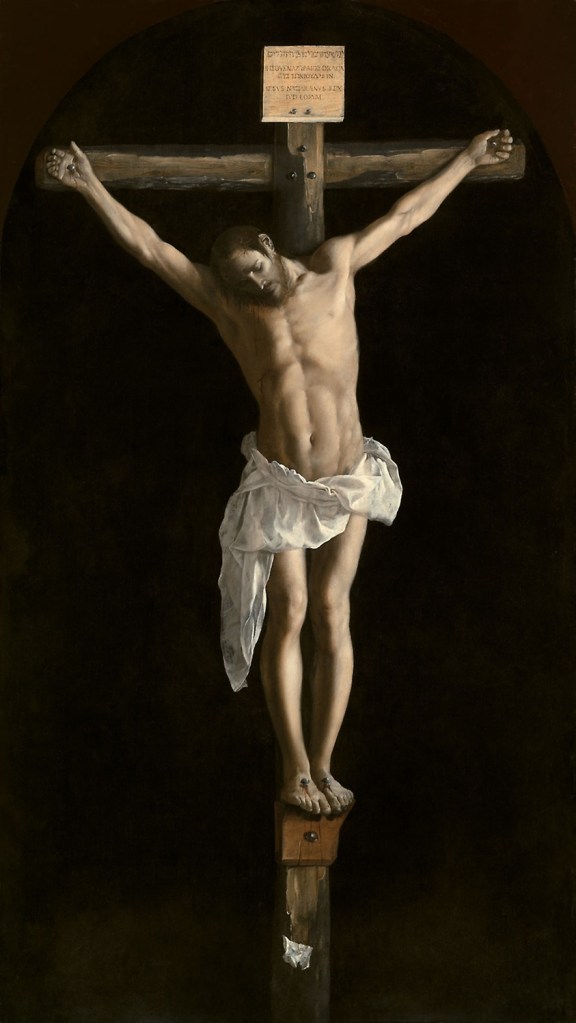
Tag Archives: Daily Office Lectionary

Re the Daily Office Readings May 20 Anno Domini 2020

The Readings: Leviticus 26:27-42; Ephesians 1:1-10; Matthew 22:41-46

(From today until Pentecost—except Ascension and Sunday—the Lectionary offers a largely course reading of Ephesians. Ephesus, on the west coast of modern Turkey, was the capital of the Roman province of Asia and among the largest cities in the Empire.)

In Lev. 26:34-35 the importance of the plural “sabbaths” (v.2) becomes clear, specifically the 7th year sabbath. That sabbath is not simply about human concerns, but also (equally?) about the land’s needs and integrity. Recalling the early chapters of Genesis (again!) Ellen Davis argues persuasively that the end of Gen. 2:15 (“The LORD God took the man and put him in the garden of Eden to till it and keep it.” NRSV) might better translated with something like “to serve and to watch it,” explaining:

 “We must serve (ˁavad) the land, not worshipping it but showing it reverence as God’s own creation, respecting it as one whose needs take priority over our immediate desires. We must watch it and watch over it (shamar) as one who has something to teach us and yet at the same time needs our vigilant care” (Getting Involved with God).

The 7th year sabbath is a part of how Israel is to relate to her land, and it turns out to be like the canary in the coal mine. So (vv.34-35) the land also must receive its due. And today? At the national/international level, Creation Care is a useful starting-point. At the local level, the “Grounds” tab in the St. Dunstan’s (Madison, Wisconsin) website is an example of developing responses.

The final verses, vv.40-48, address what Israel should do after everything goes south. It is one of a cluster of Old Testament responses to the question, differing in the weight given to divine and human initiatives, differing in what the human initiatives should look like. As such, an opportunity to wonder about how we understand divine and human initiatives to interact. The cluster itself: the stage on which John the Baptist and Jesus chart their path, typically in contrast with the other paths on offer (the Pharisees, the Zealots, etc.). How can Israel’s exile be brought to a clear end?

Re the Daily Office Readings May 19 Anno Domini 2020

The Readings: Leviticus 26:1-20; 1 Timothy 2:1-6; Matthew 13:18-23

Lev. 26:1-2 looks like a very condensed summary of the covenant: don’t do that (v.1); do this (v.2). We might wonder: why summarize the covenant this way? (How else could it have been summarized?)

What, for that matter, is wrong with idols, images, etc.? The answer is clear if the image is intended to point to any god except the LORD. By our numbering that’s covered in the first commandment; images per se, a separate issue (the second commandment). Different texts may point to different answers. I wonder if it doesn’t go back to Gen 1:26-27. If you want an image of God, pay attention to human beings; experience suggests that any other image leads to human beings being treated in inhuman ways.

“You shall keep my sabbaths and reverence my sanctuary.” The one organizes time (every 7th day, every 7th year, every 7x 7th year—recall Lev. 25); the other organizes space (the tabernacle/temple itself, the land of Israel, other lands; different gifts flow in different directions). How do we Christians understand the New Covenant to organize our time, our space?

Lev. 26:3-39 describes the blessings obedience brings and the curses disobedience brings, a standard element in the ancient near eastern treaties that served as a rough template for the Mosaic covenant. Among the many things we might wonder about, here are two. In vv.3-13 economic prosperity and national security are byproducts of the nation’s conduct before God. We tend to treat them as goods to be pursued directly.

Second, the whole obedience-brings-blessing-disobedience-brings-curse paradigm. On the one hand, does any part of the Bible remain intact if the paradigm is discarded? On the other hand, multiple voices within the OT warn us to use it with extreme caution. In 2 Kings righteous king Josiah dies young and wicked king Manasseh lives to a ripe old age. Job exhibits at length the disastrous results of using the paradigm diagnostically (Job is suffering, so Job is a sinner). What do we do with it?

Re the Daily Office Readings May 18 Anno Domini 2020

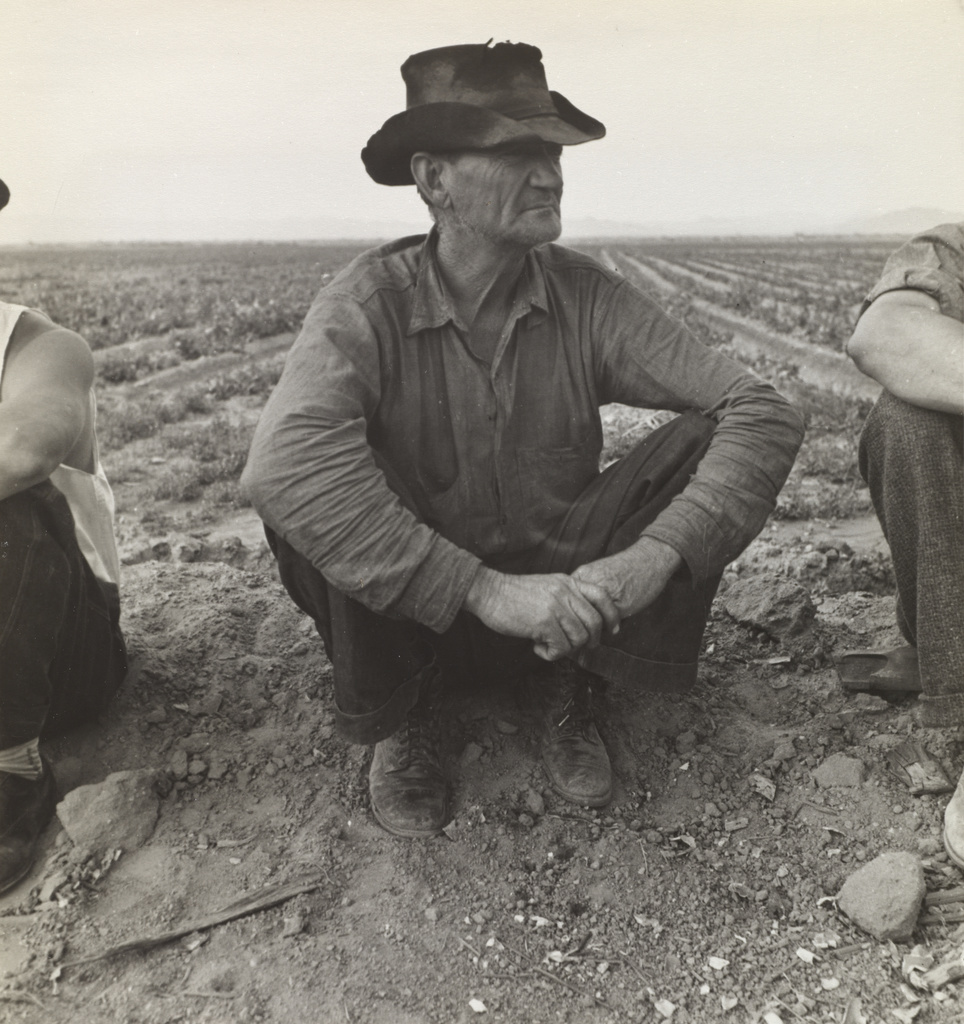
Waiting for Work on Edge of a Pea Field, Holtville, Imperial Valley, California by Dorothea Lange 1937

The Readings: Leviticus 25:35-55; Colossians 1:9-14; Matthew 13:1-16

Four things got my attention in the first reading; I wonder what got yours.

The prohibition against charging interest in lending (vv.35-38, present also in other OT law collections). Christians regarded the prohibition as binding until around the 16th century, then did an about-face (see, conveniently, Wikipedia). A step forward, backward, or both?

Israelites and non-Israelites: equal before the law? Within Lev. 17-26, commonly recognized by scholars as a collection with its own tradition history (the Holiness Code), there are strong affirmations of equality, e.g., 19:33-34; 24:22. Here Israel’s unique status and the principle that no Israelite lose permanently their portion of Israel’s land trumps equality: “The land shall not be sold in perpetuity, for the land is mine; with me you are but aliens and tenants” (v.23); “For to me the people of Israel are servants; they are my servants whom I brought out from the land of Egypt: I am the LORD your God” (v.55). Given the universal perspective of the opening chapters of Genesis, the tension between inclusivity and exclusivity runs throughout the Old Testament.

Slavery (still a scourge, see here and here). The laws re slavery are the parade example of the lethal danger of a decontextualized reading of Scripture, reading without attention to the larger context. The prohibition of enslaving Israelites, once “The earth is the LORD’s and all that is in it, the world, and those who live in it” (Ps. 24:1) sinks in, establishes a powerful presumption against the enslavement of anyone.

“The land shall not be sold in perpetuity, for the land is mine; with me you are but aliens and tenants” (Lev. 25:23). What happens if we understand this as a principle and combine it with Ps 24:1 (just cited)? I think that, if we claim to be working within the Judeo-Christian tradition, it creates a powerful presumption for, minimally, a tax strategy that discourages the accumulation of wealth across generations, and public investment that minimizes income/wealth-based differences in access to goods such as education and health care. Judging by our current practice, many seem to believe that inequality can increase indefinitely without disturbing either God or public order. What do you think?

Re the Daily Office Readings May 17 Anno Domini 2020

The Readings: Leviticus 25:1-24; James 1:2-8, 16-18; Luke 12:13-21

Note: The Lectionary ends the Leviticus reading at v.17. I’ve extended the reading to v.24 to include its statement of the principle undergirding the chapter: “The land shall not be sold in perpetuity, for the land is mine; with me you are but aliens and tenants” (v.23).

The Jubilee (vv.8ff) has received sustained attention since late in the last century as a model for dealing with third-world debt (e.g., United States Catholic Conference 1999), and at least one economist is urging it as a model for avoiding a depression in this country (Michael Hudson, here and here).

Or we could take v.23 as the starting point for meditation on our use of the words ‘my’ and ‘mine’. Here part of Letter XXI in C. S. Lewis’ imaginary correspondence from a senior to junior devil (The Screwtape Letters) may prove helpful. (We might notice that v.23 is also intimately related to the other two readings: James’ vision of everything as gift, Jesus’ assumption that the Owner can properly set limits on the actions of the tenants.)

MY DEAR WORMWOOD,

Men are not angered by mere misfortune but by misfortune conceived as injury. And the sense of injury depends on the feeling that a legitimate claim has been denied. The more claims on life, therefore, that your patient can be induced to make, the more often he will feel injured and, as a result, ill-tempered. Now you will have noticed that nothing throws him into a passion so easily as to find a tract of time which he reckoned on having at his own disposal unexpectedly taken from him. It is the unexpected visitor (when he looked forward to a quiet evening), or the friend’s talkative wife (turning up when he looked forward to a tête-à-tête with the friend), that throw him out of gear. Now he is not yet so uncharitable or slothful that these small demands on his courtesy are in themselves too much for it. They anger him because he regards his time as his own and feels that it is being stolen. You must therefore zealously guard in his mind the curious assumption “My time is my own”. Let him have the feeling that he starts each day as the lawful possessor of twenty-four hours. Let him feel as a grievous tax that portion of this property which he has to make over to his employers, and as a generous donation that further portion which he allows to religious duties. But what he must never be permitted to doubt is that the total from which these deductions have been made was, in some mysterious sense, his own personal birthright.

You have here a delicate task. The assumption which you want him to go on making is so absurd that, if once it is questioned, even we cannot find a shred of argument in its defence. The man can neither make, nor retain, one moment of time; it all comes to him by pure gift; he might as well regard the sun and moon as his chattels. He is also, in theory, committed to a total service of the Enemy; and if the Enemy appeared to him in bodily form and demanded that total service for even one day, he would not refuse. He would be greatly relieved if that one day involved nothing harder than listening to the conversation of a foolish woman; and he would be relieved almost to the pitch of disappointment if for one half-hour in that day the Enemy said “Now you may go and amuse yourself”. Now if he thinks about his assumption for a moment, even he is bound to realise that he is actually in this situation every day. When I speak of preserving this assumption in his mind, therefore, the last thing I mean you to do is to furnish him with arguments in its defence. There aren’t any. Your task is purely negative. Don’t let his thoughts come anywhere near it. Wrap a darkness about it, and in the centre of that darkness let his sense of ownership-in-Time lie silent, uninspected, and operative.

The sense of ownership in general is always to be encouraged. The humans are always putting up claims to ownership which sound equally funny in Heaven and in Hell and we must keep them doing so. Much of the modern resistance to chastity comes from men’s belief that they “own” their bodies-those vast and perilous estates, pulsating with the energy that made the worlds, in which they find themselves without their consent and from which they are ejected at the pleasure of Another! It is as if a royal child whom his father has placed, for love’s sake, in titular command of some great province, under the real rule of wise counsellors, should come to fancy he really owns the cities, the forests, and the corn, in the same way as he owns the bricks on the nursery floor.

We produce this sense of ownership not only by pride but by confusion. We teach them not to notice the different senses of the possessive pronoun-the finely graded differences that run from “my boots” through “my dog”, “my servant”, “my wife”, “my father”, “my master” and “my country”, to “my God”. They can be taught to reduce all these senses to that of “my boots”, the “my” of ownership. Even in the nursery a child can be taught to mean by “my Teddy-bear” not the old imagined recipient of affection to whom it stands in a special relation (for that is what the Enemy will teach them to mean if we are not careful) but “the bear I can pull to pieces if I like”. And at the other end of the scale, we have taught men to say “My God” in a sense not really very different from “My boots”, meaning “The God on whom I have a claim for my distinguished services and whom I exploit from the pulpit—the God I have done a corner in”.

And all the time the joke is that the word “Mine” in its fully possessive sense cannot be uttered by a human being about anything. In the long run either Our Father or the Enemy will say “Mine” of each thing that exists, and specially of each man. They will find out in the end, never fear, to whom their time, their souls, and their bodies really belong-certainly not to them, whatever happens. At present the Enemy says “Mine” of everything on the pedantic, legalistic ground that He made it: Our Father hopes in the end to say “Mine” of all things on the more realistic and dynamic ground of conquest,

Your affectionate uncle
SCREWTAPE
Re the Daily Office Readings May 16 Anno Domini 2020

From St James Episcopal Church, Goshen New York

The Readings: Leviticus 23:23-44; 2 Thessalonians 3:1-18; Matthew 7:13-21

The calendar laid out in Leviticus 23 invites reflection on our Christian calendar. Here’s another bit from Heschel’s The Sabbath, equally suggestive for us:

“Judaism is a religion of time aiming at the sanctification of time. Unlike the space-minded man to whom time is unvaried, iterative, homogeneous, to whom all hours are alike, qualitiless, empty shells, the Bible senses the diversified character of time. There are no two hours alike. Every hour is unique and the only one given at the moment, exclusive and endlessly precious.

“Judaism teaches us to be attached to holiness in time, to be attached to sacred events, to learn how to consecrate sanctuaries that emerge from the magnificent stream of a year. The Sabbaths are our great cathedrals; and our Holy of Holies is a shrine that neither the Romans nor the Germans were able to burn; a shrine that even apostasy cannot easily obliterate: the Day of Atonement. According to the ancient rabbis, it is not the observance of tile Day of Atonement, but the Day itself, the ‘essence of the Day,’ which, with man’s repentance, atones for the sins of man.”

Christmas, Epiphany, Easter, Ascension, Pentecost, Trinity, All Saints: each year we’re invited to reexperience these divine acts, and let their life-giving power bleed into the surrounding time.

When we gather together all this is visible in the changing colors on the altar and audible in the changing prayers. In this season of social distancing, where can we change the colors where we live? What other ways can we find to acknowledge and celebrate that Jesus in his flesh claimed our time, our calendars?

(P.S. Jesus claiming our calendars: that’s behind the recent change in the titles of these posts, reclaiming—and writing out in full—the old abbreviation “AD”: Anno Domini, “The Year of the Lord.” 2020 is the year of COVID 19, but that is not its primary identity.)

For more on the festivals in Leviticus 23: The Bible Journey; and Catholic Resources.

Re the Daily Office Readings May 15 Anno Domini 2020

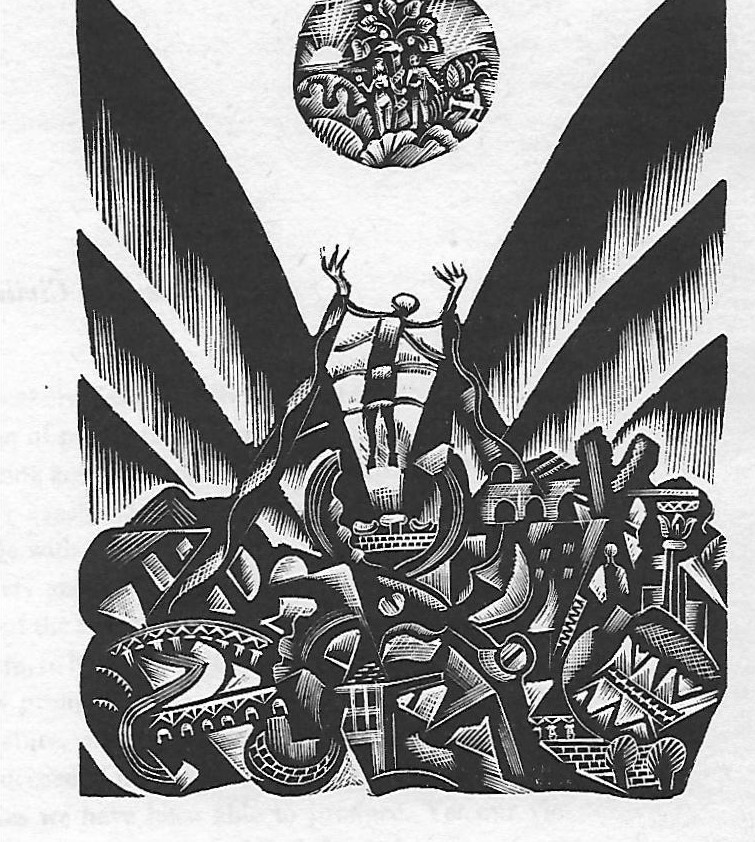
Wood Engraving by Ilya Schor in Heschel’s The Sabbath.

The Readings: Leviticus 23:1-22; 2 Thessalonians 2:1-17; Matthew 7:1-12

Leviticus 23 contains one of the Torah’s summaries of the major festivals. Our lectionary splits it between the Sabbath and Spring festivals (today) and the Fall festivals (tomorrow).

Readers whose introduction to the Sabbath is the arguments in the Gospels about permitted work and Paul’s arguments against the Gentile believers needing to observe the entire Law are liable to miss the joy, the spirituality, of the gift of the Sabbath. Abraham Heschel’s The Sabbath is a welcome corrective. Here’s a bit:

“According to the Talmud, the Sabbath is me’en ‘olam ha-ba, which means: somewhat like eternity or the world to come. This idea that a seventh part of our lives may be experienced as paradise is a scandal to the pagans and a revelation to the Jews. And yet to Rabbi Hayim of Krasne the Sabbath contains more than a morsel of eternity. To him the Sabbath is the fountainhead (ma’ yan) of eternity, the well from which heaven or the life in the world to come takes its source.

“Unless one learns how to relish the taste of Sabbath while still in this world, unless one is initiated in the appreciation of eternal life, one will be unable to enjoy the taste of eternity in the world to come. Sad is the lot of him who arrives inexperienced and when led to heaven has no power to perceive the beauty of the Sabbath.”

It is not necessary to define the precise relationship between the OT Sabbath and the Lord’s Day (Sunday) for Heschel to point us to a deepened appreciation of Sunday, the Eighth Day, the first day of the New Creation. At present we deeply miss being able to gather together on Sunday. But Sunday is exalted, a permanent source of joy and hope, not because we gather together. We have gathered together and will again gather together because it’s Sunday.

Better, recall that centuries before we celebrated Easter as an annual feast, we were celebrating Jesus’ resurrection—the inbreaking of the New Creation—every Sunday. So, for instance, we’d be quite justified in freeing the hymns filed under “Easter” (##174-213) for use on any Sunday. So, in the kitchen, Sunday is the day for the whole household to pull out all the stops. Every Sunday the ears of the chocolate Easter bunny may be at risk. Booze, bubble wands, fireworks: the current social distancing is our opportunity to find new ways to celebrate apart-and-together.

For more on Sunday, the Eighth Day, Preachers Institute, The Catholic Spirit.

Re the Daily Office Readings May 14 Anno Domini 2020

The Readings: Leviticus 19:26-37; 2 Thessalonians 1:1-12; Matthew 6:25-34

I would love to hear what you’re discovering in your voyage through this chapter. In the meantime…

In the creation story G-d brings order and stability out of chaos by dividing what needs to be kept apart, e.g., earth and sea. Distinguishing (dividing) is core to the priests’ job description, e.g., Leviticus 10:10. In this chapter, dividing (distinguishing, separating) turns out to be core to everyone’s job description. But what should be divided, what not divided? Here’s where the discovery, the surprises come.

“When you come into the land and plant all kinds of trees for fruit…” (vv.23-25)—so distinguish between the times to abstain, the times to offer, the times to consume.

“Do not profane your daughter by making her a prostitute” (v.29)—so parental decisions re children’s vocations should be divided into the proper and improper, with ‘to profane’ strikingly applied to persons!

“The alien who resides with you shall be to you as the citizen among you” (v.34). So distinguishing between the citizen and the alien is not OK?

Newly freed slaves with lots to unlearn. Thankfully, we have the gift of time.

Re the Daily Office Readings May 13 Anno Domini 2020

The Readings: Leviticus 19:1-18; 1 Thessalonians 5:12-28; Matthew 6:19-24

Leviticus 19 is a unique and important collection of diverse laws introduced by “You shall be holy, for I the LORD your God am holy” and frequently punctuated with “I am the LORD.” In an environment in which the two most frequent uses of ‘holy’ are “holier than thou” and “holy s—,” and in which “Lord” is associated with oppression there’s some preliminary work to do.

‘LORD’ (typically in small caps) is a stand-in for the name YHWH, unpronounced in Jewish tradition, often vocalized as ‘Yahweh’. In an important Old Testament tradition the introduction of the name ‘LORD’ is tied directly to the Exodus:

“God also spoke to Moses and said to him: ‘I am the LORD. I appeared to Abraham, Isaac, and Jacob as God Almighty, but by my name ‘The LORD’ I did not make myself known to them.… Say therefore to the Israelites, “I am the LORD, and I will free you from the burdens of the Egyptians and deliver you from slavery to them. I will redeem you with an outstretched arm and with mighty acts of judgment. I will take you as my people, and I will be your God. You shall know that I am the LORD your God, who has freed you from the burdens of the Egyptians”’” (Exod. 6:2-3, 6-7).

‘Holy’ appears in the creation story in relation to the Sabbath (the Sabbath itself interpreted as a way of remembering the Exodus in Deuteronomy), but then not significantly until Exodus 3:5, the LORD’s initial appearance to Moses, kicking off the Exodus (“Come no closer! Remove the sandals from your feet, for the place on which you are standing is holy ground.”).

‘The LORD’ and ‘holy’ are intimately tied to the Exodus. They are freedom words. Not surprisingly, Leviticus 19 recalls the Exodus as motivation (v.34, 36). And what’s the point of giving the people freedom if they keep acting like slaves? So: “be holy.”

What does ‘be holy’ mean? Leviticus 19 answers the question with a whirlwind of examples (e.g., “Do not profane your daughter by making her a prostitute.”) and principles (e.g., “you shall not profit by the blood of your neighbor.”). The collection is by nature not exhaustive. Rather, it sets the hearers/readers on a voyage of discovery.

The New Testament writers, celebrating Exodus 2.0, echo the call to holiness (John, Peter, Paul—in today’s reading). Recall Paul’s pivotal exhortation: “So, brothers and sisters, because of God’s mercies, I encourage you to present your bodies as a living sacrifice that is holy and pleasing to God. This is your appropriate priestly service. Don’t be conformed to the patterns of this world, but be transformed by the renewing of your minds so that you can figure out what God’s will is– what is good and pleasing and mature” (Rom. 12:1-2 CEB; boldface mine). Same voyage, same destination.

Re the Daily Office Readings May 12 Anno Domini 2020

The Readings: Leviticus 16:20-34; 1 Thessalonians 5:1-11; Matthew 6:7-15

More echoes of the Day of Atonement analogy in our tradition:

“All glory be to thee, Almighty God, our heavenly Father, for that thou, of thy tender mercy, didst give thine only Son Jesus Christ to suffer death upon the cross for our redemption; who made there, by his one oblation of himself once offered, a full, perfect, and sufficient sacrifice, oblation, and satisfaction, for the sins of the whole world; and did institute, and in his holy Gospel command us to continue, a perpetual memory of that his precious death and sacrifice, until his coming again” (BCP 334).

“Lord Jesus Christ, Son of the living God, we pray you to set your passion, cross, and death between your judgment and our souls, now and in the hour of our death. Give mercy and grace to the living; pardon and rest to the dead; to your holy Church peace and concord; and to us sinners everlasting life and glory; for with the Father and Holy Spirit you live and reign, one God, now and for ever.” (BCP 282).

And from the Epistle to the Hebrews:

“For when every commandment had been told to all the people by Moses in accordance with the law, he took the blood of calves and goats, with water and scarlet wool and hyssop, and sprinkled both the scroll itself and all the people, saying, ‘This is the blood of the covenant that God has ordained for you.’ And in the same way he sprinkled with the blood both the tent and all the vessels used in worship. Indeed, under the law almost everything is purified with blood, and without the shedding of blood there is no forgiveness of sins. Thus it was necessary for the sketches of the heavenly things to be purified with these rites, but the heavenly things themselves need better sacrifices than these. For Christ did not enter a sanctuary made by human hands, a mere copy of the true one, but he entered into heaven itself, now to appear in the presence of God on our behalf. Nor was it to offer himself again and again, as the high priest enters the Holy Place year after year with blood that is not his own; for then he would have had to suffer again and again since the foundation of the world. But as it is, he has appeared once for all at the end of the age to remove sin by the sacrifice of himself. And just as it is appointed for mortals to die once, and after that the judgment, so Christ, having been offered once to bear the sins of many, will appear a second time, not to deal with sin, but to save those who are eagerly waiting for him” (Heb. 9:19-28).

So, in the Christian tradition, the Day of Atonement is an analogy. Nothing more, nothing less. The different analogies speaking to the question of how G-d deals with human sin with all its destructive effects are perhaps like the different tools in a toolbox. So perhaps we might wonder: in our particular context what work might this tool/analogy do well for us?

Re the Daily Office Readings: The Psalms appointed

Praying in the middle of the COVID 19 pandemic is hard. The psalms assigned to the 11th day of the month in the Book of Common Prayer Psalter, Psalms 56-61, are curiously comforting, reminding me that praying was no less hard for the psalmist. For example,

Whenever I am afraid,
I will put my trust in you.
In God, whose word I praise,
in God I trust and will not be afraid,
for what can flesh do to me? (56:3-4)

“Will not be afraid”—perhaps prayed in desperation, and repeated in v.10.

Do you indeed decree righteousness, you rulers?
do you judge the peoples with equity?
No; you devise evil in your hearts,
and your hands deal out violence in the land. (58:1-2)

Dealing with a constant barrage of spin, propaganda, and deceit is nothing new.

They go to and fro in the evening;
they snarl like dogs and run about the city. (59:7)

But the vivid images bring no sort of catharsis. The last two verses of the psalm:

Let everyone know that God rules in Jacob,
and to the ends of the earth.
They go to and fro in the evening;
they snarl like dogs and run about the city. (59:15-16)

At present everyone certainly does not know that. Too much snarling and running, which in the psalm gets the last word. But God’s rule is the future for which the psalmist struggles to hope, struggles to pray into being.

Praying is hard work. But abandoning oneself and one’s world to the current realities: even harder.