Tag Archives: Episcopal

Re the Daily Office Readings July 29 Anno Domini 2020

Photo by JImmy Chang

The Readings: Judges 3:12-30; Acts 1:1-14; Matthew 27:45-54

“My God, my God, why have you forsaken me?”

Who is speaking? It could easily be so many people in so many different times and places, including the Israelites suffering under Moabite oppression (the first reading), the author of Psalm 22, or the strange Jew—Jesus—who’s the focus of Matthew’s story.

Matthew’s brief notes (vv.51-54) tell us that this is an unusual death, prompting God to start the General Resurrection early. And, as Luke tells the story, after Jesus is raised the disciples ask “Lord, is this the time when you will restore the kingdom to Israel?” A reasonable question, and a question that implies other questions, e.g., method.

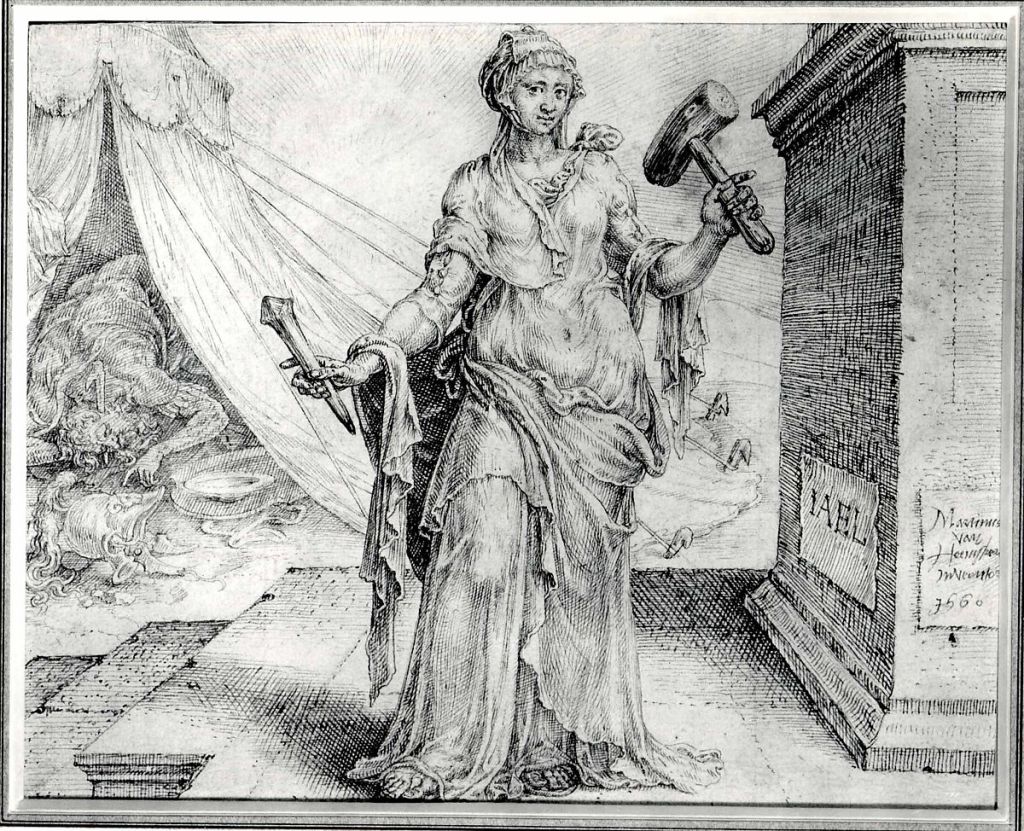
Ehud’s story (the first reading), a scatological tale the first hearers must have relished, suggests one method. And there are so many so richly deserving Eglons out there—in most times and places, and so many means of assassination. Jesus parries the question, handing the task of the continuing discipling of the disciples to the Holy Spirit: “It is not for you to know the times or periods that the Father has set by his own authority. But you will receive power when the Holy Spirit has come upon you; and you will be my witnesses…”

Ehud was the “deliverer” God raised up, but Ehud chose the method, and the editor of Judges omitted the customary “and N judged Israel for X years.” (Would you have brought your case to Ehud?) And, despite Jesus’ consistent example and teaching, method remained an issue (“Lord, do you want us to command fire to come down from heaven and consume them?” [Lk. 9:54]; “They said, ‘Lord, look, here are two swords.’ He replied, ‘It is enough’” [Lk. 22:38].)

Method remains an issue. Everything we say and do witnesses to some kingdom. May we continue seeking to allow the Spirit to teach us to witness to Jesus’ kingdom.

Shifting gears, some acknowledgement that the Lectionary has begun leading us through Acts seems appropriate. “When God wants to change the world”—recall “My God, my God…” above—“he doesn’t send in the tanks. He sends in the meek, the mourners, those who are hungry and thirsty for God’s justice, the peacemakers, and so on” (N. T. Wright, Simply Jesus p.218).

Re the Daily Office Readings July 28 Anno Domini 2020

NGC 5907 from nasa.gov.

The Readings: Judges 2:1-5, 11-23; Romans 16:17-27; Matthew 27:32-44

The NRSV’s notes on the text of today’s Romans reading attest to the difficulty of deciding how Paul ended this unique letter. Early manuscripts may put v.20b in its present location or after v.23 or after v.27. Both vv.17-20a and vv.25-27 have been identified as possible interpolations. That said, the text as we have it is the text to which the reader appends “The Word of the Lord.”

Romans 1-11 closed with a sort of hymn and doxology (11:33-36); 16:25-27 give us a second doxology. Both focus on God’s wisdom, incommensurate with our own. It’s both ironic and appropriate that they occur in this letter, which, of all Paul’s letters, skates closest to attempting to scrutinize God’s inscrutable ways.

And here in the doxologies what might seem theological abstractions and the very existential meet: it’s precisely God’s wisdom that we count on, counting on God to wisely thread the (moving) needle between God’s sovereignty and our freedom, between God’s commitments to justice and redemption. We need God to make good on the commitments to Israel, because this is the God who’s made equally weighty and risky commitments to us.

“To bring about the obedience of faith” (v.26), echoing “to bring about the obedience of faith” with which the letter started (1:5). We’re not in the grandstands, but on the field, and in God’s wisdom (?!) we also factor into the fulfillment of God’s dreams. “And I will walk among you, and will be your God, and you shall be my people” (Lev. 26:12).

Re the Daily Office Readings July 27 Anno Domini 2020

Photo by Torkos Akos

The Readings: Joshua 24:16-33; Romans 16:1-16; Matthew 27:24-31

There are a number of translation issues to notice in the Romans text:

  • Phoebe, who, commentators guess, probably brought this letter to Rome, is identified as a “deacon” (v.1 NRSV). It’s probably too early to assume the definition this word later has, but it pretty clearly indicates a recognized office.
  • Phoebe is also identified as a “benefactor” (v.2); Dunn thinks that “patron” would be a more natural translation.
  • “Junia” (v.7) “prominent among the apostles,” was recognized as a woman’s name by patristic commentators; modern translations (e.g., RSV), tended to read “Junias” (a man’s name). Current evidence re names from that period suggests that NRSV has it right in restoring “Junia” and relegating “Junias” to a footnote.

The greetings (vv.3-16) are notable by their length, probably part of Paul’s effort to win acceptance of the letter and his ministry. Notable within the greetings: “So far as this list is concerned…Paul attributes leading roles to more women than men in the churches addressed. We cannot rule out the possibility that the more restrictive rulings on women’s participation in leadership probably reflected in 1 Clement (e.g., 1 Clem. 20.7 [sic—the reference is probably to 21.7] with the Pastorals) constituted a second or third generation reaction against the greater charismatic liberty of the earlier years” (Dunn).

Re the Daily Office Readings July 26 Anno Domini 2020

Lippo Memmi

The Readings: Joshua 24:1-15; Acts 28:23-31; Mark 2:23-28

Coming from our readings in Romans there are at least two things we might wonder about from the reading from Acts—which is in fact Luke’s ending to that book.

Recalling in particular Rom 9-11, Paul’s struggle to understand Jewish resistance to and Gentile acceptance of the Gospel within the larger context of God’s faithfulness, had Paul had the opportunity to suggest edits to Luke’s final paragraphs, what, if anything, might he have suggested?

At a couple points Luke summarizes Paul’s proclamation:

  • “testifying to the kingdom of God and trying to convince them about Jesus” (v.23)
  • “proclaiming the kingdom of God and teaching about the Lord Jesus Christ” (v. 31)

(This is like Luke’s summary of Philip’s proclamation in Samaria: “who was proclaiming the good news about the kingdom of God and the name of Jesus Christ” [Acts 8:12].) What would it look like for our proclamation to be organized in this way? What might we gain? What might we lose?

Re the Daily Office Readings July 25 Anno Domini 2020

Photo by Piotr Makowski

The Readings: Joshua 23:1-16; Romans 15:25-33; Matthew 27:11-23

“I appeal to you, brothers and sisters, by our Lord Jesus Christ and by the love of the Spirit, to join me in earnest prayer to God on my behalf, that I may be rescued from the unbelievers in Judea, and that my ministry to Jerusalem may be acceptable to the saints, so that by God’s will I may come to you with joy and be refreshed in your company” (15:30-32).

“Earnest prayer” is perhaps an understatement. This is the visit to Jerusalem in which Paul is seized in the temple, taken into Roman custody, subjected to various inconclusive hearings—until his appeal to Caesar results in his finally reaching Rome. That long sequence of events (Acts 21:17-28:31) started with Paul putting into practice “Each of us must please our neighbor for the good purpose of building up the neighbor” (Rom 15:2), building/repairing bridges with the Torah-observant Christians. Paul has a notable ability to send many of us up the wall, but there’s no question that, as the saying goes, he both talked the talk and walked the walk.

Looking further ahead:

“But now, with no further place for me in these regions, I desire, as I have for many years, to come to you when I go to Spain. For I do hope to see you on my journey and to be sent on by you, once I have enjoyed your company for a little while” (15:23-24). Dunn notices of the verb translated “to be sent on by you” that “In earliest Christianity it becomes almost a technical term for the provision made by a church for missionary support.” Even though he’s had no prior contact with these folk, Paul apparently judges he has more to gain than lose by giving them a heads-up that he’s going to be looking for funding.

Re the Daily Office Readings July 24 Anno Domini 2020

http://www.ccel.org/bible/phillips/JBPhillips.htm

The Readings: Joshua 9:22–10:15; Romans 15:14-24; Matthew 27:1-10

Picking up with Rom 15:7, Paul is reprising the story he presented in Rom 1-8. God promises that Abraham will be “the father of many nations” (4:17); the Messiah makes it happen; Paul has no insignificant role in this long-anticipated end-time ingathering of the Gentiles.

Arguing for understanding Rom 7:14-25 as describing Paul’s Christian experience, Cranfield recalls Shakespeare:

                                             But I can see his pride
Peep through each part of him? (Henry 8th I.i.68f)

And, of course, Paul in today’s text is not immune. But in the midst of plenty of reasons for discouragement, the sense that God is at work creating joy and beauty and that we get to be part of that—we could use more of that “thing with feathers” (yesterday’s post).

Re Daily Office Readings July 23 Anno Domini 2020

Photo by James Wainscoat

The Readings: Joshua 9:3-21; Romans 15:1-13; Matthew 26:69-75

Emily Dickinson:

“Hope” is the thing with feathers –
That perches in the soul –
And sings the tune without the words –
And never stops – at all –

These lines might not be a bad lens through which to read today’s Romans text. Christ, responding to the “God of hope” “has become a servant of the circumcised.” So John recalls the time when Jesus “got up from the table, took off his outer robe, and tied a towel around himself. Then he poured water into a basin and began to wash the disciples’ feet and to wipe them with the towel that was tied around him.… After he had washed their feet, had put on his robe, and had returned to the table, he said to them, ‘Do you know what I have done to you? You call me Teacher and Lord– and you are right, for that is what I am. So if I, your Lord and Teacher, have washed your feet, you also ought to wash one another’s feet’” (13:4-14).

Jesus had so many reasons to be discouraged with this lot (with us). But that thing with feathers…

So it’s more than appropriate that “May the God of hope fill us with all joy and peace in believing through the power of the Holy Spirit” be one of the sentences with which Morning Prayer can send us out into our day (BCP 60, 102).

Re the Daily Office Readings July 22 Anno Domini 2020

The Readings: Joshua 8:30-35; Romans 14:13-23; Matthew 26:57-68

Photo by Lora

Nils Dahl, the Norwegian New Testament scholar, remarked that some biblical texts needed warning labels. Today’s Romans text is probably one of them.

“Christians do not drink, smoke, dance, play cards, or go to movies.” In Christian traditions endorsing such lists, the listed conduct is simply wrong. When cracks appear in this argument: the back-up argument: if you do it, a weaker brother or sister will stumble (conflating vv. 13 and 15). The result: vv.1-12 are silenced and the purported weaker brother’s/sister’s conscience is the norm.

Paul has a legitimate concern: “We who are strong ought to put up with the failings of the weak, and not to please ourselves. Each of us must please our neighbor for the good purpose of building up the neighbor. For Christ did not please himself; but, as it is written, “The insults of those who insult you have fallen on me.” (15:1-3; the argument in 14:13-23 continues in 15:1-6). But it is hard to believe that he did not have ample opportunity to observe the process described in the previous paragraph playing out in his own context.

Perhaps Paul’s argument goes off the tracks with the decision to label “eat anything” as the argument of the “strong” and “eat vegetables” as the argument of the “weak,” thereby identifying which group is to make concessions.

Admittedly, a bit of a rant. What do you think?

Re the Daily Office Readings July 21 Anno Domini 2020

Humanity Wall by Matteo Pganelli

The Readings: Joshua 8:1-22; Romans 14:1-12; Matthew 26:47-56

“Owe no one anything, except to love one another; for the one who loves another has fulfilled the law” (13:8). We might read most of Rom 14-15 as unpacking this exhortation with respect to the food laws and calendar in the Torah. Paul and the Jerusalem Council (Acts 15:19-21) agree that Gentiles are not bound by these; opinion is split as to whether Jews who follow Jesus are bound (Mark’s “(Thus he declared all foods clean.)” [7:19] does not appear in Matthew’s parallel text [15:17].) Today’s text: “Let all be fully convinced in their own minds.… Why do you pass judgment on your brother or sister?” For Paul’s vision of united Jewish/Gentile communities, this is crucial. And Paul’s exhortations have remained relevant in countless parallel situations.

Parallel situations. “A Letter on Justice and Open Debate” appeared in Harper’s on July 7, as reported in the NYT.

Not that things to wonder about are lacking. Here are three:

  1. Re eating, the Jerusalem Council: “to abstain only from things polluted by idols and from fornication and from whatever has been strangled and from blood” (Acts 15:20). Is Paul assuming the last two items, or overwriting them?
  2. The “weak/strong” (15:1) shorthand would probably be deeply offensive to those labeled “weak.” Does Paul use it to ingratiate himself with the “strong” since he’s about to ask concessions of them (vv.13ff), or for some other reason?
  3. “Why do you pass judgment on your brother or sister?” Paul’s question is erased by the claim “On this question there can be no disagreement,” a claim Paul occasionally (?) makes (e.g., Gal 1:8-9). Is it not past time to recognize “Here there can be no disagreement” as a self-disqualifying power grab?

Re the Daily Office Readings July 20 Anno Domini 2020

The Abduction of the Sabine Women by N. Poussin

The Readings: Joshua 7:1-13; Romans 13:8-14; Matthew 26:36-46

The NRSV treats the Romans text as two paragraphs: vv.8-10 and 11-14. That looks right, with the first focusing on conduct from the perspective of love, the second on conduct from the perspective of the historical moment. The transition (“Pay everyone what is owed… Owe no one anything…” [New English Translation]) suggests that Paul is coming at the previous material (13:1-7? 12:9-13:7?) from a complementary perspective. I wonder if the selection of themes (the commandments in v.9, the deeds of the night in v.13) is not motivated in part by a concern that 13:1-7 not be understood as giving the governing authorities (13:1) a blank check.

(A variety of Paul’s texts, e.g., 1 Cor 7:9, prompt readers to wonder about his attitude toward sex. I wonder if the choice of illustrations in 13:13 (and 1:26-27?) is not less about that, and more about Rome’s reputation. As the Jeffrey Epstein affair has reminded us, sex is often about power and privilege.)

Asked by a scribe about the which commandment was first of all, Jesus replied “The first is, ‘Hear, O Israel: the Lord our God, the Lord is one; you shall love the Lord your God with all your heart, and with all your soul, and with all your mind, and with all your strength.’ The second is this, ‘You shall love your neighbor as yourself.’ There is no other commandment greater than these” (Mk. 12:29-31, citing Deut 6:4-5 and Lev 19:18). I wonder if this reply is not echoed in Paul’s exhortations in 12:1ff. “You shall love the Lord your God”: 12:1-2(3-8); “You shall love your neighbor as yourself”: 12:9-13:10. So Paul can focus on the second half of the law (the horizontal) in vv.9-10 because he started with the first half (the vertical) in 12:1-2(3-8)?