Tag Archives: Episcopal

Re the Daily Office Readings 5/8/2020

The Readings: Exodus 34:18-35; 1 Thessalonians 3:1-13; Matthew 5:27-37

Two brief observations. “You shall not boil a kid in its mother’s milk” (v.26b). The command also occurs in 23:19, one of many bits of evidence that a complex history of tradition and editing lies behind the present form of these chapters. Exodus 34 rather looks like an alternative tradition of the Sinai covenant, repurposed editorially as an account of the covenant renewal.

Re the specific commandment, Jeffrey Tigay in the Jewish Study Bible comments “As noted by Philo…Ibn Ezra, and Rashbam, this law is similar to the rules that forbid acts of insensitivity against animals such as slaughtering cattle on the same day as their young, sacrificing cattle in their first week, and taking a mother bird along with her fledglings or her eggs (22.29; Lev. 22:27-28; Deut. 22:6-7).” One example of the largely untapped resources for ethical reflection on how we live on this earth with our fellow creatures.

(For “how we live” less about altruism and more about self-interest, this from The Guardian.)

“The law indeed was given through Moses; grace and truth came through Jesus Christ” (Jn. 1:17). True, but quite misleading if taken as a description of contrasting patterns of divine action in the Old and New Testaments. Even the most cursory reading of Exodus 32-34 shows that the giving of the law and its re-giving to this “stiff-necked people” (34:9; recall Spufford’s HPtFtU) is sheer grace on the part of Jesus’ Father:

“The LORD, the LORD, a God merciful and gracious, slow to anger, and abounding in steadfast love and faithfulness, keeping steadfast love for the thousandth generation, forgiving iniquity and transgression and sin, yet by no means clearing the guilty, but visiting the iniquity of the parents upon the children and the children’s children, to the third and the fourth generation.”

The other readings…

I’ve found it hard to read 1 Thessalonians sympathetically this time around: Paul too often sounds smarmy. But then I’m reading from a (sub-)culture with different rhetorical norms, and from a group not experiencing persecution. Abraham Smith has been helpful (again), noticing how much of Paul’s vocabulary challenges the pretensions of Rome, including ‘peace and security’, ‘gospel’, ‘savior’, and even ‘father’ (Augustus had really liked that title). In that fundamental respect Moses and Paul are working the same project: nurturing a community that is life-giving, not death-dealing. In this country we have a way to go before Christians are again known as the folk whose political allegiances lie Elsewhere.

Re the Daily Office Readings 5/7/2020

The Readings: Exodus 34:1-17; 1 Thessalonians 2:13-20; Matthew 5:21-26

Moses’ intercession succeeds. The LORD proclaims the Name and announces the renewal of the treaty (covenant)—along with its conditions.

The proclamation of the Name (vv.6-7) is, judging by the number of times it is cited elsewhere (e.g., Numbers 14:17-19; Nehemiah 9:16-19; Psalm 103:8; Jonah 4:1-3), the most important divine description in the Old Testament. Jewish tradition hears in it the thirteen attributes of divine mercy, and the text plays an important role in the liturgy. Without it, Jesus’ life and teaching make no sense.

The treaty and its conditions: here’s something from Brueggemann (New Interpreter’s Bible Commentary) to chew on:

“The covenant requires that Israel undertake complete loyalty to God in a social context where attractive alternatives exist. In that ancient world, the attractive alternative was the established religion of the inhabitants of the land, with all its altars, pillars, and sacred poles—its technology to ensure productivity. In our own Western context, mutatis mutandis, the attractive alternatives to covenanted faith are likely to be the techniques of consumerism, which provide ‘the good life’ without rigorous demand or cost and without the covenantal requirement of the neighbor. Then, as now, the jealous God calls for a decision against that easy alternative.”

The other readings…

…leave me with more questions than answers. Jesus’ “if you are angry” is probably not about an emotion but—given the rest of the paragraph—an action. Paul’s “the Jews… [who] displease God and oppose everyone”: an example of this anger? Would it have been better to end v.16 with “overtaken us at last”? (And whatever Paul was doing, to what degree is he responsible for the afterlife of his words?) Abraham Smith (also The New Interpreter’s Bible Commentary) makes the helpful observation that Paul’s words leave the Roman Empire offstage, although “the Jews” (however understood) pale in comparison to the fear and anxiety the Empire generates.

None of this is academic. We have enemies, who, unless we’re close to the top of the food chain, do us real harm. Anger is often (particularly for men) our go-to emotion, and strains to transition from emotion to action. What do I do with that? When do I use “them,” when “us”? LORD have mercy.

Re the Daily Office Readings 5/6/2020

The Readings: Exodus 33:1-23; 1 Thessalonians 2:1-12; Matthew 5:17-20

The chapter opens with a divine announcement of a bleak future: Moses and the people Moses brought from Egypt (v.1) are to go to the promised land but without the Lord’s presence. The people show signs of serious repentance; Moses continues to intercede, gaining first the Lord’s presence for Moses’ benefit (v.14) and finally the Lord’s presence for the people’s benefit (v.17). The point of Moses asking to see the Lord’s glory (v.18) is unclear; the effect is a parallel between the divine manifestation to the people and the making of the covenant (chapters 19-24) and the divine manifestation to Moses and the renewal of the covenant (chapter 34).

Childs comments “The Old Testament rather runs the risk of humanizing God through its extreme anthropomorphism—God changes his mind, v.5—than undercut the absolute seriousness with which God takes the intercession of his servant. Moses, on his part, refuses anything less than the full restoration of Israel as God’s special people.”

Abraham’s intercession gave Sodom and Gomorrah a decent shot at survival. Moses’ intercession secures a future for his people. To what intercession might this text motivate us?

And speaking of prayer…

The sandhill cranes were feeding in our yard again, causing this from Madeleine L’Engle’s And it was good to jump out:

“I was asked how we could pray for our planet, with the devastating wars which are tearing it apart, with greed fouling the air we breathe and the water we drink. And I replied that the only way I know how to pray for the body of our planet is to see it as God meant it to be, to see the sky as we sometimes see it in the country in wintertime, crisp with stars, or to see the land with spring moving across it, the fruit trees flowering and the grass greening, and at night hearing the peepers calling back and forth, and the high, sweet singing of the bats.”

There’s something of L’Engle’s “to see it as God meant it to be” in the gift of the presence of the cranes with their beauty and grace. L’Engle makes me wonder if their presence isn’t also an invitation to understand (offer up?) my delight as prayer, not only for them but for all God’s creatures, and an invitation to learn to see the beauty and grace proper to all these creatures.

Re the Daily Office Readings 5/5/2020

The Readings: Exodus 32:21-35; 1 Thessalonians 1:1-10; Matthew 5:11-16

Moses has persuaded the LORD not to destroy the people and start over with Moses, but there’s still the problem of the people “running wild (for Aaron had let them run wild, to the derision of their enemies).” Moses has to ask for volunteers to salvage the situation; the Levites step up; the seriousness of the situation is reflected in the death toll.

The bigger problem: with the treaty torn up (the tablets broken, v.19), do the LORD and the people have a future, and on what basis? When Moses returns to the LORD to plead for forgiveness, the divine response is two-fold: a command to lead the people to the Land accompanied by an “angel.” Not by the LORD? All the instructions regarding the tabernacle and the priesthood (chapters 25-31): are they all now moot? The plague of unspecified severity (v.34, omitted, oddly, by the Lectionary) seems almost an afterthought.

Looking back over the whole chapter, what advice would we have given Aaron, with Moses off stage for who knows how long and the people expressing real needs? Or we can flip the question. Followers’ expectations constrain their leaders. When do our expectations place our leaders in Aaron’s situation?

Scripture

This blog focuses largely on Scripture. Why might that be worth the trouble? This post, which I expect to revise periodically, notes possible answers.

Madeline L’Engle

So what do I believe about Scripture? I believe that it is true. What is true is alive and capable of movement and growth. Scripture is full of paradox and contradiction, but it is true, and if we fallible human creatures look regularly and humbly at the great pages and people of Scripture, if we are willing to accept truth rather than rigidly infallible statements, we will be given life, and life more abundantly. And we, like Joseph, will make progress towards becoming human. (Sold into Egypt)

Thomas Merton

The truth is that the surface of the Bible is not always even interesting. And yet when one does finally get into it, in one way or other, when one at last catches on to the Bible’s peculiar way of saying things, and even more to the things that are said, one finds that he is no longer simply questioning the book but being questioned by it.

If we approach it with speculative questions, we are apt to find that it confronts us in turn with brutally practical questions. If we ask it for information about the meaning of life, it answers by asking us when we intend to start living? Not that it demands that we present suitable credentials, that we prove ourselves in earnest, but more than that: we are to understand life not by analyzing it but by living it in such a way that we come to a full realization of our own identity. And this of course means a full realization of our relatedness to those with whom life has brought us into an intimate and personal encounter.

…the understanding of the Bible is, and should be, a struggle: not merely to find meanings that can be looked up in books of reference, but to come to terms personally with the stark scandal and contradiction in the Bible itself. It should not be our aim merely to explain these contradictions away, but rather to use them as ways to enter into the strange and paradoxical world of meanings and experiences that are beyond us and yet often extremely and mysteriously relevant to us. (Opening the Bible)

Simone Weil

For it seemed to me certain, and I still think so today; that one can never wrestle enough with God if one does so out of pure regard for truth. Christ likes us to prefer truth to him because, before being Christ, he is truth. If one turns aside from him to go toward the truth, one will not go far before falling into his arms. (As cited in L’Engle’s And it was good)

Re the Daily Office Readings 5/4/2020

The Readings: Exodus 32:1-20; Colossians 3:18––4:18; Matthew 5:1-10

In a post-Christian society ‘sin’ turns out to be a pretty useless word, if one is, like Francis Spufford, trying to commend Christianity to that society. Spufford’s solution in his book Unapologetic is to talk about the human propensity to fuck things up (HPtFtU). HPtFtU is on full display in our first reading: Israel is newly freed from Egypt, on a beeline to a land flowing with milk and honey, the ink not yet dry—so to speak—on the treaty that secures Israel’s status as the “treasured possession” of the God who’s just gained their freedom without breaking a sweat. The text is an opportunity to wrestle with Spufford’s diagnosis: “The HPtFtU is bad news, and like all bad news is not very welcome, especially if you let yourself take seriously the implications that we actually want the destructive things we do, that they are not just an accident that keeps happening to poor little us, but part of our nature; that we are truly cruel as well as truly tender, truly loving and at the same time truly likely to take a quick nasty little pleasure in wasting or breaking love, scorching it knowingly up as the fuel for some hotter or more exciting feeling.”

Re the Daily Office Readings 5/3/2020

Photo by Victoria Borodinova on Pexels.com

The Readings: Exodus 28:1-4, 30-38; 1 John 2:18-29; Mark 6:30-44

William Propp, reflecting on our first reading: “The Priestly Writer continually wrestles with a paradox so excruciating it verges on the comic. Israel and Yahweh crave nearness, yet can scarcely tolerate one another” (The Anchor Yale Bible). So here the description of the high priest’s clothing is punctuated with unnerving explanations: “so that he may not die… take upon himself any guilt incurred in the holy offering that the Israelites consecrate.”

How might we read the text? The New Testament sets the framework. Jesus is our High Priest (Hebrews, e.g., 2:17), echoed in the BCP’s prelude to confession in the Penitential Orders, (e.g., p.352) and the prayer before receiving communion (p.834). Christians, corporately (e.g., Eph 2:21) and individually (e.g., 1 Cor 6:18-20) are the Temple, echoed in this Collect:

“Almighty God, you have built your Church upon the foundation of the apostles and prophets, Jesus Christ himself being the chief cornerstone: Grant us so to be joined together in unity of spirit by their teaching, that we may be made a holy temple acceptable to you; through Jesus Christ our Lord, who lives and reigns with you and the Holy Spirit, one God, for ever and ever. Amen” (BCP p.230)

So, in the New Testament the Church is a dangerous place, whether in Jerusalem (Ananias and Sapphira, Acts 5:1-11) or Corinth (“many of you are weak and ill, and some have died” in 1 Cor 11:27-30), both occurring at the intersection of issues of money and status. “You shall not make wrongful use of the name of the LORD your God, for the LORD will not acquit anyone who misuses his name” (Exod 20:7): where is the danger greater than in the Church?

So caution is important. Ditto clothing. Not the sanctuary garments for the ordained: after Jesus performed his supreme high priestly act stripped naked such garments are clearly in the “things indifferent” (adiaphora) category. But, picking up on Colossians’ references to stripping off and clothing oneself in yesterday’s readings (Col 3:9-12), we might wonder whether the proper clothing for Aaron and sons (Exod 28:41) and for ourselves (Rom 13:14; Eph 4:24; military: Rom 13:12 Eph 6:11-17 1Th 5:8) are analogous.

“Above all, clothe yourselves with love, which binds everything together in perfect harmony” (Col. 3:14). Even (especially?) in this season of COVID 19, clothing is important.

Re the Daily Office Readings 5/2/2020

The Readings: Exodus 25:1-22; Colossians 3:1-17; Matthew 4:18-25

Since the Lectionary omits much of the following chapters, a quick overview. Exodus 25-31 records the instructions Moses receives during his 40 days on the mountain regarding the portable shrine (the Tabernacle; chapters 25-27) its personnel (chapters 28-29), and related arrangements (chapters 30-31). Execution of the instructions follows (Exodus 35-40) but only after the unfortunate business of the Golden Calf and its aftermath.

“And have them make me a sanctuary, so that I may dwell among them.… There I will meet with you, and from above the mercy seat, from between the two cherubim that are on the ark of the covenant, I will deliver to you all my commands for the Israelites” (vv.8, 22).

Centuries later at the dedication of the temple, Solomon prays: “But will God indeed dwell on the earth? Even heaven and the highest heaven cannot contain you, much less this house that I have built!” (1 Kings 8:27). But there it is.

The Celtic Christians talked of thin places, places where heaven and earth met. The Tabernacle, a portable thin place, not in some remote place, but at the center of the camp. And, as Israel’s long history will show, G-d will sometimes reside in, sometimes bypass the Tabernacle/Temple. Charles Williams: “the sacrifice must be made ready, and the fire will strike on another altar.”

In our experience, where has G-d shown up expectedly? Unexpectedly?

Coda

What happens if we come to the second reading with the first still ringing in our ears?

Exodus starts with a list of raw materials for the tabernacle (vv.3-7); Paul sorts through the raw materials appropriate for the Colossians as tabernacle (vv.5, 8-9, 12-14). (Now it’s the peace of Christ ruling the hearts, the word of Christ dwelling “richly”).

But the dominant metaphor seems to be clothing—perhaps recalling how baptisms were done—what’s to be stripped off (v.9), what’s to be put on (vv.12, 14).

Half awake, I’m headed for the coffee. Perhaps what the text wants me to notice is that even half awake I’m making choices: what to put on, what to leave in the wardrobe.

Re the Daily Office Readings 5/1/2020

The Readings: Exodus 24:1-18; Colossians 2:8-23; Matthew 4:12-17
(For Friday, Week of 3 Easter, not Saint Philip and St James, Apostles)

Exodus 24 narrates the ratifying of the covenant (treaty) announced in Exodus 19 (“if you obey my voice and keep my covenant, you shall be my treasured possession out of all the peoples. Indeed, the whole earth is mine, but you shall be for me a priestly kingdom and a holy nation”). After God addresses the people directly (the “Ten Commandments”), the people ask that Moses receive subsequent instruction and pass it on. The subsequent instruction occupies Exodus 20:22-23:33; Moses passes it on to the people; the people respond—as they had in 19:8—“All the words that the LORD has spoken we will do;” now the two-part ratification.

All the people participate in the first part, involving pillars, sacrifices, blood, reading, declaration, more blood, ending with Moses’ “See the blood of the covenant that the Lord has made with you in accordance with all these words.” Ritual is language, often—like here—performative language, evocative, more like poetry than prose, only somewhat translatable. Blood, one of our most potent symbols for life, death, identity. The blood of circumcision, the ram’s blood (not Isaac’s!) shed on that other mountain, the lamb’s blood at Passover, this blood… The New Testament references to the blood of Christ draw on all this, and we Gentiles must work backwards, not so much to understand as to get a sense of the mystery to which we’re being pointed.

A representative group participates in the second part: “Then Moses and Aaron, Nadab, and Abihu, and seventy of the elders of Israel went up, and they saw the God of Israel. Under his feet there was something like a pavement of sapphire stone, like the very heaven for clearness. God did not lay his hand on the chief men of the people of Israel; also they beheld God, and they ate and drank.”

That may be a scene to let sink deep into our imaginations. The stories Israel’s neighbors told about their gods help us recognize that if it’s treaty-making, it’s also a victory celebration. I wonder how it might have worked in Isaiah’s imagination.

“On this mountain the LORD of hosts will make for all peoples
a feast of rich food, a feast of well-aged wines,
of rich food filled with marrow, of well-aged wines strained clear.
And he will destroy on this mountain
the shroud that is cast over all peoples,
the sheet that is spread over all nations;
he will swallow up death forever.” (25:6-8a)

How might this (Exodus) scene shape our participation in the Eucharist? The Body of Christ, the Blood of Christ: how like or unlike their beholding God?

Re the Daily Office Readings 4/30/2020

The Readings: Exodus 20:1-21; Colossians 1:24—2:7; Matthew 4:1-11

Five Takes on the Ten

Moses thinks the special effects are to instill fear to prevent Israel sinning (v.20). Perhaps he is right; God is not above using fear. But training wheels are designed to be temporary.

Commands. Better, perhaps, than a fickle deity with constantly changing priorities, or a coy deity demanding that we guess.

“I am the LORD your God, who brought you out of the land of Egypt, out of the house of slavery.” Perhaps the most important part of the text: this is who God is, this is what this God has already done.

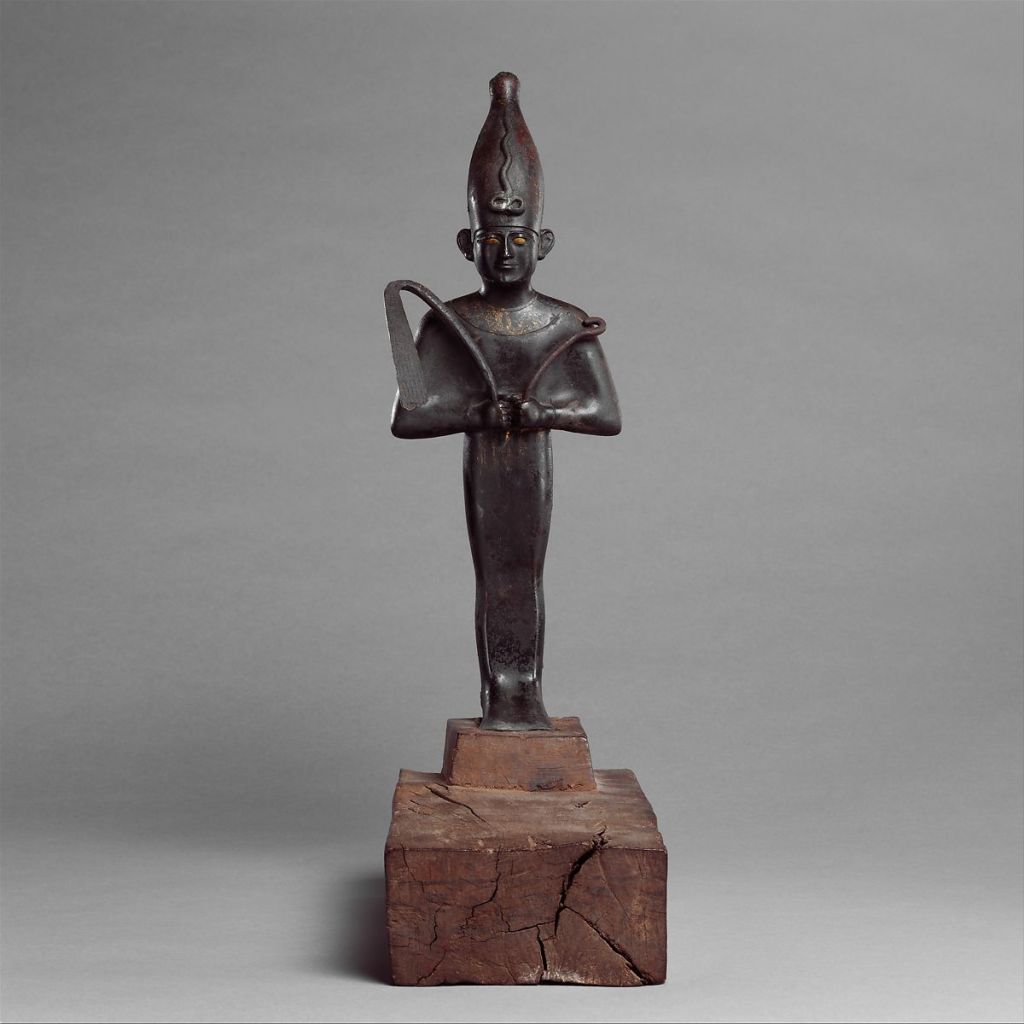
January 6, 1941, Franklin Roosevelt gave the “Four Freedoms” speech. We could as easily call today’s text the “Ten Freedoms” speech. Examples: #1: free not to worry about keeping Anubis, Anum, Atum, Bastet, Geb, Horus, Nephthys, Nut, Osiris, Isis, Ra, Seth, Shu, and Tefnut happy. #4: free to rest every seventh day. #6ff: free not to have to murder, commit adultery, steal, etc. to maintain one’s standing or satisfaction.

Matthew lets us watch the spirit of the Exodus text in action. Because the LORD is Jesus’ God, Jesus is free to send the tempter packing, free not to diminish his own humanity, free to devote his attention to restoring ours.

O God, the author of peace and lover of concord,
to know you is eternal life and to serve you is perfect freedom:
Defend us, your humble servants, in all assaults of our enemies;
that we, surely trusting in your defense,
may not fear the power of any adversaries;
through the might of Jesus Christ our Lord. (BCP 99)