Tag Archives: Jerusalem

The God Who would be at Home with Us (6th Sunday of Easter, 5/25, 2025)

Readings (Using the John 14 reading)

I hope you’ve not skimped on the coffee this morning, because we’re going to jump into the deep end, that reading from the Revelation. That, in turn, will set us up to think about what the Church is for—not a bad question since we’re only two weeks out from celebrating Pentecost.

Revelation likes images that shimmer, enigmatic images. John hears “the Lion of the tribe of Judah, the Root of David,” but what John sees is “a Lamb standing as if it had been slaughtered” (5:5-6). So here, toward the end of the book, John hears “the bride, the wife of the Lamb,” but what John sees is “the holy city Jerusalem coming down out of heaven from God” (21:9-10). This is something like what we encounter in Physics 101. Is light a particle or a wave? Yes, depending on what you’re trying to explain.

The new Jerusalem. No need for a temple, or a sun, for that matter: “for its temple is the Lord God the Almighty and the Lamb.… for the glory of God is its light, and its lamp is the Lamb.”

“The nations will walk by its light, and the kings of the earth will bring their glory into it.” Pull the camera back to include John’s Bible (our Old Testament) and it’s clear that this New Jerusalem is finally fulfilling the hopes for the original Jerusalem. Recall Isaiah:

In days to come
the mountain of the LORD’s house
shall be established as the highest of the mountains,
and shall be raised above the hills;
all the nations shall stream to it.
Many peoples shall come and say,
“Come, let us go up to the mountain of the LORD,
to the house of the God of Jacob;
that he may teach us his ways
and that we may walk in his paths.”
For out of Zion shall go forth instruction,
and the word of the LORD from Jerusalem. (2:2-3)

Something beautiful is happening, and the nations want in on it.

Then there’s that river the prophet Ezequiel saw flowing from God’s presence: “On either side of the river is the tree of life with its twelve kinds of fruit, producing its fruit each month; and the leaves of the tree are for the healing of the nations.” So healing is needed—still! The city has gates, the classic means of controlling access, but the gates are never shut. A bit later we’ll hear “The Spirit and the bride say, ‘Come.’ And let everyone who hears say, ‘Come.’ And let everyone who is thirsty come. Let anyone who wishes take the water of life as a gift” (22:17). Jerusalem is finally fulfilling its role, being the place where God’s glory is visible and healing is freely available.

I mentioned enigmatic images a bit ago, and in its final chapters the Revelation takes these to a different level in the form of two juxtaposed stories. In the one, a decisive battle in which evil is destroyed and the great white throne before which everything is sorted out. On the other hand, open-gated Jerusalem offering glory, joy, and healing to all who would enter. Well, which is it? What the Revelation may want to show us is that within the limits of human language and human understanding our clearest picture is this pair of starkly contrasting images.

Perhaps this should not be surprising. Recall how our story starts. Genesis gives us not one, but two creation stories. In one everything is good from the start, the humans play no active role, the seven days are as much liturgy as anything. In the other God works by trial and error, Adam plays an important role, and the good emerges at the end of the process: “This at last is bone of my bones and flesh of my flesh; this one shall be called Woman, for out of Man this one was taken” (2:23). To capture the reality of the beginning and ending of human history Scripture gives us pairs of stories.

What may be at stake in these pairs of stories is the challenge of doing justice to God’s sovereignty and human freedom. There’s a popular saying attributed to various folk (Augustine, Ignatius, etc.) “Pray as though everything depended on God. Work as though everything depended on you.” Maybe, but it could be heard as a call to run ourselves ragged. I like what the Ignatian author Jim Manney does with it:

“I prefer to reverse it: ‘pray as if everything depends on you, and work as if everything depends on God.’ This means that prayer has to be urgent: God has to do something dramatic if everything depends on me. It also puts our work in the right perspective: if it depends on God, we can let it go. We can work hard but leave the outcome up to him. If God is in charge we can tolerate mixed results and endure failure.”[1]

OK, what of the Church? In John’s vision there’s the New Jerusalem, finally doing its job. Sounds pretty good. What happens until then? Let’s circle back to the angel’s words: “Come, I will show you the bride, the wife of the Lamb.” “The bride, the wife of the Lamb:” that sounds like the language used elsewhere in the New Testament for Christ as bridegroom and the Church as bride. Or, to come at John’s vision from another angle, from 1st Corinthians: “Do you not know that you are God’s temple and that God’s Spirit dwells in you (3:16)?” Or, more extensively in Ephesians, “So then you are no longer strangers and aliens, but you are citizens with the saints and also members of the household of God, built upon the foundation of the apostles and prophets, with Christ Jesus himself as the cornerstone. In him the whole structure is joined together and grows into a holy temple in the Lord; in whom you also are built together spiritually into a dwelling place for God” (2:19-22).

Because God desires that all enter freely into joy, into God’s presence, God really needs a place where God can be at home, where God’s healing glory is visible, and that is the Church. That’s the dynamic in this morning’s psalm, God’s blessing here that ripples out to the corners of the earth. That’s at the core of today’s Gospel: “we will come to them and make our home with them.” This is why, by the way, the New Testament letters devote virtually no attention to evangelism and virtually all their attention to the elements in congregational life that make God’s healing glory easier or harder to see.

And this sweeping vision plays out in the decisions of specific women and men, folk like Lydia, that dealer in purple cloth from our first reading, folk like you and me.

We’re here, God knows, because we need to be here. And in the larger story that the Revelation brings into focus, we’re here because God needs places where God’s at home, where God’s healing glory can be visible in the common life of God’s people, whether gathered together or scattered through our communities during the week. A tall order, yes, which is why Jesus speaks of the Holy Spirit on approach, the flaps extending, wheels down.


[1] https://www.ignatianspirituality.com/work-as-if-everything-depends-on-god/ (accessed 5/16/2022).

Glory: on whose terms? (The First Sunday after Christmas Day, 12/29/2024)

Readings

Good morning, and Merry Christmas!

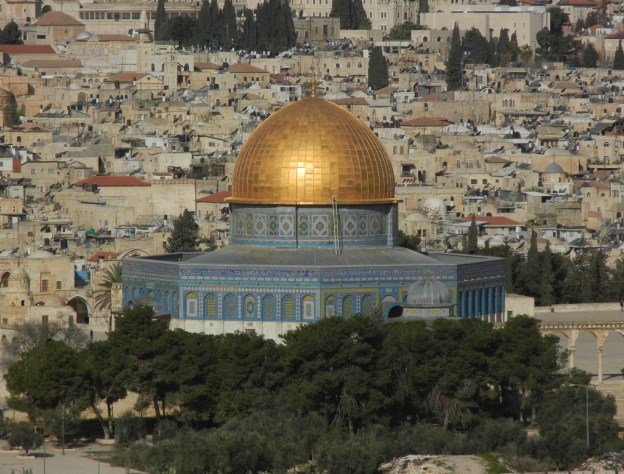
Our lectionary has set a rich feast before us; the sermon could go in any number of directions. We might focus on John the Baptist and the surprising logic of being a witness. The Word the Gospel celebrates is described as a light. Why does the light need a witness? We might focus on Jesus’ coming as opening the path to our becoming God’s daughters and sons. Or we might—and we will—wonder about the odd disconnect between the passion for Jerusalem in Isaiah and the psalm and those sober lines in the Gospel: “He came to what was his own, and his own people did not accept him.”

Jerusalem, both a specific city at a particular longitude and latitude and one of the Bible’s central symbols for God’s passion to create and preserve a life-giving community. God deals with us individually. But because to be human—as Aristotle memorably defined it—is to be a political animal, dealing with us individually means dealing equally with our communities and institutions.

For Zion’s sake I will not keep silent,
and for Jerusalem’s sake I will not rest,
until her vindication shines out like the dawn,
and her salvation like a burning torch.

So Isaiah. And in the psalm the salvation of the individual and the salvation of Jerusalem are inseparable:

Worship the Lord, O Jerusalem; *
praise your God, O Zion;
For he has strengthened the bars of your gates; *
he has blessed your children within you.
He has established peace on your borders; *
he satisfies you with the finest wheat.

And in the run-up to Jesus’ birth as described in Luke’s Gospel this vision and these hopes are on full display. And then the lines in the Gospel prologue: “He came to what was his own, and his own people did not accept him.” Defeat snatched from the jaws of victory.

How do we make sense of this strange story? The convenient answer: well, what do you expect from the Jews? Tapping into the latent anti-Semitism in our culture is convenient, because it lets us off the hook. But with Jesus, the apostles, all the New Testament writers being Jews, that’s a non-starter. How do we make sense of it all going sideways?

Let’s go back to Isaiah’s words:

For Zion’s sake I will not keep silent,
and for Jerusalem’s sake I will not rest,
until her vindication shines out like the dawn,
and her salvation like a burning torch.

In Jesus’ time Jews argued about how to hear those words. At one end of the scale: Jerusalem’s vindication as the condemnation of the gentiles. (The Zealots were here: the only good Roman is a dead Roman.) The other end of the scale: Jerusalem’s vindication as the salvation of the gentiles. And that’s where Jesus was.

It starts already in the angel’s proclamation to the shepherds: “Do not be afraid; for see– I am bringing you good news of great joy for all the people” (Luke 2:10).

Fast forward to Jesus reading Isaiah in the synagogue in Nazareth: “The Spirit of the Lord is upon me, because he has anointed me to bring good news to the poor. He has sent me to proclaim release to the captives and recovery of sight to the blind, to let the oppressed go free, to proclaim the year of the Lord’s favor.” From a nationalistic perspective, so far so good. But then Jesus chooses examples: Elijah in the famine providing for a gentile, that widow at Zarephath in Sidon; Elisha healing Naaman the Syrian of leprosy.

That argument keeps popping up, so that at the end when the Jerusalem crowd has the choice of sparing Barabbas, who’s killed Romans, and Jesus, who hasn’t…

“He came to what was his own, and his own people did not accept him”—because Jesus did not offer vindication on their terms.

So God’s story ends in defeat or in a long drawn-out stalemate? Hardly. “But to all who received him, who believed in his name, he gave power to become children of God.” Receiving Jesus, believing in Jesus’ name: beginning with Holy Baptism that’s a life-long process. We don’t easily give up getting vindication on our own terms. But through this process God’s glory becomes visible, which was and is the point of Jerusalem’s vindication. Paul writes to the Corinthians: “You are God’s building… God’s temple is holy and you are that temple” (1 Cor 3:9, 17).

God’s glory, God’s healing, off-the-scale love in all its beauty and terror. (For John the Evangelist, recall, Jesus’ glorification and Jesus’ crucifixion are the same event.) God’s glory, Jerusalem’s vindication on God’s terms, the healing of the nations. We celebrate it in Jesus; Paul looks to celebrate it everywhere from Corinth…to Sun Prairie. While John the Evangelist writes “and we have seen his glory,” the story doesn’t even pause there. We assemble, we extend our hands to receive into ourselves Jesus’ Body, Jesus’ Blood, because there’s a whole world out there hungry for God’s glory.

Amen, and Merry Christmas!

Jerusalem, David, and the stories we tell (8th after Pentecost, 7/14/2024)

Lessons (but reading all of 2 Samuel 6)

These last two weeks David and Jerusalem have been centerstage as David captures Jerusalem (last Sunday’s reading) and brings the Ark into it (today’s reading). In our days is there a city more contested? So what might these stories of its early history suggest to us?

And in our first reading the Revised Common Lectionary has—probably inadvertently—raised a second question: how do we recount our histories? The difference between the full chapter and the parts selected by the RCL is dramatic. In our days, renewed energy around the questions of what’s in our high school history books, what monuments we keep or tear down, what names we keep on military bases, schools, etc. or not. And again, what might the 2nd Samel texts suggest to us?

David and Jerusalem. Last week narrated David’s taking of Jerusalem. What was that about? Well, why is our capital in Washington D.C.? In our new nation, trust between the states was low enough that the only feasible site for a national capital was a new city unclaimed by any of the states. So Washington was founded in 1791. Tribe is pretty much everything in David’s time; from where will he rule? Jerusalem, centuries after Joshua, was still controlled by the Jebusites. David takes it; it becomes the City of David. That solves that political problem. But it creates a new political problem: what does Jerusalem have to do with Moses, with Israel’s faith? Outside of that strange story about Abram and Melchizedek (Genesis 14), nothing! So now the Ark, a central symbol of that faith, becomes Really Important.

So David organizes an impressive procession, cut brutally short by Uzzah’s death. It’s a divine shot across David’s bow: is David the Lord’s patron or the Lord David’s? It’s hard on Uzzah; subjects often suffer for the sins of their sovereigns. We trust that the Lord has or will make things right with Uzzah. David, the narrator tells us, was afraid of the Lord, and asks the right question: “How can the ark of God come into my care?” We wish that David had asked that question more often.

Anyhow, the procession is put on hold—until David hears that “the Lord blessed Obed-edom and all his household.” David responds, leaving us wondering whether greed has trumped fear. He organizes an even more elaborate procession. Multiple sacrifices, with David in an ephod (typically a priestly garment) dancing before the Lord “with all his might,” more sacrifices, a blessing on the people, and a meal for all. The narrator has given us a thoroughly ambiguous picture. It’s clearly a high point for David. Equally clearly, that nagging question of whether the Lord is David’s patron or vice versa remains open.

The narrator’s chosen to give us an account that raises as many questions as it answers. And were that not enough, the narrator choses to include Michal’s reaction. Michal, Saul’s daughter, David’s first wife. She’d saved David’s life when Saul sent to have him killed. Saul had later given her to another man. David, now with various additional wives, had demanded her return as the price of peace with Saul’s house. Michal’s response to David may have been fully justified, but it was not smart. Kings are not hard to manipulate—just ask Herodias (today’s Gospel reading)—but you have to be smart about it. In any case, the account ends “And Michal the daughter of Saul had no child to the day of her death.” Personal tragedy, but also national tragedy. A child of David and Michal might have held the tribes together. Instead, on David’s son Solomon’s death they split into North and South and spend as much time fighting each other as anyone else until they’re swallowed up by the Assyrians and Babylonians. For that matter, had David reciprocated Michal’s love, perhaps the sordid incident with Bathsheba could have been avoided.

So, Jerusalem: chosen by David as a neutral city from which to rule the tribes, new home of the Ark through the convoluted process our text has narrated. And in the middle that haunting question after David collides with the Lord’s holiness: “How can the ark of God come into my care?” Jerusalem, often called the Holy City. Oh that the Jews and Muslims (and we Christians, for that matter) could so recapture a sense of God’s holiness that the arguments about Jerusalem would be: “You take it!” “No, you take it!”

As for David, what the narrator has done with David in this chapter the narrator does throughout Samuel and into the first chapters of Kings. There’s more than enough to celebrate in David, more than enough to mourn, more than enough to wonder about. So that’s one way to tell David’s story—the national story—not highlighting the messiness, but not leaving it out.

In the Gospels—particularly in Matthew—Jesus is addressed as “Son of David.” Thank God for the Books of Samuel that pretty much force Jesus to ask “Son of which David?” The David who faced down Goliath and danced in ecstatic abandon before the Ark or the David who arranged for the death of Uriah, Bathsheba’s husband, in battle? How we tell our stories can alert us or blind us to the choices facing us.

And when I look at my own life—thank God for the Books of Samuel. Not that I’ve generated the same quantity of headlines, but the messiness is certainly there, and the fact that God didn’t run away screaming from the unedited David gives me hope. In our second reading Paul speaks repeatedly of redemption: our lives are lives that need redemption, and Paul’s talking about more than the occasional failure to make a full stop before turning on a red light.

How shall we summarize? Early in our second reading we heard “just as he chose us in Christ…to be holy and blameless before him in love.” Not “because we were holy and blameless before him.” If we take that love seriously we can risk telling our stories not to vindicate ourselves, but to celebrate that love, and position ourselves to face life’s recurrent challenges. “Holy and blameless” is the goal. We’re not in 10th century b.c. Jerusalem or 1st century a.d. Ephesus, but the challenges then and now are often the same.