Tag Archives: John 15

Life on the Vine (5th Sunday of Easter, 4/28/2024)

Readings

Jesus’ resurrection, the beginning of the New Creation, ripples out to the ends of the earth.

We watched the beginnings of this last week in Jerusalem; this week we’re in Samaria–almost, and in a bit we’ll focus in on Samaria.

But there’s a second ripple effect in our texts today, starting with the Gospel, moving through the Epistle, and ending in Acts.

The Gospel. In last week’s Gospel, Jesus described himself as the Good Shepherd. We noticed that “Shepherd” is not a new image, but had been and continued to be a powerful political image. Not surprisingly, Jesus’ followers proclaiming him as Good Shepherd encountered persecution and martyrdom from other authorities who claimed the exclusive right to that title.

This week, “I am the true vine.” And “vine” too has a history. Let’s do some word associations: Golden Arches… McDonald’s; Uncle Sam… United States; Badger… Wisconsin; vine… And we draw a blank. In Israel, we’d have gotten “Israel” The vine is one of the most basic symbols used in the OT for Israel: “You brought a vine out of Egypt; you drove away the nations and planted it” (Ps 80). The prophets play off it: “Israel is a luxuriant vine that yields its fruit” (Hosea 10). Most elaborately, Isaiah develops an allegory of God seeking good fruit —justice— from Israel the vine and encountering only rotten fruit —injustice.

So when Jesus says “I am the true vine” it’s big. Never mind being the Messiah of Israel, he’s Israel. The closest analogy is Louis XIV’s “L’état, c’est moi.” (The State? That’s me!) What’s going on? Well, this comes after about 1200 years of history with Israel, God the vinedresser seeking good fruit and finding mostly stuff that even the livestock would turn up their noses at. So God decides that if this relationship’s going to have a future, God must unite with our humanity and play both parts, vinedresser and vine. Our task becomes infinitely easier: not producing fruit on our own, but simply staying connected to that fertile Vine.

I am the vine, you are the branches. Abide in me as I abide in you. William Temple, Archbishop of Canterbury in the mid-20th Century wrote of these verses: “All forms of Christian worship, all forms of Christian discipline, have this as their object. Whatever leads to this is good; whatever hinders this is bad; whatever does not bear on this is futile.”

In developing the image, Jesus says “apart from me you can do nothing.”

This may grate, since particularly in this culture independence and autonomy are such high values. We may see it as a design defect: if God had done a better job, we’d be more independent. But there’s another way of looking at it.

We Christians confess the Triune God: Father, Son and Holy Spirit. The Holy Trinity: eternally equal, eternally interdependent. The Father without the Son and Holy Spirit can do nothing. The Son without the Father and Holy Spirit can do…nothing. The Holy Spirit without the Father and Son can do…nothing. So when this Triune God creates humanity in God’s image, is it surprising that we are created to be related to God, created, so to speak, to run on God? Rather than a defect, it’s an undreamt-of privilege, Cinderella getting an invitation to the ball.

C.S. Lewis puts it this way: “The whole dance, or drama, or pattern of this three-Personal life is to be played out in each one of us: or (putting it the other way round) each one of us has got to enter that pattern, take his place in that dance. There is no other way to the happiness for which we were made. Good things as well as bad, you know, are caught by a kind of infection. If you want to get warm you must stand near the fire: if you want to be wet you must get into the water. If you want joy, power, peace, eternal life, you must get close to, or even into, the thing that has them. They are not a sort of prize which God could, if He chose, just hand out to anyone. They are a great fountain of energy and beauty spurting up at the very center of reality. If you are close to it, the spray will wet you: if you are not, you will remain dry. Once a man is united to God, how could he not live forever? Once a man is separated from God, what can he do but wither and die?” (Mere Christianity 176).

We spend our life together with God discovering what this means, how this happens. The obvious question is how do we abide/stay connected? In the verses that follow this text —we’ll read them next week— Jesus talks of love and keeping the commandments. Those sound like they might be going in two very different directions, but are not. As we’ll hear next week —and may already recall from Jesus’ summary of the Law— the commandments are finally simply about loving God and loving one’s neighbor.

The Epistle. The epistle too is concerned with abiding, God abiding in us, we abiding in God. The epistle’s particular concern is lack of love between Christians, and so its repeated command is “Love one another.”

Why should we love one another? The epistle reminds us of The Story: God so loved us that He sent Jesus to bring us from death to life, from separation to union. God so loved us —recalling the Gospel— that God played and plays both parts: Vinedresser and Vine. If that’s the story, then the only way to live that fits with the story is love.

How serious is this? “Those who do not love a brother or sister whom they have seen, cannot love God whom they have not seen.”

In contrast to our culture’s assumptions and the impression you can easily get from the Church’s history, God doesn’t regard loving God and neglecting to love one’s brother or sister as an option. We can’t, in other words, keep two sets of books: my relationship with God, my relationship with my brothers and sisters.

We’ll spend some time looking at what this means in practice next week, because I need time to say something about our reading from Acts. Suffice it to say that the Apostle in Acts, Philip, has heard first-hand from Jesus about the Vine and the Branches, about the need to love each other, and has had some years of learning to do this with the other Apostles, a challenging group to love even on their best days.

Acts. The assigned reading in the lectionary tells of the conversion of the Ethiopian eunuch. From the position of the story in the book, he looks to be a Jew or a proselyte. Although it’s a lovely story, I want to focus on what happened in the verses just before it: Philip’s visit to Samaria and the conversion of many Samaritans.

First, a bit of background. Saul, David, and Solomon ruled over a united Israel. After Solomon’s death, the northerners rejected David’s dynasty and Jerusalem as the place of worship, so now there were two kingdoms: the Northern Kingdom (Israel) and the Southern Kingdom (Judah). The city and region of Samaria is in the heart of that old Northern Kingdom. Centuries later in Jesus’ time, the Samaritans still followed Moses, rejected Jerusalem, and were universally scorned and shunned by all the Jews. When good Jews went from Galilee north of Samaria to Judea or vice versa, they’d do so on the east side of the Jordan, so as not to have to set foot in the region of Samaria. It had been going far longer than Hatfields/McCoys or Packers/Bears.

So here’s the thing. Nothing would have been more natural for Philip and the Apostles than to continue writing off the Samaritans. Nothing would have been more natural than for the Gospel to have leapfrogged Samaria for the Jewish dispersion throughout the Roman Empire.

But that’s not the story and that’s not the script. The story is God’s love turning enemies into friends: “In this is love, not that we loved God but that he loved us and sent his Son to be the atoning sacrifice for our sins.” The script is Philip going to Samaria. In the Name of Jesus people are delivered from possession by unclean spirits, people are healed —and there is great joy.

Learning to abide in the true Vine, learning to love the other apostles sets Philip up to recognize in the Samaritans not The Enemy, but simply other folk for whom Jesus died and was raised.

I am the vine, you are the branches. Abide in me as I abide in you. In a world torn by multiple divisions nothing could sound more like irrelevant navel-gazing. But it’s precisely this “Abide in me as I abide in you” that gives the Church the traction to go where it would not otherwise have gone and to make of enemies friends.
The Fifth Sunday of Easter: A Sermon

Lessons

There are many things we might wonder about in today’s Gospel. I’ve found myself wondering about two in particular, and these serve as the backbone for the sermon. First, “Abide in me as I abide in you.” What does ‘abide’ mean? What does it look like? Second, “Those who abide in me and I in them bear much fruit.” What’s the fruit Jesus is talking about?

“Abide.” If we’d read a little further in the Gospel we’d have heard “If you keep my commandments, you will abide in my love” (v.10). And then “This is my commandment, that you love one another as I have loved you” (v.12). It sounds like “abide” points to life in a community that includes Jesus and the disciples and—as we’ll see—the Father and the Spirit, which is so characterized by love that the author of the epistle can say flatly “God is love.”

The epistle—the Dummy’s guide to the Gospel—focuses on this love. What does it want to say? First, that the starting point is God’s love for us. “In this is love, not that we loved God but that he loved us and sent his Son to be the atoning sacrifice for our sins.” That’s the starting point, the starting point of our history, the starting point for each day. Each day I awake to the world in which God showed his love by sending Jesus to give us life.

This is where the author focuses; he could equally have focused on God’s love shown in creation. And this love is so immediate that it’s easy not to notice it. Let’s try this: please shut your eyes. Pay attention to your breathing: inhaling, exhaling, inhaling, exhaling. Every breath: pure gift. Now open your eyes. There’s light, another great gift. We exist in a world saturated with God’s generosity, God’s love.

“Beloved, let us love one another,” because that’s the response that fits with our reality. Anything else is a fruitless and usually painful exercise in forcing a square peg into a round hole.

Just past the end of our Gospel reading Jesus says “As the Father has loved me, so I have loved you.” And this reminds us that Jesus’ life is our clearest picture of what love looks like. Recall Jesus’ self-description that we heard last week: Jesus the Good Shepherd, tender with the sheep, but not pretending that the wolves are other than wolves. The good news: we don’t have to stay wolves.

“Beloved, let us love one another.” Why do we find that so difficult? We live in a world saturated with God’s love, but it’s also a world in rebellion against God, so it’s very hard not to learn from a very early age that it’s everyone for themselves. Money, power, status: whatever I think I need to stay safe: I’m going to hold that tight. That limits the love I can risk.

It’s something like that story of the guy hiking in the mountains. His foot slips and he goes off the edge of the trail, just managing to grab a root to halt what would be a very long descent. He cries for help. A voice that could only be divine responds “I’m here and will help you…Let go of the root.” The guy thinks for a long moment and then responds “Is anyone else up there?”

We’re fearful folk, living in a world that encourages us to tell ourselves stories that don’t start with God and don’t end with God. As long as I’m holding onto that root—whatever it is that I think assures my security—my hand can’t reach out to my neighbor. Happily, working at “love one another” makes it easier to remember to tell ourselves stories that are true.

Before I move on, here’s another take on love from Thomas Merton: “The beginning of love is to let those we love be perfectly themselves, and not to twist them to fit our own image. Otherwise we love only the reflection of ourselves we find in them.”

“Abide in me as I abide in you.”

“Those who abide in me and I in them bear much fruit.” What’s the fruit Jesus is talking about? At the start of our reading we hear “I am the true vine.” Throughout the Old Testament the vine is a symbol for Israel, perhaps most importantly in Isaiah’s parable:

1 Let me sing for my beloved
my love-song concerning his vineyard:
My beloved had a vineyard
on a very fertile hill.
2 He dug it and cleared it of stones,
and planted it with choice vines;
he built a watchtower in the midst of it,
and hewed out a wine vat in it;
he expected it to yield grapes,
but it yielded wild grapes.

And a few verses later:

7 For the vineyard of the LORD of hosts
is the house of Israel,
and the people of Judah
are his pleasant planting;
he expected justice,
but saw bloodshed;
righteousness,
but heard a cry!

Justice and righteousness: Isaiah’s shorthand for a healthy community, a community—recalling Jesus’ summary of the law—characterized by love of God and neighbor. Since Jesus is constantly playing off images in his Scripture (our “Old Testament”) I think this is what the fruit is about: a community of love. A community, therefore, with open borders, receiving with open arms folk like the Ethiopian eunuch Philip received in the reading from Acts.

Philip, by the way, is the Deacon Philip, not the Apostle Philip (see Acts 8:1). Deacons often do far more than their job description would suggest. And this portrait of Philip, opening his heart and Scripture to this Ethiopian isn’t a bad portrait of a deacon whose presence we miss today. There will, God willing, be time to give him a well-earned “thank you.” And there’s time to follow his example, opening our hearts to our neighbors. But back to the Epistle…

Love of God and neighbor. It’s so easy—fatally easy—to think that these are two separate issues. But if there’s anything our reading from the epistle wants to say, it’s that there’s no space between these two loves. Loving God and not loving the neighbor? Not simply a bad idea, but simply impossible. Or, more precisely, if I love god and don’t love my neighbor, it’s not Jesus’ God that I’m loving.

“In this is love, not that we loved God but that he loved us.”
“Beloved, let us love one another.”

The world is such that it’s easy to forget that we’re in a story that begins and ends with God’s love. Forgetful, our memories need all the help they can get. This is why the Book of Common Prayer starts with the Daily Office, an extended exercise in jogging our memory. And towards the end of that section… Please grab a copy and turn to page 136. Pages 137-140 contain short forms for the morning, noon, early evening, and the close of the day. In the coming week, notice when it’s hard to remember. See if any of these forms might be useful.

Re the Daily Office Readings 4/22/2020

The Readings: Exodus 15:22-16:10; 1 Peter 2:1-10; John 15:1-11

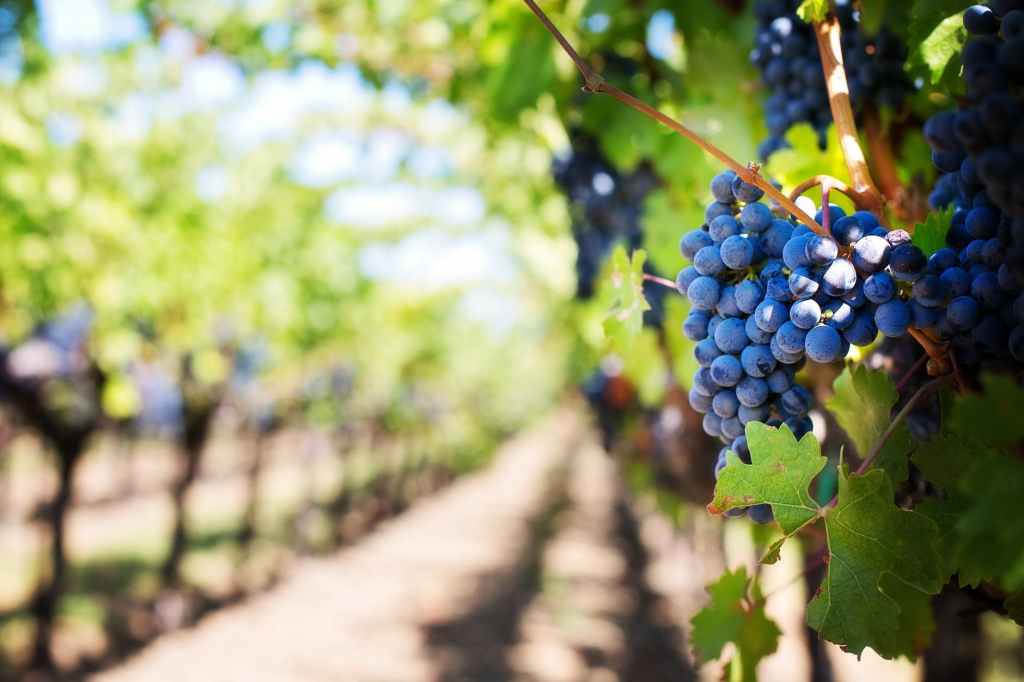
Photo by Pixabay on Pexels.com

Peter continues to expound his new exodus theme. Arriving at Sinai Israel heard: “Now therefore, if you obey my voice and keep my covenant, you shall be my treasured possession out of all the peoples. Indeed, the whole earth is mine, but you shall be for me a priestly kingdom and a holy nation” (Exod 19:5-6a). Peter: “But you are a chosen race, a royal priesthood, a holy nation, God’s own people, in order that you may proclaim the mighty acts of him who called you out of darkness into his marvelous light” (2:9). So William Temple, Archbishop of Canterbury during WW II: “The church exists primarily for the sake of those who are still outside it” (for variants, see here).

That’s the goal; in today’s Exodus reading Israel is, like us, very much a work in progress. Temple again: “Thou canst do all things. I have nothing. I am not fit to offer the meanest service. Surely God will first require and help me form a character worthy to serve him, and then appoint me my task. No; in point of fact it is only through service that such a character could be formed.” (Readings in St John’s Gospel, cited in Schmidt’s Glorious Companions). So perhaps we can be patient with ourselves and those around us.

In that last quote Temple could have been talking about today’s reading from John. It’s one of Jesus’ two retellings of Isaiah’s Song of the Vineyard (5:1-7), the other being the parable of the wicked tenants (Matt 21:33-46 and parallels). Isaiah’s song concludes: “For the vineyard of the LORD of hosts is the house of Israel, and the people of Judah are his pleasant planting; he expected justice, but saw bloodshed; righteousness, but heard a cry!” I’m puzzled. When we explore what sort of fruit God is seeking in John 15, why doesn’t the exploration start with Isaiah 5?