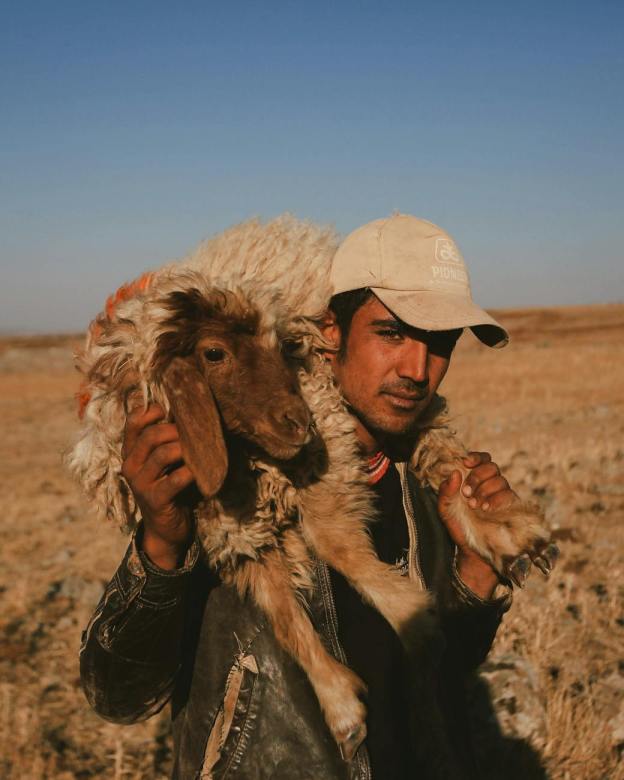
Tag Archives: love

This is what we do (14th Sunday after Pentecost, 9/14/2025)

Readings (Track 2)

One of these Sundays we’ll have a Gospel reading that doesn’t remind us of our current polarized context—but it’s not this Sunday. Luke sets the scene: “All the tax collectors and sinners were coming near to listen to Jesus. And the Pharisees and the scribes were grumbling and saying, ‘This fellow welcomes sinners and eats with them.’” So Jesus tells three parables, the two we heard this morning, and the third, the Parable of the Two Lost Sons, a.k.a. The Prodigal Son, which we heard the fourth Sunday in Lent.

I mention the Parable of the Two Lost Sons because it addresses something that might leave us uncomfortable in the first two parables. The parables of the lost sheep and the lost coin don’t question our assumptions about what it means to be lost or found. The Parable of the Two Lost Sons does: the younger son is clearly found; but the parable ends with the older son—who never left home—undecided about how to respond to the father’s plea to join the party. The older son: transparently a stand-in for the grumbling Pharisees and scribes, all facing the same challenge: join the party or not? Never having left home can mask an even more intractable way of being lost. But that said, what of the text we did hear?

“All the tax collectors and sinners…” Scholars argue about whether “tax collectors” is the best translation. But whatever the translation, what isn’t argued is that folk bid to collect taxes and tolls, and then farmed the work out to local subcontractors. If profit were to be made, it had to be on top of what the Romans figured they were owed. Abuse was pretty much inevitable. “Sinners” was a more nebulous category, but would easily have included those whose life choices showed little interest in observing Torah, e.g., raising pigs. So it’s not just the Pharisees and scribes who would have been grumbling. As we’ll hear a few weeks from now in the story of Zacchaeus, a chief tax collector, nobody’s happy that Jesus is eating with him.

How is Jesus going to respond? If his opponents have a valid point, it’s that he isn’t shunning the wicked. Most societies practice shunning as a way of maintaining social cohesion (lately ours has been calling it “canceling”). The opponents could have appealed to various psalms (“I do not sit with the worthless, / nor do I consort with hypocrites; / I hate the company of evildoers, / and will not sit with the wicked.” [26:4-5]). But there are dangers. It can too easily encourage self-righteousness. The goal can too easily shift from encouraging repentance to elimination. Later we hear Paul trying to avoid these dangers (“Take note of those who do not obey what we say in this letter; have nothing to do with them, so that they may be ashamed. Do not regard them as enemies, but warn them as believers.” [2 Thess. 3:14-15]). But it’s not part of Jesus’ toolkit. Jesus, more, understands his role as gathering Israel—all Israel, definitely including the tax collectors and sinners, and even (recalling the third parable) that stubborn righteous older brother who’s refusing to come to the party. And in his companion volume to the Gospel, Luke narrates the widening of the gathering: “But you will receive power when the Holy Spirit has come upon you; and you will be my witnesses in Jerusalem, in all Judea and Samaria, and to the ends of the earth” (Acts 1:8).

But rather than wade into the sociology of shunning, Jesus tells some parables. The sheep and coin parables build on what we do. They’re brief, but dense, prodding us to wonder about multiple things. First, the actors lose the sheep, the coin. So there’s some implied responsibility. When what is lost is a person, the responsibility is shared, but probably doesn’t disappear. Cain’s “Am I my brother’s keeper?” (Gen. 4:9) is probably not a line we can safely echo. So Jesus’ opponents might wonder about their responsibility.

Second, the sheep, the coin, have value. Jesus to his opponents: do you really want to say that these tax collectors and sinners have no value? [Cf. 4 Ezra 7:[60-61]!)

And so the shepherd and woman seek. The parables echo the prophet Ezekiel’s words: “For thus says the Lord GOD: I myself will search for my sheep, and will seek them out. As shepherds seek out their flocks when they are among their scattered sheep, so I will seek out my sheep. I will rescue them from all the places to which they have been scattered on a day of clouds and thick darkness. I will bring them out from the peoples and gather them from the countries” (34:11-13).

Then there’s Jesus’ commentary on the parables. First, straining the logic of the parables a bit, the focus on repentance. Jesus seeks it among the tax collectors and sinners—among the Pharisees and scribes, for that matter, but we have to wait for the third parable to hear that play out.

Second, the joy, God’s joy. As a good Jew, Jesus is using circumlocutions to talk about God, so speaks of “joy in heaven” and “joy in the presence of the angels of God,” but it’s God who’s rejoicing. Again from the prophet Ezekiel: “As I live, says the Lord GOD, I have no pleasure in the death of the wicked, but that the wicked turn from their ways and live” (33:11).

This, Jesus says, is what we do. We seek out the lost. And, implied, this is what we do because this is what God does. Even Ecclesiastes notices it: “And God looks after what is driven away” (Eccl. 3:15 CEB).

Listening to all this in our current polarized context doesn’t require much fancy footwork on the preacher’s part.

Whatever else the parables are saying: we don’t write people off.

And, recalling our first reading and the leadership roles of the Pharisees and scribes, this is particularly important for our leaders. Recall our first reading, Israel has acted perversely—just after formally entering into covenant with the Lord at Sinai. Moses has the option of becoming the new Abraham (“and of you I will make a great nation”). But Moses gets it right: when the people are at their worst, that’s the time to plead for mercy, not justice. Our armed forces have this baked into their creeds: leave no one behind; we need it from our leaders.

Equally important: we don’t write people off because God doesn’t.

One of the stranger portraits of God in the popular imagination is God as Judge, uncaringly doling out rewards and punishments. ‘Stranger,’ because it has nothing to do with Holy Scripture. Recall Hosea’s portrait of this God tied up in knots over how to effectively respond: “How can I give you up, Ephraim? How can I hand you over, O Israel? How can I make you like Admah? How can I treat you like Zeboiim? My heart recoils within me; my compassion grows warm and tender” (Hos. 11:8). This God, Jesus’ God, continually seeking us out. “Surely goodness and mercy shall pursue me all the days of my life” (Ps. 23:6) sang David. This God, as we’ll hear in next week’s Epistle, “desires everyone to be saved and to come to the knowledge of the truth” (1 Tim. 2:4).

One final observation. The parables raise issues of responsibility and worth. When we pull back the camera and ask what drives God’s action these pale in comparison to love. “God so loved the world…” Is our capacity to love growing, our capacity to translate that love into action growing? That’s perhaps the most profound of the challenges the parables pose to Jesus’ opponents, to us.


Jesus vs. “That’s just the way things are” (7th Sunday after Pentecost, 7/27/2025)

Readings (Track 2)

Two Sundays ago we heard the Great Commandment (love of God and neighbor) and the parable of the Good Samaritan (love of the neighbor). Last Sunday, Jesus in Martha’s home: love of God expressed in the continual listening to Jesus. Today, Luke’s presentation of the Lord’s Prayer: what our prayers should look like if that dual love is the mandate.

Last time we were together with these readings I focused on the Lord’s Prayer. This time, just a couple words on that first word, “Father.” In Jesus’ mind and teaching it has everything to do with God’s love and generosity (“If you then, who are evil, know how to give good gifts to your children, how much more will the heavenly Father give…”) and nothing to do with the conduct that’s rendered the word ‘father’ toxic in the experience of too many women. There’s no easy solution to that, even as we focus on Jesus’ use of the word and—when necessary—mentally substitute in ‘Mother.’ Meanwhile, Luke is reminding us that the story doesn’t start with the love mandate, but with the generous Father’s love. Our love is the fitting response to that love.

Over in our Epistle, that line from last week’s reading is still ringing in my head: “and through [Jesus] God was pleased to reconcile to himself all things.” How does Paul think God is doing that?

It sounds unbelievable. Jesus as victor/healer in relation to all that ails our world? This is one of the reasons Abraham and Sarah pop up so frequently in the New Testament. Well past the childbearing window, the Lord says “I will make of you a great nation” and they hang in for decades until they’re changing diapers. “Sounds unbelievable” is familiar territory for us people of faith.

Jesus as healer/victor: how does societal healing, or, more broadly, societal change happen?

That’s the key question for organizations like World Vision, the relief & development agency where I worked for a couple decades. How, for example, to introduce a promising agricultural innovation? What you usually need is a few farmers willing to try it. If it works, it sells itself. The neighbors have been watching (probably expecting it to fail), now they want it too.

This is the strategy behind God’s calling Abraham/Israel. Here’s Isaiah:

“Many peoples shall come and say, ‘Come, let us go up to the mountain of the LORD, to the house of the God of Jacob; that he may teach us his ways and that we may walk in his paths.’ For out of Zion shall go forth instruction, and the word of the LORD from Jerusalem.… they shall beat their swords into plowshares, and their spears into pruning hooks…” (Isa. 2:3-4)

And it remains the strategy with the renewal of the Israel project in Jesus’ followers. Here’s Paul in Ephesians: “and to make everyone see what is the plan of the mystery hidden for ages in God who created all things; so that through the church the wisdom of God in its rich variety might now be made known to the rulers and authorities in the heavenly places” (3:9-10). This is why the New Testament gives little attention to evangelism and a great deal of attention to the quality of life in the emerging congregations.

Quality of life. Last week Paul spoke of thrones, dominions, rulers and powers. He’s not only speaking of civil authorities, but also of the customs, institutions, mental frameworks, that pretend to rule his hearer’s lives. Adjust the vocabulary a little and it all sounds very familiar: how many dimensions of our lives get ruled by “that’s just the way things are!” Take the economy. No one controls it. It has its priests (the economists). Sometimes it’s healthy. Sometimes it’s sick. Sometimes it demands sacrifices. Paul: the congregation is the place where the defeat of these powers is visible, where Jesus molds our corporate life (remember Mary, listening).

That’s hardly easy. As in most agricultural test plots, we’re not dealing with virgin land, but with land that’s long been badly treated. So Jesus’ life-giving death and resurrection needs to play out again and again in Jesus’ followers. This is, I think, part of what Paul was talking about in last week’s reading: “in my flesh I am completing what is lacking in Christ’s afflictions for the sake of his body.”

The New Testament scholar Gerhard Lohfink writes: “Sin does not just vanish in the air, even when it is forgiven, because sin does not end with the sinner. It has consequences. It always has a social dimension. Every sin embeds itself in human community, corrupts a part of the world, and creates a damaged environment. So the consequences of sin have to be worked off, and human beings cannot do so of themselves any more than they can absolve themselves. Genuine ‘working off’ of guilt is only possible on a basis that God himself must create. And God has created such a base in his people, and in Jesus he has renewed and perfected it.

Lohfink continues, quoting from Dag Hammarskjöld’s diary:Forgiveness breaks the chain of causality because he who “forgives” you—out of love—takes upon himself the consequences of what you have done. Forgiveness, therefore, always entails a sacrifice. The price you must pay for your own liberation through another’s sacrifice is that you in turn must be willing to liberate in the same way, irrespective of the consequences to yourself.[1]

In the Eucharistic Prayer we hear Jesus’ words “This is my Blood of the new Covenant, which is shed for you and for many for the forgiveness of sins.” It’s easy to assume that Jesus is talking only about God forgiving us. But remember how tightly Jesus links being forgiven and forgiving (the Lord’s Prayer in today’s Gospel)! Jesus is almost certainly talking about both. Jesus is shedding his blood to create a forgiven community that forgives.

(Forgiveness, remember, is not saying “it doesn’t matter.” It’s about extending to each other the same forgiveness we need from God.)

And notice what happens when a culture of forgiveness takes root among us. The mandate is love, but we’re not very good at love. We make mistakes. Forgiveness becomes important pretty quickly. And it’s not simply remedial. Our national culture burns a lot of energy to maintain the illusion of being right. I’m right. I was right. I will be right. But if there’s real forgiveness, that’s unnecessary. All that energy is available for listening to Jesus (Mary), attending to, responding to the neighbor (the Samaritan). If I always have to be right the love mandate is a heavy lift. If loving is something we’re learning how to do together, forgiving each other, with the freedom even to laugh at ourselves, then not so much.. 

Jesus as the victor/healer. God’s happy to use that freed up energy to show that the powers don’t get the last word, that “that’s just the way it is” doesn’t get the last word. That’s a long-term project. In the 4th Century, Basil in Caesarea established the first hospital with inpatient facilities, professional medical staff, and free care for the poor.[2] In the Middle Ages, starting in the monasteries, water and wind power took the place of forced human labor. The Greeks had had the technology to do this, but why bother when slaves are plentiful? The monks, reading Moses on creation (humanity in God’s image) and Paul (neither slave nor free in Christ) were motivated to use that technology, and it soon spread past the monasteries. In recent centuries Genesis’ declaration that all humanity bears God’s image began to be heard in new ways, and voting rights slowly expanded. So today pretty much all governments claim legitimacy based on the people’s continued consent—however flimsy that claim. Quite breathtaking, really, what Jesus has accomplished through the Church.

Our story, of course, is not one of unbroken progress. God values our freedom, so things can go forward, backward, or sideways. We now have—God help us—for-profit hospitals. So Abraham and Sarah remain crucial as pioneers in trust. And speaking of Abraham, in God’s generosity loss doesn’t get the last word. The rabbis noticed that poor ram caught in the thicket that Abraham sacrificed instead of Isaac; Rabbi Hanina ben Dossa said this: “Nothing of this sacrifice was lost. The ashes were dispersed in the Temple’s sanctuary; the sinews David used as cords for his harp; the skin was claimed by the prophet Elijah to clothe himself; as for the two horns, the smaller one called the people together at the foot of Mount Sinai and the larger one will resound one day, announcing the coming of the Messiah.”[3] Loss doesn’t get the last word.

Our Colossians reading started with “As you therefore have received Christ Jesus as Lord, continue to live your lives in him.” Continue: there’s a world out there badly needing healing, badly needing transformation. What might Jesus be seeking to do through us now?


[1] Jesus of Nazareth pp 255-256.

[2] Cf. https://www.patheos.com/blogs/lostinaoneacrewood/2020/01/03/basiliad-basil-of-caesarea-social-justice-worlds-first-hospital/.

[3] Wiesel Messengers of God 101.

God is Love; The Holy Trinity: The Community of Love (Trinity Sunday, 6/15/2025)

Readings

Children’s Sermon

Can you play ping pong or tag by yourself? Tell yourself a joke?
Many of the things that give us the greatest joy, that express our humanity, we need to do together. Loving is another of those things.

What we’re celebrating today, Trinity Sunday, is that that joy and love have been at the heart of reality even before God created anything. God is One. God is Father, Son, and Holy Spirit, an eternal community of joy and love.

And this God calls out to us: come join the party. That’s the invitation we share with our neighbors.

Adults’ Sermon

What I shared with the children is the core of what I’m sharing with you. Love, like telling a joke or playing tag, demands others. What we celebrate on Trinity Sunday is that the statement “God is Love” did not need to wait for creation to be true. And God, rather than putting up a wall around that community, has been calling out to us from the start: Come on in!

Today’s readings offer different ways of exploring this reality.

Our psalm: “you adorn him with glory and honor.” We heard the psalmist spell that out within the psalm’s horizon. Within the horizon of Scripture as a whole the core of that glory and honor is that divine invitation. We heard it a couple weeks ago in Revelation: “The Spirit and the bride say, ‘Come.’ And let everyone who hears say, ‘Come.’ And let everyone who is thirsty come. Let anyone who wishes take the water of life as a gift.” And we heard it in Jesus’ prayer: “The glory that you have given me I have given them, so that they may be one, as we are one, I in them and you in me, that they may become completely one, so that the world may know that you have sent me and have loved them even as you have loved me.” What is any glory or honor our nations can gin up in comparison to being the recipients of this invitation? (So the Doctrine of the Trinity ends up telling us who we are.)

In the Gospel we heard “When the Spirit of truth comes, he will guide you into all the truth,” or, as Raymond Brown translates it in his magisterial commentary “he will guide you along the way of all truth.” But here—sorry—we need a brief parenthesis about that word “truth.” We’re used to contrasting it with what’s factually false. But recall its first use in the Gospel to describe Jesus: “full of grace and truth.” We might better translate “abounding in steadfast love and faithfulness,” because John’s citing God’s self-definition at Sinai (Exod. 34:6). That’s who God is; that’s who Jesus is. And the truth in question is as much about being true in relationships (faithful) as being true to the facts.

The Spirit’s work, guiding “along the way of all truth,” is crucial in both senses. Jesus is alive, not dead. The Gentile believers don’t need to be circumcised. But how do the Jewish believers who keep kosher and the Gentile believers who don’t, live faithfully together? That’s equally important, so that the New Testament letters spend a great deal of energy on what truthful/faithful life together means—in the midst of our differences. Turns out there’s nothing automatic about “By this everyone will know that you are my disciples, if you have love for one another” (Jn. 13:35).

In today’s epistle we heard “and hope does not disappoint us, because God’s love has been poured into our hearts through the Holy Spirit that has been given to us.” Why doesn’t this hope disappoint us? If we asked Paul to unpack this, I suspect that I would have reminded us that all of this is directed to us in community rather than us as isolated individuals. We’ve received the Holy Spirit, who guides us into more faithful relations with each other. We can put our weight on that hope of sharing the glory of God because we’re getting a foretaste of that glory in what the Holy Spirit’s doing in our relationships in the parish.

We pray for this at every Eucharist. Recall the words from Prayer A: “Sanctify [the bread and wine] to be for your people the Body and Blood of your Son… Sanctify us also that we may faithfully receive this holy Sacrament, and serve you in unity, constancy, and peace.” Make these elements holy; make us holy. We need this holiness to live together in love.

What of wisdom’s words in our reading from Proverbs? They’re probably included because of their historical role in early conversations leading to Doctrine of Trinity. This morning, let’s hear them in context of other readings.

30b and I was daily his delight,
rejoicing before him always,
31 rejoicing in his inhabited world
and delighting in the human race.

What’s surprising about these lines is their contrast with wisdom’s words elsewhere in these first nine chapters. Wisdom has been offering to guide us “along the way of all truth.” But we humans are often a hard—if not hostile—crowd. Nevertheless, wisdom chooses to focus on what brings her delight, so “delighting in the human race.”

(Another quick parenthesis: as the portrait of the accuser—which comes into English as “Satan”—develops in the Old Testament, its core is arguably viewing humanity in the worst possible light: Job’s only serving God from self-interest. Or in the prophet Zechariah the accuser pointing out all the things that are wrong with the high priest. Delighting in or criticizing other folk: regularly choosing the latter—even when it’s more or less justifiable—is satanic.)

Proverbs’ portrait of wisdom participated in the Early Church’s conversations regarding the Trinity because what wisdom does sounds like what the Son or the Spirit do. In the light of our other readings, we can also observe that the Spirit’s guiding us along the way of all truth, strengthening our capacity to hope, also aligns us with wisdom’s stance so that we might echo wisdom’s words. So Trinity Baraboo might aim at:

We are daily God’s delight,
rejoicing before God always,
rejoicing in God’s inhabited world,
delighting in the human race.

Not a bad way to extend our celebration of Trinity Sunday into the rest of the year!

The God Who would be at Home with Us (6th Sunday of Easter, 5/25, 2025)

Readings (Using the John 14 reading)

I hope you’ve not skimped on the coffee this morning, because we’re going to jump into the deep end, that reading from the Revelation. That, in turn, will set us up to think about what the Church is for—not a bad question since we’re only two weeks out from celebrating Pentecost.

Revelation likes images that shimmer, enigmatic images. John hears “the Lion of the tribe of Judah, the Root of David,” but what John sees is “a Lamb standing as if it had been slaughtered” (5:5-6). So here, toward the end of the book, John hears “the bride, the wife of the Lamb,” but what John sees is “the holy city Jerusalem coming down out of heaven from God” (21:9-10). This is something like what we encounter in Physics 101. Is light a particle or a wave? Yes, depending on what you’re trying to explain.

The new Jerusalem. No need for a temple, or a sun, for that matter: “for its temple is the Lord God the Almighty and the Lamb.… for the glory of God is its light, and its lamp is the Lamb.”

“The nations will walk by its light, and the kings of the earth will bring their glory into it.” Pull the camera back to include John’s Bible (our Old Testament) and it’s clear that this New Jerusalem is finally fulfilling the hopes for the original Jerusalem. Recall Isaiah:

In days to come
the mountain of the LORD’s house
shall be established as the highest of the mountains,
and shall be raised above the hills;
all the nations shall stream to it.
Many peoples shall come and say,
“Come, let us go up to the mountain of the LORD,
to the house of the God of Jacob;
that he may teach us his ways
and that we may walk in his paths.”
For out of Zion shall go forth instruction,
and the word of the LORD from Jerusalem. (2:2-3)

Something beautiful is happening, and the nations want in on it.

Then there’s that river the prophet Ezequiel saw flowing from God’s presence: “On either side of the river is the tree of life with its twelve kinds of fruit, producing its fruit each month; and the leaves of the tree are for the healing of the nations.” So healing is needed—still! The city has gates, the classic means of controlling access, but the gates are never shut. A bit later we’ll hear “The Spirit and the bride say, ‘Come.’ And let everyone who hears say, ‘Come.’ And let everyone who is thirsty come. Let anyone who wishes take the water of life as a gift” (22:17). Jerusalem is finally fulfilling its role, being the place where God’s glory is visible and healing is freely available.

I mentioned enigmatic images a bit ago, and in its final chapters the Revelation takes these to a different level in the form of two juxtaposed stories. In the one, a decisive battle in which evil is destroyed and the great white throne before which everything is sorted out. On the other hand, open-gated Jerusalem offering glory, joy, and healing to all who would enter. Well, which is it? What the Revelation may want to show us is that within the limits of human language and human understanding our clearest picture is this pair of starkly contrasting images.

Perhaps this should not be surprising. Recall how our story starts. Genesis gives us not one, but two creation stories. In one everything is good from the start, the humans play no active role, the seven days are as much liturgy as anything. In the other God works by trial and error, Adam plays an important role, and the good emerges at the end of the process: “This at last is bone of my bones and flesh of my flesh; this one shall be called Woman, for out of Man this one was taken” (2:23). To capture the reality of the beginning and ending of human history Scripture gives us pairs of stories.

What may be at stake in these pairs of stories is the challenge of doing justice to God’s sovereignty and human freedom. There’s a popular saying attributed to various folk (Augustine, Ignatius, etc.) “Pray as though everything depended on God. Work as though everything depended on you.” Maybe, but it could be heard as a call to run ourselves ragged. I like what the Ignatian author Jim Manney does with it:

“I prefer to reverse it: ‘pray as if everything depends on you, and work as if everything depends on God.’ This means that prayer has to be urgent: God has to do something dramatic if everything depends on me. It also puts our work in the right perspective: if it depends on God, we can let it go. We can work hard but leave the outcome up to him. If God is in charge we can tolerate mixed results and endure failure.”[1]

OK, what of the Church? In John’s vision there’s the New Jerusalem, finally doing its job. Sounds pretty good. What happens until then? Let’s circle back to the angel’s words: “Come, I will show you the bride, the wife of the Lamb.” “The bride, the wife of the Lamb:” that sounds like the language used elsewhere in the New Testament for Christ as bridegroom and the Church as bride. Or, to come at John’s vision from another angle, from 1st Corinthians: “Do you not know that you are God’s temple and that God’s Spirit dwells in you (3:16)?” Or, more extensively in Ephesians, “So then you are no longer strangers and aliens, but you are citizens with the saints and also members of the household of God, built upon the foundation of the apostles and prophets, with Christ Jesus himself as the cornerstone. In him the whole structure is joined together and grows into a holy temple in the Lord; in whom you also are built together spiritually into a dwelling place for God” (2:19-22).

Because God desires that all enter freely into joy, into God’s presence, God really needs a place where God can be at home, where God’s healing glory is visible, and that is the Church. That’s the dynamic in this morning’s psalm, God’s blessing here that ripples out to the corners of the earth. That’s at the core of today’s Gospel: “we will come to them and make our home with them.” This is why, by the way, the New Testament letters devote virtually no attention to evangelism and virtually all their attention to the elements in congregational life that make God’s healing glory easier or harder to see.

And this sweeping vision plays out in the decisions of specific women and men, folk like Lydia, that dealer in purple cloth from our first reading, folk like you and me.

We’re here, God knows, because we need to be here. And in the larger story that the Revelation brings into focus, we’re here because God needs places where God’s at home, where God’s healing glory can be visible in the common life of God’s people, whether gathered together or scattered through our communities during the week. A tall order, yes, which is why Jesus speaks of the Holy Spirit on approach, the flaps extending, wheels down.


[1] https://www.ignatianspirituality.com/work-as-if-everything-depends-on-god/ (accessed 5/16/2022).

Bread, Wine, Feet (Maundy Thursday, 4/17/2025)

Readings

Passover. Our first reading marks its beginning. It celebrates the Lord’s power to save, to make a way where there is no way. It celebrates this God as champion of liberty, enemy of slavery. And here we are tonight, remembering how Jesus observed Passover that night.

Jesus did at least two things. He reinterpreted two of Passover’s symbols, the bread and the wine, to point to his coming death. Liberty, passing from slavery into freedom, demands more than defeating the current human Pharaoh. The underlying problem: our ancestral rebellion and distrust of God, and Jesus’ death deals with that. So, at every Eucharist, “Christ our Passover is sacrificed for us.”

That, it turns out, is the easy part. The harder part: changing our behavior so that we stop acting like little Pharaohs at every opportunity. So Jesus starts washing their feet and caps it with “If I, your Lord and Teacher, have washed your feet, you also ought to wash one another’s feet.”

“This is my body that is for you.… This cup is the new covenant in my blood.” “You also ought to wash one another’s feet.” Two sides of the same coin.

What’s going on here? Toward the end of the Gospel reading we heard “I give you a new commandment, that you love one another. Just as I have loved you, you also should love one another.” Washing each other’s feet, leaving behind the endless competition for status: that’s finally about love. As is, for that matter, “This is my Body; this is my Blood.” As the Gospel of John says elsewhere “God so loved the world…”

Toward the end of the Song of Songs we hear “Set me as a seal upon your heart, / as a seal upon your arm; / for love is strong as death, passion fierce as the grave” (8:6a). Pharaoh’s kingdom is powered by death; only love will defeat it.

Jesus’ Freedom–and Ours (Palm Sunday, 4/13/2025)

Readings

In today’s collect we prayed “Mercifully grant that we may walk in the way of his suffering, and also share in his resurrection.” Wondering what that might look like, I’m drawn to what Harold Kushner says in his Forward to Viktor Frankl’s book Man’s Search for Meaning, the book based on Frankl’s experience in the Nazi concentration camps: “Forces beyond your control can take away everything you possess except one thing, your freedom to choose how you will respond to the situation.” And I’m struck by how Jesus uses that freedom in today’s Gospel.

Our Gospel reading starts with Jesus’ celebration of the Passover, and his reinterpretation of its symbols: “This is my body, which is given for you.… This cup that is poured out for you is the new covenant in my blood.” And Luke follows this immediately with “A dispute also arose among them as to which one of them was to be regarded as the greatest.” How tempting it might have been for Jesus to use his freedom to say “Enough. I’m going back to Galilee. You all sort it out on your own.” Instead, again, he tries to help them understand that God’s kingdom works differently than those to which they’re accustomed.

(Oddly, given the often discouraging state of the Church, I find Luke’s portrayal of the disciples encouraging. They argue about who’s the greatest. They fall asleep while Jesus prays in the garden. One of them betrays him. One of them lops off the high priest’s slave’s ear. Peter denies him not one, not two, but three times. Jesus knows the material he has to work with in this Church project, and somehow thinks it’s worth the effort.)

Praying in the garden: “Father, if you are willing, remove this cup from me; yet, not my will but yours be done.” There’s such a painful distance between the Father’s perspective and Jesus’ perspective. Nevertheless, let’s notice how Jesus uses his freedom: to forego second-guessing the Father. It dovetails with that line from our Isaiah reading: “I have set my face like flint.” There’s a time for considering multiple options; once the decision has been made it rarely helps to revisit it: being double-minded usually doesn’t end well.

During the arrest: “Then one of [the disciples] struck the slave of the high priest and cut off his right ear.” “I have set my face like flint” could easily translate into tunnel vision; Jesus uses his freedom even to attend to that wounded slave. Jesus uses his freedom—a freedom we all have—so that even on a bad day other people matter.

Those same alternatives, tunnel-vision vs responsiveness to the context, show up at the crucifixion. I am so grateful that I can’t imagine what it would have been like, but there it is: “Father, forgive them; for they do not know what they are doing.” “Truly I tell you, today you will be with me in Paradise.”

Harold Kushner again: “Forces beyond your control can take away everything you possess except one thing, your freedom to choose how you will respond to the situation.” Jesus’ use of that freedom is, frankly, breathtaking. May it nurture our imagination and courage when we find ourselves in situations where we have less control than we’d prefer. So, yes, with the Collect: “Mercifully grant that we may walk in the way of his suffering, and also share in his resurrection.”

Hope (1st Sunday of Advent, December 1, 2024)

Readings

And so we begin another year, with all the hopes and fears anything new brings. The readings and the liturgy can pretty much carry us along; perhaps what the sermon can offer is attention to three of the images in or behind our readings.

The first is that word “righteous” in Jeremiah. “A righteous Branch… execute justice and righteousness… Jerusalem… called: ‘The LORD is our righteousness.’”

“Righteous” and “Righteousness” are today pretty much restricted to religious contexts. That’s a pity, because ‘righteous’ (tsaddiq in Hebrew) is a remarkably useful word. A person who is righteous (a tsaddiq) is a person who does what needs to be done to fulfill the obligations of a relationship, even if it means coloring outside the lines.

In the Old Testament one of the classic examples of the tsaddiq is the widow Tamar. She owes it to her dead husband to have a son who’ll carry on his name. But her father-in-law, Judah, is standing in the way, and has shown no sign of budging. So, off with the widow’s garb, on with the prostitute’s garb, and she has the son by an oblivious Judah. Judah’s outraged—until she shows him the credit card receipt—but then has to acknowledge her as the more righteous: she’s done what’s necessary to carry on her husband’s (Judah’s son’s) name. She’s the Tamar who shows up in Jesus’ genealogy in Matthew.

The Lord, precisely in this sense, is righteous. It doesn’t matter how powerful Israel’s enemies are. It doesn’t matter how deep a hole Israel has dug herself in. The last thing the Lord will say is “Well, you brought this on yourself; what do you expect me to do?” The Lord is righteous. If that means bringing Israel out of Egypt, opening a way through the sea, the Lord will do it. If that means toppling the Babylonian Empire so the exiles can return home, the Lord will do it. If it means taking on human flesh to live as one of us, the Lord will do it. The Lord is righteous.

It’s that confidence in the Lord’s righteousness that animates the psalm. It doesn’t matter what combination of external enemies and self-inflicted wounds the psalmist is dealing with: the Lord can and will sort it out. That’s the confidence the psalm—and our tradition—invite us to share. The Lord is righteous, creative, stubborn; the Lord will sort it out.

The second image is from the Gospel, “the Son of Man coming in a cloud.” We heard those same words last Sunday in vision from Daniel 7. Recall the vision: Daniel sees a series of four beasts, each more terrifying than the last, with the last one hounding God’s people. But then the Ancient One comes onstage, the beasts are dealt with, and “the Son of Man coming in a cloud”—that one receives kingship. (And so we heard the text at the Feast of Christ the King.) It’s a remarkably hopeful vision: the face of the human future is not bestial, but human. The terrorists don’t win. The surveillance state doesn’t win. God bats last; God and humanity win.

You see, if the future that awaits us is bestial, then the dissipation and drunkenness Jesus warns us against in today’s Gospel sound like pretty good options. If the future that awaits us is bestial, then the invitation “to cast away the works of darkness” is futile. But the future that awaits us has a human face, Jesus’ face, so hope—with the swimming upstream that it entails—is the rational response.

The Lord is righteous. This Son of Man secures a human future. Two images from our readings. The third image lies just below the surface and serves as the motor. It’s captured in one of the carols that didn’t make it into our hymnal: “Tomorrow shall be my dancing day: / I would my true love did so chance / To see the legend of my play, / To call my true love to my dance: / Sing, O my love, O my love, my love, my love; / This have I done for my true love.” That’s the story we’re in, “we” as the human race, “we” as each individual. How the Nicene Creed manages to summarize this romance, this love story, without using the word ‘love’ is a head-scratcher. Anyhow, as love is necessarily a joint project, God’s standing invitation: let’s write this story together. And in that spirit the Church invites us into this season of Advent.

God’s Clashing Desires (5th after Pentecost, 6/23/2024)

Lessons (Track 1, 1st set)

What a combination of readings: David & Goliath, Jesus in the middle of the lake calming the storm—and Paul pleading with the Corinthians.

Let us start with the obvious. Our world has plenty of Goliaths, enemies who claim to dominate our present and future. Our world has plenty of storms. It is very good news that Goliath’s claims are simply claims, that the pitch black skies and the water-drenched deck at unbelievable angles are not the last things we’ll experience. The battle is the Lord’s: Goliath doesn’t get the last word, our feet will again be on solid ground. These are stories to hang onto, and there are times in our lives when that’s all we need to hear from them.

But how does Paul’s “through great endurance” fit into those stories? It’s not Paul’s fault; David and Jesus had their share of “through great endurance” moments. It’s that in many situations “where’s my slingshot” isn’t the appropriate response—though we’ve all had experience with folk like that. There were probably parts of Paul that wished for a slingshot, wished to simply shout into the storm “How about you all just shut up and do what I say!” Why not go there?

Recall our Old Testament lesson from two weeks ago: the people want a king, which the Lord and Samuel think is a really bad idea, and the Lord tells Samuel to give them what they want. How do we make sense of that?

Wrestling with the text two weeks ago, this is what I came up with. God wants two things, that we be free and that we make good choices. Either would be relatively easy. Together, not so much, as any parent knows. This combination of desires is one way to talk about God’s love. God loves us: desires that we be free, desires that we make good choices. “We want a king like all the nations.” “OK; we’ll do this the hard way.” A king can serve as a template for the Messiah.

Where this gets challenging: God desires that we share these desires. This is typically not an easy sell. Recall that scene in Luke, when the Samaritan village refuses hospitality to Jesus and his disciples. James and John: “Lord, do you want us to command fire to come down from heaven and consume them?” (Luke 9:54). Desiring people’s freedom and that they choose well means that their good becomes primary, so Jesus has to work on the disciples’ notion of greatness: “You know that among the Gentiles those whom they recognize as their rulers lord it over them, and their great ones are tyrants over them. But it is not so among you; but whoever wishes to become great among you must be your servant, and whoever wishes to be first among you must be slave of all” (Mark 10:42-44). Discipleship is a lengthy process because learning to desire what God desires doesn’t come easily.

Which brings us to Paul, trying through letters to reset his relationship with the Corinthians. They’re a typical congregation, working out what being Christian means, and sometimes avoiding that work. The city of Corinth’s motto could have been “The one who dies with the most toys wins,” so some in the congregation assumed “The one who has the most spiritual gifts wins.” So Paul in 1 Corinthians talks about spiritual gifts, culminating in that bracing chapter that begins “If I speak in the tongues of mortals and of angels, but do not have love, I am a noisy gong or a clanging cymbal” (1 Cor. 13:1).

And in the text we heard this morning Paul details what that love has meant: “great endurance, in afflictions, hardships, calamities, beatings, imprisonments, riots, labors, sleepless nights, hunger; by purity, knowledge, patience, kindness, holiness of spirit, genuine love.”

Paul gives them this long list not to score points—though perhaps that’s not completely absent, Paul being human and all—but because this is how the Corinthians need to love each other. So that—picking up David’s words—“all the earth may know that there is a God in Israel, and that all this assembly may know that the LORD does not save by sword and spear.”

Paul’s saying nothing new here, simply reminding the Corinthians of Jesus’ story, a story that’s to become our story. Jesus’ love, a love serving others, means a story of death and resurrection. So in our baptism we pray “Grant, O Lord, that all who are baptized into the death of Jesus Christ your Son may live in the power of his resurrection.”

God desires that all be free and that all use their freedom well. For that God needs a people committed to that project, and baptism is how we are enlisted. “Yes, Lord, I want to learn to love as you love, desiring people’s freedom and that they use it well. I want to learn to serve them, so that Jesus’ death and resurrection play out in this flesh.” Amen.

Love complicates things (3rd Sunday after Pentecost)

Readings (Track 1)

In the middle of Jesus’ argument with the scribes he tells this short parable: “But no one can enter a strong man’s house and plunder his property without first tying up the strong man; then indeed the house can be plundered.” Plunder: that’s an intriguing image for what Jesus is about. For what God’s about, for that matter. The Exodus: plunder on a national scale. The mob stirred up by Paul and Silas’ presence in Thessalonica didn’t get it entirely wrong: “These people who have been turning the world upside down have come here also” (Acts 17:6). No wonder Paul’s regularly in trouble—as we heard in our second reading.

But it’s not plunder for the sake of plunder (“My pile of loot’s bigger than yours!”), but, whether at the Exodus or in Galilee, for human freedom, restoring it so that it can be used well. Pulling back the camera to take in all of Mark’s Gospel, whether in the exorcisms, the healings, the conversations or the proclamation, that plundering is about restoring human freedom and encouraging us humans to use it well. The first thing out of Jesus’ mouth in that Gospel: “The time is fulfilled, and the kingdom of God has come near; repent, and believe in the good news” (1:15).

The kingdom/reign of God, with two divine desires in play: that we be free, that we choose well. Either one of these would be easy to fulfill; both—that quickly gets complicated. Consider our first reading from Samuel’s time, a few centuries after the Exodus. The people have repeatedly used their freedom badly, and now they want a human king. A king: they’d celebrated the Lord as their king back at the Exodus (Exodus 15:18). But now, no, a human king “so that we also may be like other nations.” If God’s desire were simply that the people choose well, well, so much for freedom: no human king. But God desires both that they be free and that they choose well. So God tells Samuel to give the people what they want; we’ll do it the hard way.

That’s a pretty good illustration of God’s love. God loves us too much either to compromise our freedom or to stop caring about our choices. Love—as any parent knows—complicates things. God can bring good out of our bad choices (the king is the template for the Messiah), but the price is high (“King of the Jews” was the sign on Jesus’ cross).

Does God always get what God wants? Since what God wants is that we be free and that we choose well, the answer is pretty clearly no. (That’s one of the main reasons why the Bible is a lengthy book!) And one of the recurrent challenges in worshipping this God is to respect both of these divine desires. If we think the people are choosing badly is their freedom really all that important?

Bad choices bring death. Adam and Eve choose badly in Genesis chapter 3; only one of their sons (Cain and Abel) is alive by the end of chapter 4. Death ends the story; death ends all stories. In the psalms one of the most frequent arguments the psalmists make for deliverance: rescue me, because in Hades no one praises you; that’s the lose-lose option. Shakespeare nails it in MacBeth:

Life’s but a walking shadow, a poor player,
That struts and frets his hour upon the stage,
And then is heard no more. It is a tale
Told by an idiot, full of sound and fury,
Signifying nothing.

So if there were ever a game-changer, it’s Jesus’ resurrection (the motor for Paul’s reflections in our second reading). Death isn’t the end. Jesus’ transformed body grounds our hope for a similarly transformed body, “an eternal weight of glory,” as Paul put it.

How to tie this together? At least three ways come to mind. “God desires our freedom and that we use it well.” That, of course, is only one of many ways we might summarize what God’s up to. But play with it; wonder how it might serve to guide our outreach budget and activities.

Second. God desires our freedom and that we use it well. Because neither desire is negotiable God’s history with us is as messy as it is (recall, again, Holy Week) and Mick Jagger’s “You can’t always get what you want” turns out to apply to God as well. So we don’t know how all this will play out in the end. Will all be saved? We do know that it comes down to a fairly simple question: is my character such that I’d enjoy spending eternity with this God who keeps making hard choices and who loves my enemies as much as me?

In this respect heaven and hell reflect who we are. Recall that old analogy: a large banquet hall, the tables loaded. The complication is that our arms no longer bend at the elbows. At some tables, despair: despite increasingly acrobatic strategies no one can feed themselves. At other tables, delight: everyone feeding their neighbor.

A third way of tying this together: C. S. Lewis’ luminous sermon “The Weight of Glory” that draws on our second reading. After imagining what this weight of glory might mean, he pivots:

…it may be asked what practical use there is in the speculations which I have been indulging. I can think of at least one such use. It may be possible for each to think too much of his own potential glory hereafter; it is hardly possible for him to think too often or too deeply about that of his neighbour.… It is a serious thing to live in a society of possible gods and goddesses, to remember that the dullest and most uninteresting person you talk to may one day be a creature which, if you saw it now, you would be strongly tempted to worship, or else a horror and a corruption such as you now meet, if at all, only in a nightmare. All day long we are, in some degree, helping each other to one or other of these destinations.…There are no ordinary people.

God, in love, desires our freedom and that we use it well, for our choices really matter. That doesn’t make it easy for God or for us. Easy, apparently, is not the point.

“Love one another:” Putting it into practice (6th Sunday of Easter, 5/5/2024)

Readings

The first lesson from the Acts of the Apostles tells of the Holy Spirit coming upon the Gentiles —Romans, mostly— while Peter was still preaching. And with that all the parts of Jesus’ commission and promise “you will be my witnesses in Jerusalem, in all Judea and Samaria, and to the ends of the earth” begin to be fulfilled. For once this still very Jewish Church crosses the enormous cultural hurdles to preach to the Gentiles it’s a relatively short step to the ends of the earth. Once the doors are open to the Gentiles, it doesn’t matter much if they’re in Naples, Norway, or North Lake. “And this is the victory that conquers the world, our faith” indeed.

If we ask about the motor for that victory, there are two obvious answers. The first is the Holy Spirit. Who else but God’s Spirit could have given the apostles the backbone to stand before the Jewish leaders and the Roman Empire? But the second equally obvious answer is the love that has been the constant theme in our readings these past weeks. “This is my commandment, that you love one another as I have loved you.” And in another context Jesus said “By this everyone will know that you are my disciples, if you…have love for one another.” All the things that Jesus could have said but didn’t: “if you have flawless theology; if you are without sin; if you…” Well, we might as well segue into St Paul’s paean to love in 1st Corinthians: “if you speak with the tongues of angels and men…” Nope: “if you have love for one another.”

I thought very briefly about organizing this homily around the question “What does the Bible say about loving one another?” Then I quickly realized that that was absurd, because you wouldn’t be far wrong if you said that on the whole the Bible is about nothing else than loving God and loving one’s neighbor. So “What does the Bible say about loving one another?” would be a very long sermon. Better, it’s something we spend our entire lives learning.

So the question pretty quickly became What might I say that would be useful to us here and now about “love one another”? Here are four themes to chew on: confession, generosity, no-fault, and forgiveness.

Confession. “Love one another” doesn’t get very far unless we’re willing to acknowledge ourselves as serious sinners. If my own experience is an indication, we’re ready to admit we’re sinners, but not serious sinners —that’s other folk. Years before I got married a friend described marriage as the ideal context for discovering the depth of one’s selfishness. He was right. And in the first years of marriage the times I came closest to throwing in the towel were the times in which my choices were to flee or acknowledge to myself just how selfish I was being. To which the Christian tradition with exquisite pastoral sensitivity says “Well, duh! What did you think Jesus died for, your parking tickets? So repent & learn how to love this woman.” How often are we tempted to walk away from each other because the relationship is an occasion of unwelcome self-knowledge?

Generosity. “Love one another” is about —to steal from St Paul— hoping all things, believing all things. St. Ignatius in the Spiritual Exercises put in best: “it should be presupposed that every good Christian ought to be more eager to put a good interpretation on a neighbor’s statement than to condemn it. Further, if one cannot interpret it favorably, one should ask how the other means it. If that meaning is wrong, one should correct the person with love; and if this is not enough, one should search out every appropriate means through which, by understanding the statement in a good way, it may be saved.”

So when we find ourselves mentally mapping a conflict in a way that puts the others entirely in the wrong and us entirely in the right, all the warning bells should be going off, first because we are offending against charity regarding the others, and secondly because this mapping blinds us to our own sinfulness. The sad thing about this is that all of us have been working hard since kindergarten at getting good at this sort of mapping, and by puberty it’s mostly instinctive. As with the barbarian hordes, so with us: following Jesus means laying down weapons that we’ve gotten very good at using.

No-fault. “Love one another” is pretty much a no-fault policy. That’s the point of Jesus’ words in Matthew 5: “So when you are offering your gift at the altar, if you remember that your brother or sister has something against you, leave your gift there before the altar and go; first be reconciled to your brother or sister, and then come and offer your gift.” Again, notice what he doesn’t say: not “if you remember that your brother or sister did something bad to you” or “if you remember that you did something bad to your brother or sister” but simply “if you remember that your brother or sister has something against you.” If the relationship’s broken, that’s the trigger, and whose “fault” it is…is irrelevant. What relationships need some TLC?

Forgiveness. “Love one another” is about forgiveness. The stakes here couldn’t be higher. “For if you forgive others their trespasses, your heavenly Father will also forgive you; but if you do not forgive others, neither will your Father forgive your trespasses.” I don’t know of anything harder than forgiveness, whether of others or of ourselves. Many times the best we can do is to pray for a little more openness to forgiveness.

And when it comes to forgiveness we need to be careful not to cut corners. People say: well, I forgive him, but see if I’ll trust/respect/talk to him again. That doesn’t work, and here’s why. It’s not simply that Jesus ties us forgiving others and God forgiving us together. It’s that the way we imagine God forgiving us is linked to how we forgive others. And God’s forgiveness is reckless and extravagant. The prodigal son gets new robes, the fattened calf, and a seat at the head table. The Epistles repeatedly celebrate our boldness and freedom of access to God’s presence. “[You have] made us worthy to stand before you” says one of the Eucharistic prayers. And this is the way we’re to forgive. It is an integral part of the freedom Jesus has won for us. The flip side: if we persist in forgiving at arm’s length (“I forgive you, but…”) we should not be surprised if we wake up one morning and discover that our image of God looks less like the prodigal’s father and more like the prodigal’s elder brother: well, you’re back, but don’t you dare make yourself at home.

“Love one another” It’s about being willing to learn the depth of our brokenness. It’s about putting the best interpretation possible on the conduct of our brothers and sisters.  It’s no-fault. It’s about forgiving as God forgives us: recklessly, extravagantly.

Let me leave you with a final image. Football games are usually won or lost in the trenches, the hard away-from-the-cameras work. It doesn’t matter who’s playing quarterback for the Packers if by the time he gets the ball the backfield is filled with guys wearing the wrong color jersey.

Loving each other when that “each other” is hard to love is that work in the trenches. There’s no glamour to it, but it wins games —and our Lord is out to win the world. “By this everyone will know that you are my disciples, if you have love for one another.”