Tag Archives: Magi

One Wild Ride (Epiphany, 1/6/2026)

Readings

The readings for our celebration of the Epiphany take us on one wild ride. We think we’re headed to Jerusalem. Then there’s a small detour to Bethlehem. Then the itinerary explodes, with multi-colored sparks flying in all directions like a giant peony-shaped firework.

In our reading from Isaiah the “you” addressed is, grammatically, feminine singular, so, in context, Jerusalem. The promised divine light and glory contrast with the present reality: Jerusalem being simply a small impoverished bit of the Persian Empire. But “the LORD will arise upon you, and his glory will appear over you,” and kings and nations will respond. Towards the end of the reading it sounds like the script for Matthew’s magi, and if we picture the magi arriving on camels, we have Isaiah to thank.

Today’s psalm is a prayer for the king that focuses on the ideal king’s priorities. And almost all of that focus is on his initiatives for the poor (“For he shall deliver the poor who cries out in distress, / and the oppressed who has no helper. / He shall have pity on the lowly and poor; / he shall preserve the lives of the needy.”). That’s its edge, for most kings had quite different priorities. Few kings had an egalitarian vision in which the blood of the poor mattered. The psalm was always an expression of hope. When the kingdom falls, it becomes an expression of messianic hope. It’s included in today’s readings probably because of the mention of the kings bringing gifts (vv.10-11). If we think of the magi as kings, we can thank this psalm.

Both Isaiah and the psalm direct our attention to Jerusalem. So it’s no surprise that the magi show up there. “Where is the child who has been born king of the Jews?” The capital does seem like the logical place to look. A consultation with the chief priests and scribes reroutes them to Bethlehem, and there they deliver their gifts.

Would Isaiah have been disappointed that those gifts didn’t end up in the temple? Perhaps Matthew thinks they did: a temple is defined by its occupant, and Matthew has already identified Jesus as Emmanuel (“God is with us”).

But how do we understand the magi’s gifts: tribute to someone else’s king, or to a king as much theirs as the Jews’? Perhaps they don’t know. But it’s one of the questions at the heart of whether Jesus is the Messiah/Christ, and what being the Messiah/Christ means: what to do about Israel’s enemies? What to do about or with the Gentiles? Even the apostles after the resurrection: “Lord, is this the time when you will restore the kingdom to Israel?” (Act 1:6) Or, to broaden the question, our first two readings: texts supporting a nationalistic (chauvinistic) agenda, or fleshing out that promise to Abraham “in you all the families of the earth shall be blessed” (Gen 12:3)?

It took Pentecost and the mini-Pentecost at the gentile Cornelius’ home to discern the answer, to discern what the magi’s gifts were about, and Paul lays it out in our reading from Ephesians: God’s mystery/secret now revealed: “the Gentiles have become fellow heirs, members of the same body, and sharers in the promise.”

And this is playing out not only in Jerusalem and Bethlehem, but across the known world. That glory of the LORD Isaiah awaits? Recall Jesus’ promise: “For where two or three are gathered in my name, I am there among them” (Mat 18:20), also in Rome, also in Ripon. A giant peony-shaped firework.

And as Jesus’ brother James reminds us, it’s not a matter of special effects, but of living out today’s psalm’s egalitarian vision, Jesus’ vision. James: “My brothers and sisters, do you with your acts of favoritism really believe in our glorious Lord Jesus Christ? For if a person with gold rings and in fine clothes comes into your assembly, and if a poor person in dirty clothes also comes in…” (2:1-2). Our readings have us focusing on Jew and Gentile; James reminds us that this isn’t the only division belief in our glorious Lord calls us to transcend.

The Gentiles: “fellow heirs, members of the same body, and sharers in the promise.” Very good news for us Gentiles. Good news for the Jews? That’s more ambiguous. On the one hand, it points to the fulfillment of that promise to Abraham: “in you all the families of the earth shall be blessed.” On the other hand, it was easy to read the Bible (our Old Testament) in nationalistic/chauvinistic ways, and learning new ways of reading, thinking, behaving—that’s never easy. We like to think “your kingdom come” and “our kingdom come” point in the same direction; it’s unsettling when we discover they don’t. Both the Jews and Gentiles in these mixed house churches have hard work to do, which is why the New Testament writers give so much attention to their common life. Jews and Gentiles together: that’s by no means a done deal.

There’s an apocryphal story about Henry Kissinger visiting a zoo in Jerusalem where the centerpiece is a cage containing lions and lambs. Kissinger, astounded, corners the zookeeper: How do you do it? The zookeeper: you just have to keep adding lambs.

And in the “no pressure” department, we hear “so that through the church the wisdom of God in its rich variety might now be made known to the rulers and authorities in the heavenly places.” Where Paul talks of rulers and authorities—and he does so repeatedly in this letter—we talk of institutions, identities, “the powers that be,” what seems plausible or possible. Think of how we talk about the economy: the economy is healthy; the economy is nervous; the economy demands sacrifices.

These rulers and authorities are not necessarily evil, but they do tend to be overly jealous of their own turf, to keep us divided, suspicious, fearful.

One commentator puts it this way:

“[T]he Church provides hostile cosmic powers with a tangible reminder that their authority has been decisively broken and that all things are subject to Christ. The overcoming of the barriers between Jews and Gentiles, as they are united through Christ in the Church, is a pledge of the overcoming of all divisions when the universe will be restored to harmony in Christ.” From the beginning of the book Paul’s been talking about that divine plan “to gather up all things in him, things in heaven and things on earth” (1:10).

In Paul’s vision, God’s intention is that if you want to see where world history is headed, look at the Church. And that, of course, is the challenge, for too often our churches simply replicate existing divisions.

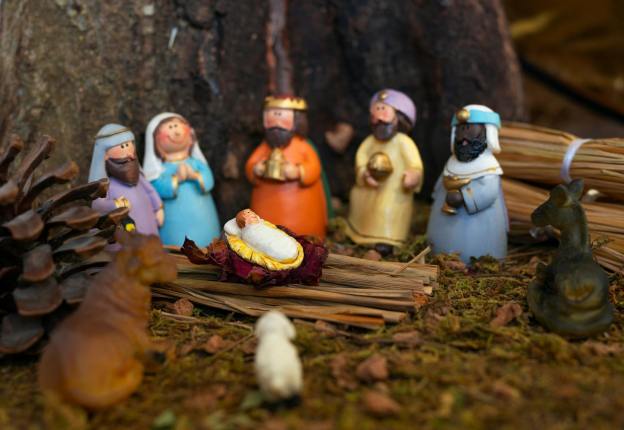
The magi. In God’s providence they were guided to the One in whom God is gathering all things, “things in heaven and things on earth.” To celebrate Epiphany is to recommit ourselves to their not having made that long trip for nothing.
Learning with the Astrologers (The Feast of the Epiphany, 1/6/2025)

Readings

Sometime in early Spring, shortly after what we celebrate as the Feast of the Annunciation, Mary had sung:

He has cast down the mighty from their thrones,
and has lifted up the lowly.
He has filled the hungry with good things,
and the rich he has sent away empty.
He has come to the help of his servant Israel,
for he has remembered his promise of mercy,
The promise he made to our fathers,
to Abraham and his children for ever.

We might mentally loop this song and let it play in the background throughout this sermon, for it provides an appropriate soundtrack for our Gospel reading, and the Gospel reading in turn shows the surprising ways in which it plays out.

And the Gospel reading, in turn, also looks like it’s playing off the texts we heard from Isaiah and our psalm. There’s the foreigners bringing gifts theme. Further, Matthew’s identified Jesus as Son of David in the opening verse of the Gospel, and here the quote from the prophet Micah identifies Jesus as the Messiah. Psalm 72’s gifts to the King’s Son fit right in. Gold and frankincense as gifts show up twice the the Bible: Isa 60 and Matt 2. Matthew’s interested in both the continuity (Ps 72) and discontinuity (Isa 60) of these texts with his story.

Our Isaiah text. For a sense of the situation, recall that when the returning exiles laid the foundation for the second temple, we’re told “many of the priests and Levites and heads of families, old people who had seen the first house on its foundations, wept with a loud voice when they saw this house, though many shouted aloud for joy” (Ezra 3:12). This temple: such an impoverished version of Solomon’s temple. But, proclaims the prophet: that’s not the last word. You will shine. Nations will come to your light. Nations, bringing gold and frankincense to the temple. Jesus’ “You are the light of the world” might come to mind.

So, enter the Magi, the astrologers. In Matthew’s world folk assumed that important events—like the birth of powerful kings—would be heralded in the heavens. Even the Book of Numbers recalled the pagan prophet Balaam’s words “I see him, but not now; I behold him, but not near– a star shall come out of Jacob, and a scepter shall rise out of Israel” (Num. 24:17a). The Magi have seen the star; they head for the capital.

We heard what happened: they’re redirected to Bethlehem. The gold and frankincense end up in Bethlehem. So Isaiah got it wrong? Not according to Matthew: if you’re looking for the true temple, it’s currently in Bethlehem. The Gospel of John made the same point with Jesus’ words “”Destroy this temple, and in three days I will raise it up” (Jn. 2:19); Matthew does it with this story.

Pulling back the camera, the Magi story reminds us of why we gentiles are celebrating this Jewish King’s birth. So in our second reading we heard “the Gentiles have become fellow heirs, members of the same body, and sharers in the promise in Christ Jesus through the gospel.” Jews and Gentiles, then (and now?) like the proverbial Hatfields and McCoys: and Jesus is uniting them. Matthew’s Gospel ends with the command to disciple all nations; the Magi story is the set-up.

The Magi. We met their counterparts in the competitions between Moses and Pharaoh’s magi and between Daniel and the Babylonian magi. The Jews (so to speak) get it right; the Gentiles get it wrong. And here the script gets reversed? Maybe. What doesn’t change is that in all three situations (Pharaoh’s court, the Babylonian court, Herod’s court) it’s the powerless who get it right.

That’s the warning both here and in Mary’s song. “He has come to the help of his servant Israel,” yes. But servant Israel—like servant Church—can be asleep at the switch. Not one of the chief priests or scribes accompany the Magi down to Bethelem. Better, I suppose, than Herod, who’s quite awake to any threat to his understanding of God’s kingdom. Being part of Israel or the Church: no guarantee that we’ll get it right. And the more power we have, the more careful we need to be.

Coming at this another way, in Mary’s song it sounds like God is making all the decisions. “He has filled the hungry with good things, / and the rich he has sent away empty.” In Matthew’s story the rich (so to speak) exclude themselves, the chief priests and scribes through some combination of sleep and inertia, Herod through fear.

Let’s return to Isaiah’s image of light.

Arise, shine; for your light has come,
and the glory of the LORD has risen upon you.
For darkness shall cover the earth,
and thick darkness the peoples;
but the LORD will arise upon you,
and his glory will appear over you.
Nations shall come to your light,
and kings to the brightness of your dawn.

No shortage of thick darkness these days. Isaiah—and Paul—don’t want us to be surprised by that. But precisely in the midst of that: “so that through the church the wisdom of God in its rich variety might now be made known to the rulers and authorities in the heavenly places.” And what is this wisdom that Paul is celebrating? That the Gentiles—all peoples—are now through the Messiah invited to full participation in God’s project of world healing initiated with Abraham and Sarah. Is this project of uniting all peoples in Christ sustainable? Is the water of baptism more potent than the inertia of ethnicity and culture? Did Mary and her song get it right? That’s what the Church—despite all its failings—is to demonstrate. “You are the light of the world.”

When the astrologers got it right (Epiphany)

Readings

Sometime in early Spring, shortly after what we celebrate it as the Feast of the Annunciation, Mary had sung:

He has cast down the mighty from their thrones,
and has lifted up the lowly.
He has filled the hungry with good things,
and the rich he has sent away empty.
He has come to the help of his servant Israel,
for he has remembered his promise of mercy,
The promise he made to our fathers,
to Abraham and his children for ever.

We might mentally loop this song and let it play in the background throughout this sermon, for it provides an appropriate soundtrack for our Gospel reading, and the Gospel reading in turn shows the surprising ways in which it plays out.

And the Gospel reading, in turn, also looks like it’s playing off the texts we heard from Isaiah and our psalm. There’s the foreigners bringing gifts theme. Further, Matthew’s identified Jesus as Son of David in the opening verse of the Gospel, and here the quote from the prophet Micah identifies Jesus as the Messiah. Psalm 72’s gifts to the King’s Son fit right in. Gold and frankincense as gifts show up twice the the Bible: Isa 60 and Matt 2. Matthew’s interested in both the continuity (Ps 72) and discontinuity (Isa 60) of these texts with his story.

Our Isaiah text. For a sense of the situation, recall that when the returning exiles laid the foundation for the second temple, we’re told “But many of the priests and Levites and heads of families, old people who had seen the first house on its foundations, wept with a loud voice when they saw this house, though many shouted aloud for joy” (Ezra 3:12). This temple: such an impoverished version of Solomon’s temple. But, proclaims the prophet: that’s not the last word. You will shine. Nations will come to your light. Nations, bringing gold and frankincense to the temple. Jesus’ “You are the light of the world” might come to mind.

So, enter the Magi, the astrologers. In Matthew’s world folk assumed that important events—like the birth of powerful kings—would be heralded in the heavens. Even the Book of Numbers recalled the pagan prophet Balaam’s words “I see him, but not now; I behold him, but not near– a star shall come out of Jacob, and a scepter shall rise out of Israel” (Num. 24:17a). The Magi have seen the star; they head for the capital.

We heard what happened: they’re redirected to Bethlehem. The gold and frankincense end up in Bethlehem. So Isaiah got it wrong? Not according to Matthew: if you’re looking for the true temple, it’s currently in Bethlehem. The Gospel of John made the same point with Jesus’ words “”Destroy this temple, and in three days I will raise it up” (Jn. 2:19); Matthew does it with this story.

Pulling back the camera, the Magi story reminds us of why we gentiles are celebrating this Jewish King’s birth. So in our second reading we heard “the Gentiles have become fellow heirs, members of the same body, and sharers in the promise in Christ Jesus through the gospel.” Jews and Gentiles, then (and now?) like the proverbial Hatfields and McCoys: and Jesus is uniting them. Matthew’s Gospel ends with the command to disciple all nations; the Magi story is the set-up.

The Magi. We met their counterparts in the competitions between Moses and Pharaoh’s magi and between Daniel and the Babylonian magi. The Jews (so to speak) get it right; the Gentiles get it wrong. And here the script gets reversed? Maybe. What doesn’t change is that in all three situations (Pharaoh’s court, the Babylonian court, Herod’s court) it’s the powerless who get it right.

That’s the warning both here and in Mary’s song. “He has come to the help of his servant Israel,” yes. But servant Israel—like servant Church—can be asleep at the switch. Not one of the chief priests or scribes accompany the Magi down to Bethelem. Better, I suppose, than Herod, who’s quite awake to any threat to his understanding of God’s kingdom. Being part of Israel or the Church: no guarantee that we’ll get it right. And the more power we have, the more careful we need to be.

Coming at this another way, in Mary’s song it sounds like God is making all the decisions. “He has filled the hungry with good things, / and the rich he has sent away empty.” In Matthew’s story the rich (so to speak) exclude themselves, the chief priests and scribes through some combination of sleep and inertia, Herod through fear.

Let’s return to Isaiah’s image of light.

Arise, shine; for your light has come,
and the glory of the LORD has risen upon you.
For darkness shall cover the earth,
and thick darkness the peoples;
but the LORD will arise upon you,
and his glory will appear over you.
Nations shall come to your light,
and kings to the brightness of your dawn.

No shortage of thick darkness these days. Isaiah—and Paul—don’t want us to be surprised by that. But precisely in the midst of that: “so that through the church the wisdom of God in its rich variety might now be made known to the rulers and authorities in the heavenly places.” And what is this wisdom that Paul is celebrating? That the Gentiles—all peoples—are now through the Messiah invited to full participation in God’s project of world healing initiated with Abraham and Sarah. Is this project of uniting all peoples in Christ sustainable? Did Mary and her song get it right? That’s what the Church—despite all its failings—is to demonstrate. ““You are the light of the world.”