Tag Archives: Magnificat

Learning with the Astrologers (The Feast of the Epiphany, 1/6/2025)

Readings

Sometime in early Spring, shortly after what we celebrate as the Feast of the Annunciation, Mary had sung:

He has cast down the mighty from their thrones,
and has lifted up the lowly.
He has filled the hungry with good things,
and the rich he has sent away empty.
He has come to the help of his servant Israel,
for he has remembered his promise of mercy,
The promise he made to our fathers,
to Abraham and his children for ever.

We might mentally loop this song and let it play in the background throughout this sermon, for it provides an appropriate soundtrack for our Gospel reading, and the Gospel reading in turn shows the surprising ways in which it plays out.

And the Gospel reading, in turn, also looks like it’s playing off the texts we heard from Isaiah and our psalm. There’s the foreigners bringing gifts theme. Further, Matthew’s identified Jesus as Son of David in the opening verse of the Gospel, and here the quote from the prophet Micah identifies Jesus as the Messiah. Psalm 72’s gifts to the King’s Son fit right in. Gold and frankincense as gifts show up twice the the Bible: Isa 60 and Matt 2. Matthew’s interested in both the continuity (Ps 72) and discontinuity (Isa 60) of these texts with his story.

Our Isaiah text. For a sense of the situation, recall that when the returning exiles laid the foundation for the second temple, we’re told “many of the priests and Levites and heads of families, old people who had seen the first house on its foundations, wept with a loud voice when they saw this house, though many shouted aloud for joy” (Ezra 3:12). This temple: such an impoverished version of Solomon’s temple. But, proclaims the prophet: that’s not the last word. You will shine. Nations will come to your light. Nations, bringing gold and frankincense to the temple. Jesus’ “You are the light of the world” might come to mind.

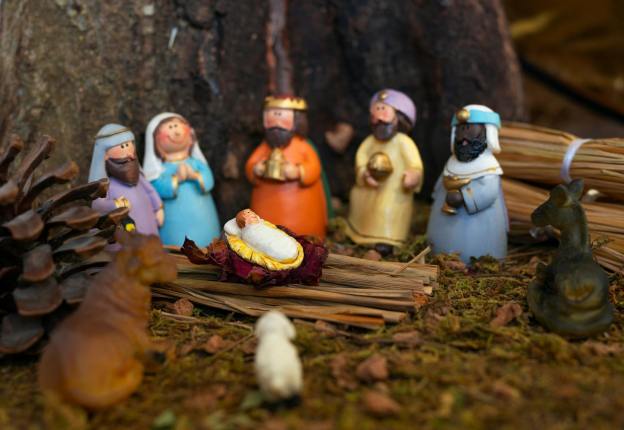
So, enter the Magi, the astrologers. In Matthew’s world folk assumed that important events—like the birth of powerful kings—would be heralded in the heavens. Even the Book of Numbers recalled the pagan prophet Balaam’s words “I see him, but not now; I behold him, but not near– a star shall come out of Jacob, and a scepter shall rise out of Israel” (Num. 24:17a). The Magi have seen the star; they head for the capital.

We heard what happened: they’re redirected to Bethlehem. The gold and frankincense end up in Bethlehem. So Isaiah got it wrong? Not according to Matthew: if you’re looking for the true temple, it’s currently in Bethlehem. The Gospel of John made the same point with Jesus’ words “”Destroy this temple, and in three days I will raise it up” (Jn. 2:19); Matthew does it with this story.

Pulling back the camera, the Magi story reminds us of why we gentiles are celebrating this Jewish King’s birth. So in our second reading we heard “the Gentiles have become fellow heirs, members of the same body, and sharers in the promise in Christ Jesus through the gospel.” Jews and Gentiles, then (and now?) like the proverbial Hatfields and McCoys: and Jesus is uniting them. Matthew’s Gospel ends with the command to disciple all nations; the Magi story is the set-up.

The Magi. We met their counterparts in the competitions between Moses and Pharaoh’s magi and between Daniel and the Babylonian magi. The Jews (so to speak) get it right; the Gentiles get it wrong. And here the script gets reversed? Maybe. What doesn’t change is that in all three situations (Pharaoh’s court, the Babylonian court, Herod’s court) it’s the powerless who get it right.

That’s the warning both here and in Mary’s song. “He has come to the help of his servant Israel,” yes. But servant Israel—like servant Church—can be asleep at the switch. Not one of the chief priests or scribes accompany the Magi down to Bethelem. Better, I suppose, than Herod, who’s quite awake to any threat to his understanding of God’s kingdom. Being part of Israel or the Church: no guarantee that we’ll get it right. And the more power we have, the more careful we need to be.

Coming at this another way, in Mary’s song it sounds like God is making all the decisions. “He has filled the hungry with good things, / and the rich he has sent away empty.” In Matthew’s story the rich (so to speak) exclude themselves, the chief priests and scribes through some combination of sleep and inertia, Herod through fear.

Let’s return to Isaiah’s image of light.

Arise, shine; for your light has come,
and the glory of the LORD has risen upon you.
For darkness shall cover the earth,
and thick darkness the peoples;
but the LORD will arise upon you,
and his glory will appear over you.
Nations shall come to your light,
and kings to the brightness of your dawn.

No shortage of thick darkness these days. Isaiah—and Paul—don’t want us to be surprised by that. But precisely in the midst of that: “so that through the church the wisdom of God in its rich variety might now be made known to the rulers and authorities in the heavenly places.” And what is this wisdom that Paul is celebrating? That the Gentiles—all peoples—are now through the Messiah invited to full participation in God’s project of world healing initiated with Abraham and Sarah. Is this project of uniting all peoples in Christ sustainable? Is the water of baptism more potent than the inertia of ethnicity and culture? Did Mary and her song get it right? That’s what the Church—despite all its failings—is to demonstrate. “You are the light of the world.”

When the astrologers got it right (Epiphany)

Readings

Sometime in early Spring, shortly after what we celebrate it as the Feast of the Annunciation, Mary had sung:

He has cast down the mighty from their thrones,
and has lifted up the lowly.
He has filled the hungry with good things,
and the rich he has sent away empty.
He has come to the help of his servant Israel,
for he has remembered his promise of mercy,
The promise he made to our fathers,
to Abraham and his children for ever.

We might mentally loop this song and let it play in the background throughout this sermon, for it provides an appropriate soundtrack for our Gospel reading, and the Gospel reading in turn shows the surprising ways in which it plays out.

And the Gospel reading, in turn, also looks like it’s playing off the texts we heard from Isaiah and our psalm. There’s the foreigners bringing gifts theme. Further, Matthew’s identified Jesus as Son of David in the opening verse of the Gospel, and here the quote from the prophet Micah identifies Jesus as the Messiah. Psalm 72’s gifts to the King’s Son fit right in. Gold and frankincense as gifts show up twice the the Bible: Isa 60 and Matt 2. Matthew’s interested in both the continuity (Ps 72) and discontinuity (Isa 60) of these texts with his story.

Our Isaiah text. For a sense of the situation, recall that when the returning exiles laid the foundation for the second temple, we’re told “But many of the priests and Levites and heads of families, old people who had seen the first house on its foundations, wept with a loud voice when they saw this house, though many shouted aloud for joy” (Ezra 3:12). This temple: such an impoverished version of Solomon’s temple. But, proclaims the prophet: that’s not the last word. You will shine. Nations will come to your light. Nations, bringing gold and frankincense to the temple. Jesus’ “You are the light of the world” might come to mind.

So, enter the Magi, the astrologers. In Matthew’s world folk assumed that important events—like the birth of powerful kings—would be heralded in the heavens. Even the Book of Numbers recalled the pagan prophet Balaam’s words “I see him, but not now; I behold him, but not near– a star shall come out of Jacob, and a scepter shall rise out of Israel” (Num. 24:17a). The Magi have seen the star; they head for the capital.

We heard what happened: they’re redirected to Bethlehem. The gold and frankincense end up in Bethlehem. So Isaiah got it wrong? Not according to Matthew: if you’re looking for the true temple, it’s currently in Bethlehem. The Gospel of John made the same point with Jesus’ words “”Destroy this temple, and in three days I will raise it up” (Jn. 2:19); Matthew does it with this story.

Pulling back the camera, the Magi story reminds us of why we gentiles are celebrating this Jewish King’s birth. So in our second reading we heard “the Gentiles have become fellow heirs, members of the same body, and sharers in the promise in Christ Jesus through the gospel.” Jews and Gentiles, then (and now?) like the proverbial Hatfields and McCoys: and Jesus is uniting them. Matthew’s Gospel ends with the command to disciple all nations; the Magi story is the set-up.

The Magi. We met their counterparts in the competitions between Moses and Pharaoh’s magi and between Daniel and the Babylonian magi. The Jews (so to speak) get it right; the Gentiles get it wrong. And here the script gets reversed? Maybe. What doesn’t change is that in all three situations (Pharaoh’s court, the Babylonian court, Herod’s court) it’s the powerless who get it right.

That’s the warning both here and in Mary’s song. “He has come to the help of his servant Israel,” yes. But servant Israel—like servant Church—can be asleep at the switch. Not one of the chief priests or scribes accompany the Magi down to Bethelem. Better, I suppose, than Herod, who’s quite awake to any threat to his understanding of God’s kingdom. Being part of Israel or the Church: no guarantee that we’ll get it right. And the more power we have, the more careful we need to be.

Coming at this another way, in Mary’s song it sounds like God is making all the decisions. “He has filled the hungry with good things, / and the rich he has sent away empty.” In Matthew’s story the rich (so to speak) exclude themselves, the chief priests and scribes through some combination of sleep and inertia, Herod through fear.

Let’s return to Isaiah’s image of light.

Arise, shine; for your light has come,
and the glory of the LORD has risen upon you.
For darkness shall cover the earth,
and thick darkness the peoples;
but the LORD will arise upon you,
and his glory will appear over you.
Nations shall come to your light,
and kings to the brightness of your dawn.

No shortage of thick darkness these days. Isaiah—and Paul—don’t want us to be surprised by that. But precisely in the midst of that: “so that through the church the wisdom of God in its rich variety might now be made known to the rulers and authorities in the heavenly places.” And what is this wisdom that Paul is celebrating? That the Gentiles—all peoples—are now through the Messiah invited to full participation in God’s project of world healing initiated with Abraham and Sarah. Is this project of uniting all peoples in Christ sustainable? Did Mary and her song get it right? That’s what the Church—despite all its failings—is to demonstrate. ““You are the light of the world.”

The Fourth Sunday of Advent (Year C): A Sermon

Readings

There’s a double dose of good news in today’s readings: God is indeed coming to set things right, and God generously invites us to be part of this. We’ll start with the invitation, then move to the setting things right.

The Gospel reading starts out “In those days…” If we ask “which days?” we need to go back a few verses and hear the angel Gabriel saying to Mary: “Do not be afraid, Mary, for you have found favor with God. And now, you will conceive in your womb and bear a son, and you will name him Jesus. He will be great, and will be called the Son of the Most High, and the Lord God will give to him the throne of his ancestor David. He will reign over the house of Jacob forever, and of his kingdom there will be no end.”

“Do not be afraid…” first, probably, because angels are powerful creatures. Gabriel’s one of the more powerful and he’s standing right there in the living room. But “Do not be afraid…” also because Mary’s a Jew, whose people have been colonized by a series of pagan empires for over five hundred years, Rome simply being the latest. Mary has to think back over 500 years to remember a time when the Jews were free—if only in theory. If we had to think that far back it’d put us before Columbus. After all that time, can the God of King David, who many think has been conspicuously absent for the last 500 years, be trusted?

Mary trusts, and at the end of the conversation responds “Here am I, the servant of the Lord; let it be with me according to your word.” God gives Mary—gives us—the quite amazing dignity of being agents in this story. Recalling our reading from Hebrews, Jesus is able to say “See, I have come to do your will” because Mary has given her “Here am I.” Jesus offers up his body because Mary has offered hers up: “let it be with me according to your word.”

Mary’s response brings us up to today’s reading, in which Mary heads for the one person who might understand what she’s just gotten herself into. Elizabeth, her relative, is also pregnant, despite being “advanced in years” and previously judged barren. An angel had been involved in that one also. A year before all this happened, neither Elizabeth nor Mary would have had any thought of being part of a divine project of this magnitude. But here they are.

Elizabeth greets Mary, and her speech takes up most of the Gospel reading. We read Mary’s reply, “The Song of Mary,” between the first two lessons. It’s one conversation.

Why did Luke include this scene? It doesn’t particularly advance the action. But it shows us something we almost never see elsewhere in the Gospels, and never at this length: two disciples talking to each other. And what comes through in both their speeches is a combination of “Oh, good, I’m not crazy,” wonder at being in the story at all, and a fierce joy at what God is doing.

“Oh, good, I’m not crazy.” Neither of them say that; I suspect both were thinking it: Elizabeth, preparing to be a mother when most of her friends are enjoying being grandmothers, Mary, with the angel’s voice—it was an angel, wasn’t it?—ringing in her ears. When you get caught up in God’s projects it helps to have someone with whom to run a sanity check. This is why God puts us into congregations.

Both are a little dazed at being in the story at all. “[W]hy has this happened to me, that the mother of my Lord comes to me?” “[F]or he has looked with favor on his lowly servant.” And the joy: present in Elizabeth’s “the mother of my Lord” and developed throughout Mary’s song.

Repentance, about which we’ve been speaking these last weeks, is not the focus of the Christian life. That would be like a photographer spending all her time cleaning her lenses. But it’s necessary so that something interesting can happen. And in the encounter between Elizabeth and Mary, we have an image of what that “something interesting” might look like. Two strong women, dreaming dreams and seeing visions, supported by and rejoicing in each other’s friendship, rejoicing in the first stirrings—quite literally—of what God is doing in their midst.

God’s generous invitation to be part of God’s good news, extended not just to Elizabeth and Mary, but to each one of us. Recall Paul’s absurdly mixed metaphor: “My children, I am going through the pain of giving birth to you all over again, until Christ is formed in you” (Gal. 4:19 NJB). Until Christ is formed in you.

Now, what about this business of God coming to set things right? Here we might focus on these lines from Mary’s song:

He has shown the strength of his arm,
he has scattered the proud in their conceit.
He has cast down the mighty from their thrones,
and has lifted up the lowly.
He has filled the hungry with good things,
and the rich he has sent away empty.

Mary’s channeling pretty much the entire biblical witness here: we as a race have turned away from God and as a result regularly commit atrocities against our neighbors, all of whom bear God’s image. So “setting things right” is more than a bit of reform here or there. The status quo is inhuman. No wonder that the British banned the singing of Mary’s song in India during their rule, or that in the 1980’s the Guatemalan government banned its public recitation, or the military junta in Argentina banned its public display.[1]

Is God’s coming good news? If my status and riches depend on oppression and violence, not so much. So, not surprisingly, some of the most pointed prayers in the Book of Common Prayer are assigned to these four weeks of Advent:

Week 1: …give us grace to cast away the works of darkness…

Week 2: …Give us grace to heed their warnings and forsake our sins…

Week 3: …because we are sorely hindered by our sins, let your bountiful grace and mercy speedily help and deliver us;

Week 4: Purify our conscience, Almighty God, by your daily visitation…

So, in one of our prayers of confession, we acknowledge “the evil we have done, and the evil done on our behalf.”Is God’s coming good news? Depends on which side I’m on, the sheep or the goats, and the Advent season pleads with us to take this seriously.

OK, preacher, how do we witness to this? If the status quo is inhumane, what do we do? A good chunk of the New Testament is devoted to this question; consider these snapshots:

Jesus’ instruction: “You know that among the Gentiles those whom they recognize as their rulers lord it over them, and their great ones are tyrants over them. But it is not so among you; but whoever wishes to become great among you must be your servant, and whoever wishes to be first among you must be slave of all.” (Mk. 10:42-44)

Philemon is a slave-owner and Onesimus a slave: Paul tells Philemon they need to treat each other as brothers in Christ. That plants the seed that eventually results in many countries abolishing slavery.

The first witnesses to the resurrection are women, and Junia is recognized among the apostles (Rom 16:7). Things like these plant the seed that eventually results in women winning civil rights and, in some parts of the Christian Church, the barriers falling to ordination.

“Honor the emperor” (1 Peter 2:17)—and hold the empire accountable for the pretty language it uses to describe its values (Acts 16:35-40).

In short, the default strategy is consenting to God transforming our life together in the church (“let it be with me according to your word.”) and that acting as a catalyst—as leaven—for the whole loaf. And, when it comes to it (“We must obey God rather than any human authority.” ([Acts 5:29]), not being afraid to cause “good trouble.”

God is coming to set things right and—wonder of wonders—we’re invited to be a part of that. How might that play out in the week ahead?


[1] See http://enemylove.com/subversive-magnificat-mary-expected-messiah-to-be-like/, accessed 12/7/2021.