Tag Archives: Revelation

The God Who would be at Home with Us (6th Sunday of Easter, 5/25, 2025)

Readings (Using the John 14 reading)

I hope you’ve not skimped on the coffee this morning, because we’re going to jump into the deep end, that reading from the Revelation. That, in turn, will set us up to think about what the Church is for—not a bad question since we’re only two weeks out from celebrating Pentecost.

Revelation likes images that shimmer, enigmatic images. John hears “the Lion of the tribe of Judah, the Root of David,” but what John sees is “a Lamb standing as if it had been slaughtered” (5:5-6). So here, toward the end of the book, John hears “the bride, the wife of the Lamb,” but what John sees is “the holy city Jerusalem coming down out of heaven from God” (21:9-10). This is something like what we encounter in Physics 101. Is light a particle or a wave? Yes, depending on what you’re trying to explain.

The new Jerusalem. No need for a temple, or a sun, for that matter: “for its temple is the Lord God the Almighty and the Lamb.… for the glory of God is its light, and its lamp is the Lamb.”

“The nations will walk by its light, and the kings of the earth will bring their glory into it.” Pull the camera back to include John’s Bible (our Old Testament) and it’s clear that this New Jerusalem is finally fulfilling the hopes for the original Jerusalem. Recall Isaiah:

In days to come
the mountain of the LORD’s house
shall be established as the highest of the mountains,
and shall be raised above the hills;
all the nations shall stream to it.
Many peoples shall come and say,
“Come, let us go up to the mountain of the LORD,
to the house of the God of Jacob;
that he may teach us his ways
and that we may walk in his paths.”
For out of Zion shall go forth instruction,
and the word of the LORD from Jerusalem. (2:2-3)

Something beautiful is happening, and the nations want in on it.

Then there’s that river the prophet Ezequiel saw flowing from God’s presence: “On either side of the river is the tree of life with its twelve kinds of fruit, producing its fruit each month; and the leaves of the tree are for the healing of the nations.” So healing is needed—still! The city has gates, the classic means of controlling access, but the gates are never shut. A bit later we’ll hear “The Spirit and the bride say, ‘Come.’ And let everyone who hears say, ‘Come.’ And let everyone who is thirsty come. Let anyone who wishes take the water of life as a gift” (22:17). Jerusalem is finally fulfilling its role, being the place where God’s glory is visible and healing is freely available.

I mentioned enigmatic images a bit ago, and in its final chapters the Revelation takes these to a different level in the form of two juxtaposed stories. In the one, a decisive battle in which evil is destroyed and the great white throne before which everything is sorted out. On the other hand, open-gated Jerusalem offering glory, joy, and healing to all who would enter. Well, which is it? What the Revelation may want to show us is that within the limits of human language and human understanding our clearest picture is this pair of starkly contrasting images.

Perhaps this should not be surprising. Recall how our story starts. Genesis gives us not one, but two creation stories. In one everything is good from the start, the humans play no active role, the seven days are as much liturgy as anything. In the other God works by trial and error, Adam plays an important role, and the good emerges at the end of the process: “This at last is bone of my bones and flesh of my flesh; this one shall be called Woman, for out of Man this one was taken” (2:23). To capture the reality of the beginning and ending of human history Scripture gives us pairs of stories.

What may be at stake in these pairs of stories is the challenge of doing justice to God’s sovereignty and human freedom. There’s a popular saying attributed to various folk (Augustine, Ignatius, etc.) “Pray as though everything depended on God. Work as though everything depended on you.” Maybe, but it could be heard as a call to run ourselves ragged. I like what the Ignatian author Jim Manney does with it:

“I prefer to reverse it: ‘pray as if everything depends on you, and work as if everything depends on God.’ This means that prayer has to be urgent: God has to do something dramatic if everything depends on me. It also puts our work in the right perspective: if it depends on God, we can let it go. We can work hard but leave the outcome up to him. If God is in charge we can tolerate mixed results and endure failure.”[1]

OK, what of the Church? In John’s vision there’s the New Jerusalem, finally doing its job. Sounds pretty good. What happens until then? Let’s circle back to the angel’s words: “Come, I will show you the bride, the wife of the Lamb.” “The bride, the wife of the Lamb:” that sounds like the language used elsewhere in the New Testament for Christ as bridegroom and the Church as bride. Or, to come at John’s vision from another angle, from 1st Corinthians: “Do you not know that you are God’s temple and that God’s Spirit dwells in you (3:16)?” Or, more extensively in Ephesians, “So then you are no longer strangers and aliens, but you are citizens with the saints and also members of the household of God, built upon the foundation of the apostles and prophets, with Christ Jesus himself as the cornerstone. In him the whole structure is joined together and grows into a holy temple in the Lord; in whom you also are built together spiritually into a dwelling place for God” (2:19-22).

Because God desires that all enter freely into joy, into God’s presence, God really needs a place where God can be at home, where God’s healing glory is visible, and that is the Church. That’s the dynamic in this morning’s psalm, God’s blessing here that ripples out to the corners of the earth. That’s at the core of today’s Gospel: “we will come to them and make our home with them.” This is why, by the way, the New Testament letters devote virtually no attention to evangelism and virtually all their attention to the elements in congregational life that make God’s healing glory easier or harder to see.

And this sweeping vision plays out in the decisions of specific women and men, folk like Lydia, that dealer in purple cloth from our first reading, folk like you and me.

We’re here, God knows, because we need to be here. And in the larger story that the Revelation brings into focus, we’re here because God needs places where God’s at home, where God’s healing glory can be visible in the common life of God’s people, whether gathered together or scattered through our communities during the week. A tall order, yes, which is why Jesus speaks of the Holy Spirit on approach, the flaps extending, wheels down.


[1] https://www.ignatianspirituality.com/work-as-if-everything-depends-on-god/ (accessed 5/16/2022).


Why The Revelation thinks we need courage (5th Sunday of Easter, 5/18/2025)

Readings (The Revelation reading is extended to include vv.7-8: “Those who conquer will inherit these things, and I will be their God and they will be my children. But as for the cowardly, the faithless, the polluted, the murderers, the fornicators, the sorcerers, the idolaters, and all liars, their place will be in the lake that burns with fire and sulfur, which is the second death.”)

At Baptism there’s a prayer for the newly baptized, part of which runs “Sustain them, O Lord, in your Holy Spirit. Give them an inquiring and discerning heart, the courage to will and to persevere, a spirit to know and to love you, and the gift of joy and wonder in all your works” (BCP 308). Today’s readings, with the baptism of the Gentile Cornelius with his family and friends in the background, can help us hear this prayer more clearly, particularly that ‘courage’ bit. Let’s dive in.

Our Revelation reading gives us John’s vision of a new heaven and a new earth. But in what sense ‘new’? Here—as in most of the book—John is playing off particular Old Testament texts, specifically the announcement of a new heaven and earth toward the end of Isaiah. Here’s a bit of it: “They shall build houses and inhabit them; they shall plant vineyards and eat their fruit. They shall not build and another inhabit; they shall not plant and another eat; for like the days of a tree shall the days of my people be, and my chosen shall long enjoy the work of their hands” (Isa. 65:21-22). That may sound underwhelming until we remember that for Isaiah’s audience, as for most people in most times and places, it’s revolutionary. The normal in most times and places is that you have your house or vineyard only until someone more powerful decides they want it. So the new heaven and new earth is this heaven and earth—with justice. And already we get a sense of why ‘courage’ might be relevant, because the powerful tend to be happy with things as they are.

Well, how do we get from here to there (pretty much the question that drives the whole Book of Revelation)? Revelation answers by rereading the Old Testament, thereby challenging popular misreadings. Last Sunday we noticed two of John’s rereadings: he hears “the Lion of the tribe of Judah” but sees “a Lamb standing as if it had been slaughtered.” He hears of 144,000 Israelites being sealed (probably for violent battle) but sees “a great multitude that no one could count, from every nation, from all tribes and peoples and languages.” The slaughtered Lamb wins the new heaven and new earth; that great multitude follows His lead.

So, in today’s text, “See, I am making all things new.” But lest we assume that we’re just passive beneficiaries, there are the last two verses that focus on our responses, conquering or not.

“Those who conquer will inherit these things, and I will be their God and they will be my children.” “Those who conquer” echoes the promises that end each of the messages to the seven churches in chapters 2 and 3. The first: “To everyone who conquers, I will give permission to eat from the tree of life that is in the paradise of God” (2:7). The last: “To the one who conquers I will give a place with me on my throne, just as I myself conquered and sat down with my Father on his throne” (3:21). “Those who conquer” is another one of John’s reinterpretations. It’s the language of holy war, but interpreted by the slaughtered Lamb: to conquer is to give faithful witness—as did the Lamb—despite the dangers. In a world too often enslaved by lies, witnessing to the truth can be liberating—and dangerous.

So “those who conquer” theme highlights the virtue of courage, “the cowardly” head John’s list of those excluded. That, of course, is a deeply troubling list, troubling enough that the Revised Common Lectionary ends the reading two verses earlier. But John’s been arguing throughout the book that our choices now matter, whether we accept God’s generosity matters, whether there are witnesses to the truth in the midst of lies matters, whether we’re finally about “Your will be done” or “My will be done” matters. As for that “lake that burns with fire and sulfur,” it’s an image within a vision; it would be pointless to look for it using Google Maps. Nor is Scripture sure that anyone actually ends up there. God, as Paul writes to Timothy “desires everyone to be saved” (1 Tim. 2:4). But John doesn’t want us to forget that our choices matter.

How do we get from here to there? There’s another dimension to that question that sets us up for our other readings. “See—John hears—the home of God is among mortals.” But since it’s the New Jerusalem that’s coming down, why isn’t it “the home of God is among the Jews?” Back toward the start of the story God had promised Abraham “You shall be the ancestor of a multitude of nations” (Gen. 17:4). But how that was going to work was never clear. Notice how today’s psalm ends: “He has raised up strength for his people / and praise for all his loyal servants, / the children of Israel, / a people who are near him. / Hallelujah!” It was easy to assume that the distinction between the children of Israel and everyone else was baked into creation itself, so that the only way to become part of God’s people is to become Jews. Which is why Peter got an earful in our first reading.

Peter had had a disquieting vision. Before he could digest it the messengers from the gentile centurion Cornelius showed up looking for him, and the Spirit said “Go!” Peter preached to Cornelius and his family and friends, and the Holy Spirit descended. These gentiles spoke in tongues, praised God; Peter had them baptized.

And, as our text tells us, the “circumcised believers” criticized him. Why? Well, following their reading of texts like Psalm 148, Peter should have first circumcised them, then discussed baptism. But the Spirit decided otherwise. Cornelius’ house is where the question of how Abraham becomes “the ancestor of a multitude of nations” got decided.

As you may recall, those favoring an exclusivist reading of texts like Psalm 148 did not give up easily. So Peter’s hearers’ conclusion “Then God has given even to the Gentiles the repentance that leads to life” is deeply problematic in what it doesn’t acknowledge. First, God gave both Peter and the Gentiles repentance. “By no means, Lord; for nothing profane or unclean has ever entered my mouth.” Had Peter stayed stuck there, no story. Second, God gave to the Gentiles repentance as Gentiles: they didn’t need to become Jews first.

It’s hard to overestimate the importance of this story. Bishop Lesslie Newbigin uses this story to capture the difference between evangelism and proselytism: in proselytism only the hearers are supposed to change. Here it’s a Jewish problem, but it quickly becomes a Gentile problem, with the Gentile Christians saying to the Jewish Christians “If you don’t eat pork you’re not a real Christian.” And any group with a bit of power can play this game: “You’re not a real Christian until you’re like us. We decide what your repentance needs to look like.”

In terms of John’s vision, Peter is one who conquers, not by demanding that Cornelius with his family and friends become like him, but by courageously following the lead of the Spirit, despite the flak he knows he’s going to get from Jerusalem. He conquers because he understands that repentance is an ongoing project. Our brother Martin Luther nailed it in the first of his 95 theses: “When our Lord and Master Jesus Christ said, “Repent” (Mt 4:17), he willed the entire life of believers to be one of repentance.” (And recall that in the Episcopal tradition the core of repentance is not simply feeling sorry about what one’s done, but changing one’s behavior.)

Our Gospel text’s “I give you a new commandment, that you love one another” takes John’s “Those who conquer” in a related direction. We don’t need that commandment when we’re in agreement; it’s when we disagree seriously that “love one another” needs to kick in. “Those who conquer” are not those who’ve brought everyone else around to their way of thinking, but those whose love keeps the circle unbroken. Like the apostles did during Easter week. They were all “Alleluia” and Thomas “I really would like to see some, you know, evidence,” and they’re still together when Jesus appears again. That’s love, courageous love. That’s conquering.

So, picking up the baptismal prayer, “Sustain us, O Lord, in your Holy Spirit. Give us an inquiring and discerning heart, the courage to will and to persevere, a spirit to know and to love you, and the gift of joy and wonder in all your works.”

About that “valley of the shadow of death” (4th of Easter, 5/11/2025)

Readings

“Listen to what the Spirit is saying to the churches.” Today’s texts keep us on our toes, zooming in on the individual, zooming out to capture the whole course of our history with God. Of the texts, Psalm 23 is the best known, so we’ll start there.

Formally, it’s an extended, an exuberant, affirmation of trust. It’s often set to soothing music. That’s not bad, but it doesn’t help us notice the drama. That line, “guides me along right pathways.” And we always follow the guidance we’re given?  So, toward the end: “Surely your goodness and mercy shall follow me…” That’s a head-scratcher of a translation; normally we’d translate the verb ‘pursue.’ There are times when I’ve blown off the guidance and God’s goodness and mercy need to pursue me. In other words, that one sheep that goes astray in Jesus’ parable: that would be most of us from time to time.

“Though I walk through the valley of the shadow of death, / I shall fear no evil; / for you are with me.” Just what is the psalmist trusting? That things will always be placid? This year our Great Vigil again included Shadrach, Meshach, and Abednego in the fiery furnace: “for you are with me” indeed!

And here we’re at the border between the individual and the global perspectiver, because there’s that popular response to the psalmist’s words: “Though I walk through the valley of the shadow of death, / I shall fear no evil; / for I’m the baddest *** in the valley.” What does it mean to live smart, in full awareness of the world as it is?

Which brings us to our text from the Revelation, whose central question is—arguably—how God conquers evil. The Revelation answers that question by transforming popular religious symbols in the light of Christ. It contrasts what John hears and what John sees. We heard part of one of those contrasts last Sunday. John hears “the Lion of the tribe of Judah, the Root of David, has conquered.” And we expect that John will see a mighty warrior. But no: “Then I saw… a Lamb standing as if it had been slaughtered.” God conquering evil doesn’t play out as we expect.

Today’s reading gives us another contrast. Just before the verses we heard John hears the command to mark out twelve thousand from each of the twelve tribes, the “one hundred forty four thousand,” implying preparation for a holy war. What John sees (today’s reading): “a great multitude that no one could count, from every nation, from all tribes and peoples and languages.”

Who are they? John’s told: “These are they who have come out of the great ordeal; they have washed their robes and made them white in the blood of the Lamb.” The description suggests martyrdom, and that would make sense, because the Revelation is warning its hearers that the psalmist’s “right pathways” could result in martyrdom (recall Shadrach, Meshach, and Abednego). But if martyrs, martyrs because they are first witnesses. In that, they follow Jesus, for ‘witness,’ as we heard two Sundays ago, is the first thing the Revelation needs to say about Jesus: “the faithful witness.”

How does God conquer evil? The Revelation’s answer: “a Lamb standing as if it had been slaughtered.” And we’re the witnesses, we who—in the words of the Great Vigil—“once renounced Satan and all his works, and promised to serve God faithfully in his holy Catholic Church” (BCP 292). Perfect witnesses? No, hence the pursuing goodness and mercy.

And in all this the Revelation slips in another transformation. Who does the shepherding? The Lamb. The Lamb is the Shepherd, and it is with that glad affirmation that we continue to use and put our weight on Psalm 23.

A couple comments on the other readings and I’ll close. The reading from John chapter 10 continues the theme of Jesus as the Good Shepherd, introduced at the beginning of that chapter. Verse 26 might awaken some Calvinistic anxiety: “but you do not believe, because you do not belong to my sheep.” So there are Jesus’ sheep and not Jesus’ sheep, forever divided? That would make nonsense of John’s Gospel, written, as we heard two Sundays ago, “so that you may come to believe that Jesus is the Messiah, the Son of God, and that through believing you may have life in his name.” So we might better hear v.26 as “but you do not believe, because you do not [yet] belong to my sheep.”

Tabitha’s story in Acts does a number of things. First, it reminds us that the psalmist’s “right pathways” do not always lead to an interview with Nebuchadnezzar, Pilate, etc. Witness, whether borne by Jesus, that great multitude, or Tabitha, is life-giving, thus all the widows “weeping and showing tunics and other clothing that Dorcas had made while she was with them.” Her resurrection (that’s the verb behind the NRSV’s “get up”) witnesses that the psalmist’s trust was well-founded: “and I will dwell in the house of the Lord forever.”

And, perhaps most importantly, this shepherding role is not confined to Jesus. Tabitha, with her “good works and acts of charity” shepherded. “My sheep hear my voice…and they follow me” said Jesus. After stories like Tabitha’s we might paraphrase: “My sheep hear my voice, they follow me, they shepherd.” And so her story gives us one enfleshment of the Revelation’s vision: How does God conquer evil? One tunic at a time.

Be prepared for him who knows how to ask questions (3rd Sunday of Easter, 5/4/2025)

Readings

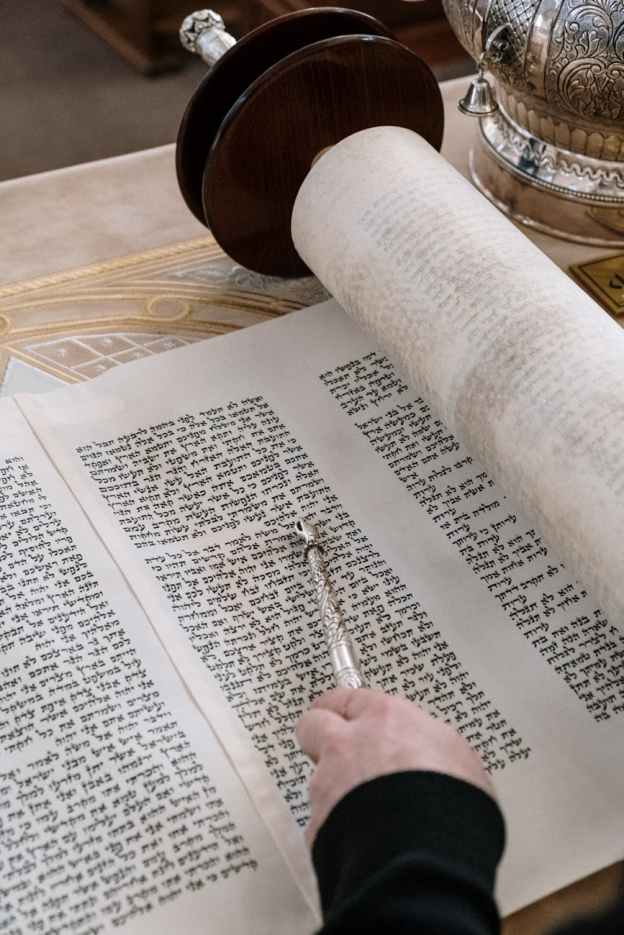
Our second lesson picks up in the middle of one of John’s visions: a scroll in God’s hand, sealed with seven seals, and the question “Who is worthy to open the scroll and break its seals?” And whether in heaven or on earth or under the earth—the classic way of dividing up creation—no one was able, and John begins to weep bitterly.

So what’s in the scroll? John doesn’t tell us. Not, I think, because he doesn’t know, but because the scroll as a symbol can do more if it shimmers a little, if it points to a number of possibilities. That scroll might remind us of the collection of scrolls that was Holy Scripture. Who can open that, offer a trustworthy and authoritative interpretation? All the divergent voices, all the dead ends: what does it come to in the end? Or, to worry about more than the Jews, the scroll might remind us of our problem of getting our head around human history. History: “one damn thing after another”? Or, closer to home, that well-sealed scroll might remind us of the challenge of understanding our own selves, our own histories. Take it in any or all of those ways, and we don’t have much difficulty joining John as he weeps.

And then one of the elders says to John, “Do not weep. See, the Lion of the tribe of Judah, the Root of David, has conquered, so that he can open the scroll and its seven seals.” Those two titles, ‘Lion of the tribe of Judah’, and ‘Root of David’ had been used in the centuries leading up to Jesus’ birth for the Messiah, and both promised strength, victory, conquest. With that sort of introduction, what we expect John to see is something or someone like Schwarzenegger. But what John sees is “a Lamb standing as if it had been slaughtered.”

The elder announces a Lion; what John sees is a Lamb. So what’s going on? A divine bait & switch? That’s perhaps what the crowd who cried “Crucify him!” thought. Or perhaps the most profound statement of what God’s power looks like: Jesus of Nazareth, the one who had every right to demand service, but who came to serve and to give his life—this is the slain Lamb part—a ransom for many.

And it is this Lion/Lamb who is worthy to take, open, and read that scroll in all the possible senses we noticed. Jesus, the one whose life and work is the fulfillment of that strange assortment of loose ends that we now call the Old Testament. Jesus, the one who has entered our history, and so given us the hope that it may end with something more than a bang or a whimper. As followers of the slaughtered Lamb, we live from the hope that God will bring good also out of the evils we encounter. Jesus, the one who can open the scroll that is my own life.

Jesus, the slaughtered Lamb, opening the scroll that is my life. Our other two readings give us some help imagining what this looks like, and in both cases it’s by asking questions. Jesus, of course, does more than ask questions. He gives commands (“love one another”, “Go therefore and make disciples of all nations”), describes our world, tells very odd stories, weeps, laughs. But Jesus does ask questions, and that’s maybe when Jesus is most… dangerous.

Let me digress. My favorite poems are a collection of choruses T. S. Eliot wrote for a pageant play called “The Rock.” Friends in Berkeley introduced me to them; I found them in one of Berkeley’s many used bookstores in 1971. A few lines for the sheer joy of it:

We build in vain unless the Lord build with us.
Can you keep the City that the Lord keeps not with you?
A thousand policemen directing the traffic
Cannot tell you why you come or where you go.
A colony of cavies or a horde of active marmots
Build better than they that build without the Lord….
When the Stranger says: “What is the meaning of this city?
Do you huddle close together because you love each other?”
What will you answer? “We all dwell together
To make money from each other”? or “This is a community”?
And the Stranger will depart and return to the desert.
O my soul, be prepared for the coming of the Stranger,
Be prepared for him who knows how to ask questions.

So Saul, en route to Damascus, encounters a very bright light and a voice: “Saul, Saul, why do you persecute me?” And that question is the beginning of the transformation of his world.

And maybe only a couple of years earlier at the Sea of Galilee, the disciples after a fruitless night of fishing hear the voice of a stranger on the shore: “Children, you have no fish, have you?” They follow his instructions and end up with a net too full to bring into the boat.

Later, after breakfast:
—Simon son of John, do you love me more than these?
—Yes, Lord; you know that I love you.
—Feed my lambs.
—Simon son of John, do you love me?
—Yes, Lord; you know that I love you.
—Tend my sheep.
—Simon son of John, do you love me?
—Lord, you know everything; you know that I love you.
—Feed my sheep.

Readers have long noticed that these three questions correspond to Peter’s three denials the night of Jesus’ arrest; the denials were in public, so too these affirmations. But there’s also something very intimate going on here. Peter’s responses matter to Jesus. Jesus loves Peter, and so Peter’s responses matter on a personal level. As do your responses, as do your responses, as do mine. That’s the sort of vulnerability that love brings, even and particularly to this slaughtered Lamb.

So, what questions is Jesus asking me? What questions is Jesus asking you? “Well, I don’t hear Jesus asking any questions!” Nor does someone who’s got the sound system cranked all the way up hear the call to dinner. Some noise we can’t control; some we can, and only after we’ve minimized the noise we can control are we in a position to complain “Well, I don’t hear Jesus asking any questions!”

The Lion of the tribe of Judah, the slaughtered Lamb, asking me, asking us, the questions that will open and render intelligible our lives, our world.

“Worthy is the Lamb that was slaughtered to receive power and wealth and wisdom and might and honor and glory and blessing!”