Each of today’s readings could fuel multiple sermons. This time around let’s focus on Psalm 19. Thematically it breaks into three parts: creation (vv.1-6), the law (vv.7-11), and what we might call divine intervention (vv.12-14). Each part is an important part in a faithful life. Is it a complete picture of a faithful life? No. There’s no attention to the community—for that we’d need other psalms. But it gives us more than enough to think about this morning.
“The heavens declare the glory of God, / and the firmament shows his handiwork.” Creation proclaims God’s glory; creation is worthy of our sustained attention. The physicists give us the clearest picture of this, the fine tuning of the various constants that make a stable universe possible, for which see folk like John Polkinghorne. For the world of flora and fauna, I often return to Annie Dillard’s Pilgrim at Tinker Creek.
“The creator goes off on one wild, specific tangent after another, or millions simultaneously, with an exuberance that would seem to be unwarranted, and with an abandoned energy sprung from an unfathomable font. What is going on here? The point…is not that it all fits together like clockwork…but that it all flows so freely wild, like the creek, that it all surges in such a free, fringed tangle. Freedom is the world’s water and weather, the world’s nourishment freely given, its soil and sap: and the creator loves pizzazz” (p.135).
“Consider the lilies of the field” Jesus tell us, and how much of his teaching depends on his having first himself considered God’s creation! So theologians like Augustine talk about God’s two books, Scripture and the book of nature. In short, the first part of our psalm: going outside and paying attention is a spiritual discipline.
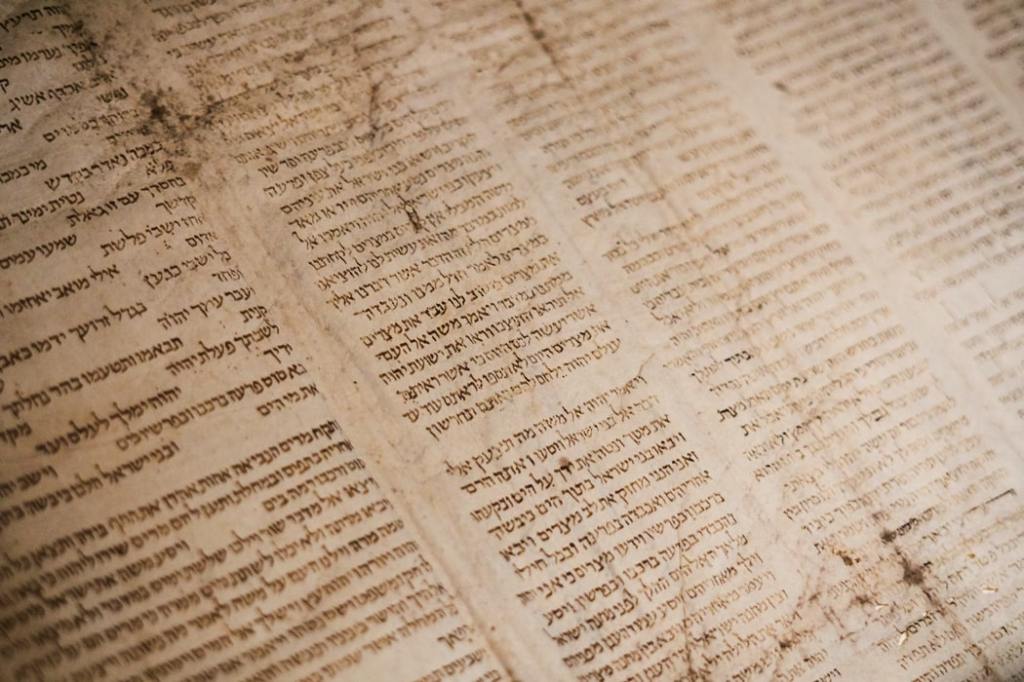
If God’s glory is found in creation it’s equally found in God’s Torah (“teaching” or, more narrowly, “law”). The joy expressed in this second part, vv.7-11, is perhaps most clearly expressed in the Jewish celebration of Simhat Torah (“Joy of the Teaching/Law”). The Torah (Genesis-Deuteronomy) is read in the synagogue over the course of the year. Simhat Torah, in which members of the congregation dance with the Torah scroll, celebrates the end of the reading and the opportunity to begin the reading again. The Decalogue, that part of the Torah from our first reading, gives us an opportunity to enter into that joy. “I am the LORD your God, who brought you out of the land of Egypt, out of the house of slavery.” What follows: how to live as free people. The Godly Play curriculum calls this text “The Ten Best Ways to Live.”
“You shall have no other gods before me.” There is only one God we need to keep happy. An improvement over the various polytheisms then on offer, with multiple gods to keep happy. An improvement over our current de facto polytheism. So many gods want a piece; so many commercials: without me, you’re toast.
“Remember the sabbath day.” God’s creation is generous enough that six days of labor provides for seven days of life. If seven days are required, or if the scheduling is such that there’s no dependable weekly day of rest, that’s a sure sign that Pharaoh has returned.
You shall not murder, commit adultery, steal, etc. We don’t have to do these things to preserve/enhance our life.
“The Ten Best Ways to Live” indeed.
Now, the big surprise in the psalm is that it doesn’t end with v.11. After all that’s just been said about Torah, why do we need vv.12-13? Why indeed?
It turns out that we humans are pretty good at coopting/subverting anything, including Torah. In our best moments this happens almost by accident; in our worst, quite deliberately. The dog is wagging the tail, the dog is wagging the tail… and one day we discover the tail wagging the dog.
The activities Jesus discovered in the temple (John 2). “In the temple he found people selling cattle, sheep, and doves, and the money changers seated at their tables.” All that probably started legitimately enough: animals are necessary for sacrifice and some worshippers may have preferred to buy locally rather than bring the animals from their village. The money changing? Common currency had an image of the emperor, for whom divine prerogatives were claimed, and the temple authorities came to believe that such coins were inappropriate in the temple. It starts legitimately enough; but soon the penny drops that there’s a great deal of money to be made. The tail wags the dog, and all for the greater glory of God.
“Cleanse me from my secret faults…keep your servant from presumptuous sins.” The psalmist doesn’t explain how God does this, even as it’s clear that if it’s just me and Torah it’s not going to end well. How God does this: here’s where the psalmist could have talked about the community, particularly those members of the community that I don’t like to listen to. (“I want you to give me at once the head of John the Baptist on a platter” [Mk. 6:25].) It’s probably more prudent to listen to John than to leave God no other alternative than sending in Jesus, whip of cords in hand.
This unexpected turn in vv.12-13 is probably related to Paul’s critique of “the wisdom of the wise, and the discernment of the discerning” in our second reading. Often the problem with this wisdom/discernment is that it assumes that we’ve heard all we need to hear from God. We have the Torah; we have the Bible; what more do we need? And we end up crucifying Christ again.
But the psalmist’s “cleanse me” trusts that it doesn’t need to end like this. “Cleanse me from my secret faults…keep your servant from presumptuous sins.” Why? Look at the last verse: “Let the words of my mouth and the meditation of my heart / be acceptable in your sight, / O Lord, my strength and my redeemer.” The heavens are declaring God’s glory—that’s where we started. The psalmist’s hope/prayer is that the psalmist’s voice finally join that voiceless praise.
Not a bad agenda for Lent—or the rest of the year: get outside and pay attention, drink deeply from Torah with its “Ten Best Ways to Live,” listen for how God—often through our neighbor—may be trying to free us from our self-serving readings.

 With Jacob at Bethel