“Surely the Lord is in this place—and I did not know it” (Gen 28:16). Here we wonder about encountering G-d at the intersection of Bible and Life–typically prompted by the (Episcopal) Book of Common Prayer.
Re Judges, by now it’s clear that Israel doesn’t need exterior enemies to suffer damage. “People did what was right in their own eyes” is amply illustrated. If having a king would have made things better—we’ll see.
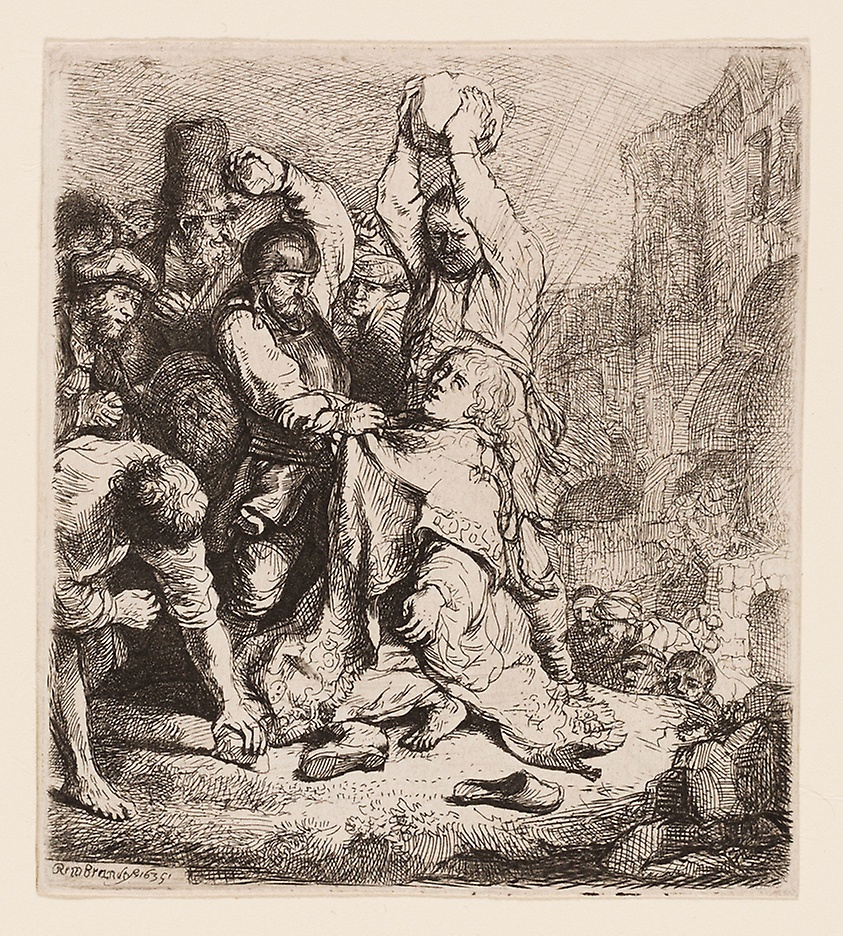
Re Acts, James Dunn’s The Partings of the Ways explores how two Second Temple groups, the Pharisees and Jesus’ followers, ended up as Judaism and Christianity. If the “pillars” of Second Temple faith are monotheism, election, covenant focused in Torah, and land focused in Temple, Stephen’s speech represents perhaps the earliest parting. Stephen describes the Temple as “made with human hands” (cheiropoiētos), a word typically used for idols (Lev 26:1, Isa 2:18, Dan 5:4, etc.)! If that’s what the Temple is…
Re John, the Feast of St. Mary (Aug 15) bumped the reading of the beginning of John 5. There Jesus, back in Jerusalem, heals the paralytic—on the Sabbath. The Jewish authorities challenge him; today’s reading picks up his response. Why does Jesus focus on the resurrection? Perhaps the answer has something to do with “Rise, take up thy bed, and walk” (v.8 KJV). The former paralytic and the authorities focus on “take up thy bed, and walk” (vv.11, 12). ‘Raise up/rise’ (egeirō) can also be used of resurrection (v.21; cf. Isa 28:19, Matt 14:2, etc.), and Jesus focuses on this part of the command. The healing is life-giving (v.21, health and death being on a continuum); the healing is a foretaste of what Jesus will be doing.
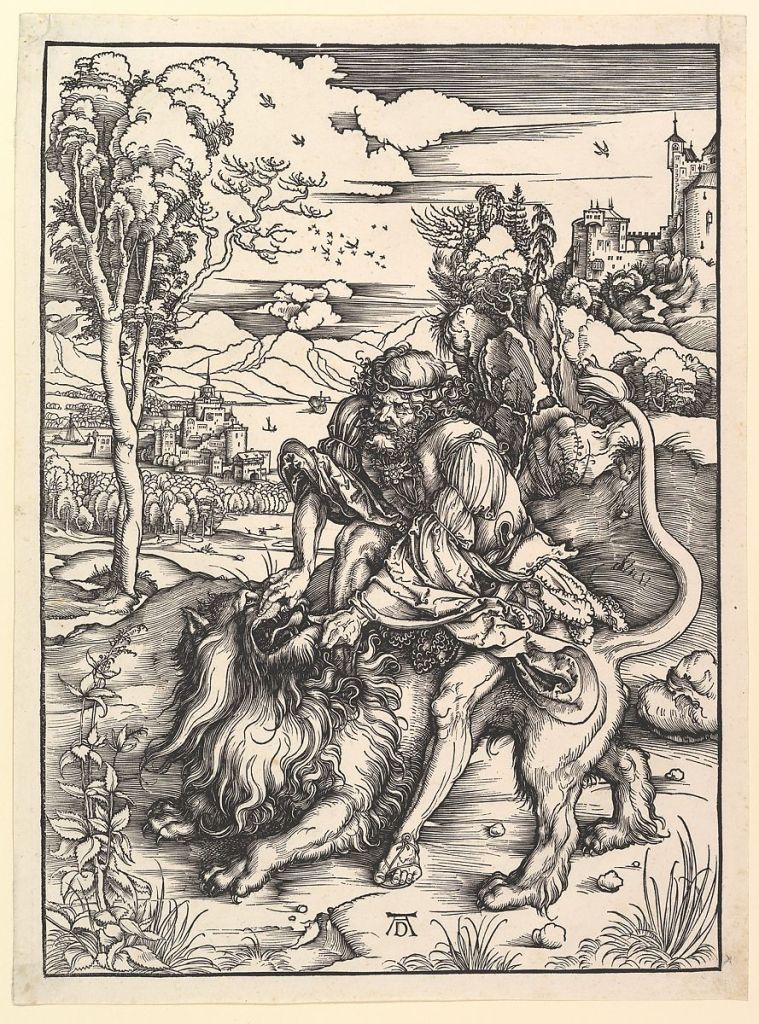
The Samson story ends on a strange combination of notes: anger, exaltation, answered prayer, death, and “He had judged Israel twenty years.”
Blind Willie Johnson’s powerful “If I had my way” retells Samson’s story, while leaving his death unstated. It captures one current in protest, that combination of rage and passion for some combination of justice and revenge that no longer attends to the cost, personal or otherwise. Better than acquiescence to or cooptation by “the wicked world,” but not, we hope, the only option.
Samson, also a riddle in which the people of God are mirrored. Lest this sound strange, consider the political choices those who self-identify as God’s people have made and are making.
Hannah’s song looks like the inspiration for Mary’s song (“The Magnificat”). Both songs are notable in uniting the singer’s story with the story of God’s gracious dealings with Israel/Humanity. Seeing in our lives something that can be credibly called ‘story’, seeing a connection to a story larger than ourselves: we’re hungry for that, with the alternative always hovering: “Life is just one damned thing after another, whether it is private or public life” (Toynbee).
And Mary is properly central in so much of Christian spirituality and imagination. Her “Here am I, the servant of the Lord; let it be with me according to your word” (Lk 1:38) articulates the faith to which we aspire; God would form Christ in each one of us (recall Gal 4:19).
From the Gospel reading (the subject, from a different angle, of the August 7 post), after, and continuing, a classic mother-son interchange (vv.3-4): “His mother said to the servants, ‘Do whatever he tells you.’” After Lk 1:38 (above), Mary can say that with authenticity; we do well to respond with alacrity.
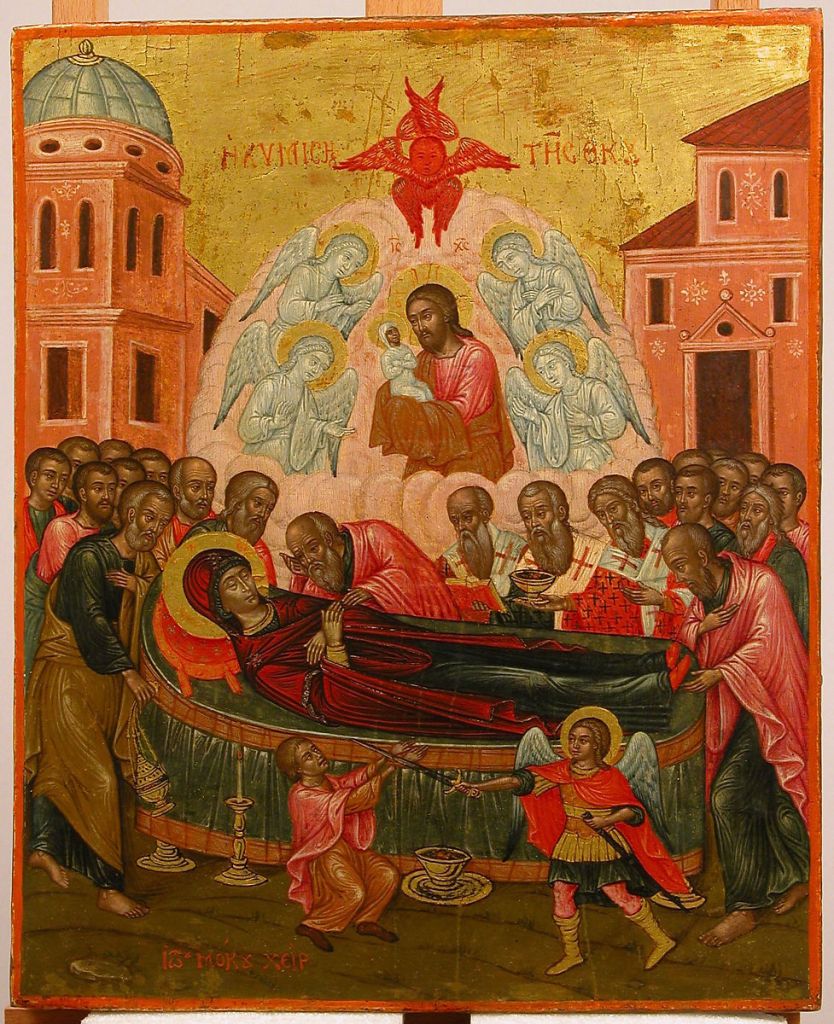
The Feast of the Dormition of the Theotokos (the “falling asleep” of the God-bearer) is one of the oldest Marian feasts, set on August 15 in the East in the 6th century and adopted in the West in the 7th Century (detail here and here).
The foxes and the torches: for one stretch of the story’s history we were invited to enjoy the trickster Samson pulling another one on the Philistines. Now, impossible to escape the sadness of it all. The Timnite and his daughter (Samson’s betrothed): what were their names? The moral logic of the protagonists (15:3, 7, 10, 11), fitting for the playground (“he hit me first”)—but they are no longer children. Samson calls on the LORD for water, and receives it. The LORD can give Samson what he asks for, but how to give him what he has no idea that he needs?
Re Stephen’s speech, recall William Faulkner: “The past is never dead. It’s not even past” (Requiem for a Nun). So giving a truthful account of our past…
John’s narrative contains two apparent non sequiturs, both attributed to Jesus (vv.44, 48 [in which ‘you’ is plural in both occurrences]), and commentators have long sought to make sense of them—without apparent success. But, bottom line, Jesus’ word (“your son will live”) is reliable, and the royal official believes. ‘Believe’—another word important to this Gospel. Michael Gorman, focusing on Paul, offers this definition of faith: “Faith is that response to God’s initiative that opens the gates of self to God’s transforming power” (Cruciformity: Paul’s Narrative Spirituality of the Cross).
After the auspicious and ceremonial announcement of Samson’s calling, the beginning of his career could not be more jolting. (Drawing back the camera, the prominence of riddles in the stories suggests that Samson himself is a riddle, for which one solution may be Samson = Israel.) God calls Israel into covenant at Sinai; Israel responds with the Golden Calf. Samson is called to be a nazirite; Samson seeks a bride among the Philistines, eats and shares honey from a ritually unclean source, hosts a drinking party. But God has already been adapting: the spirit has begun to drive him (13:25; Alter’s translation, who notes “more literally, ‘to pound/pulsate [within]’”); Samson’s libido is also the Lord’s getting him engaged against the Philistines.
Where does all this leave God’s justice? Olson (New Interpreter’s Bible Commentary) wrestles with the question: “God seems constrained to work through such devious and sinful means in the disordered context of a splintered and rebellious Israelite nation. God is free to contravene the very laws God has given to Israel for the sake of God’s mercy and love for the people and for the sake of the punishment of the oppressive Philistines.” Perhaps. Re the last point, note Alter’s translation of v.19 “and struck down from among them thirty men and took their armor” (the italicized word occurs also in 2 Sam 2:21, there translated ‘spoil’) and his comment “Samson, then, chooses to confront and kill armed warriors.”
The Gospel of John is interested in testimony (‘witness’ [marturia] 14x vs. 4x in the other Gospels; ‘to witness’ [martureō] 31x vs. 2x in the other Gospels), and in this story notices the price the woman pays for her testimony. V.27: how many degrees did the temperature drop with the disciples’ arrival? V.42: Jesus may be the “Savior of the world” but that doesn’t mean any less care is needed to guard the male ego. The Gospel honors her, honors her witness.
Dealing with our vulnerability: this from Ellen F. Davis on the psalms of petition in Opening Israel’s Scriptures, quoting André Chouraqui:
The only thing he [the psalmist] opposes to the arrows that pierce him through, is his own voice[.] His hands are empty; God alone is his weaponry, his fortress. The Innocent never relies on his material strength for deliverance from his enemies…
… Every one of the psalms—and especially the psalms which seem the most bellicose—[all] are animated by an absolute contempt for material brute strength. This is not a question of heroic renunciation, but rather one of objective certitude. Might is good for nothing, serves as the foundation for nothing, and leads to nothing… As for the Just, he is committed to the victorious action of justice and truth.
The Judges reading is puzzling. Why give so much space to the aftermath of the messenger’s announcement to Manoah’s woman? (There were certainly more engaging Samson stories left on the cutting room floor!) Perhaps this: Manoah is not the sharpest knife in the drawer, and seems to distrust the divine. Is the narrator using Manoah to preview Samson’s character?
Faithful Jews—now Christians—responded to Hellenistic culture in divergent enough ways that Luke uses ‘Hellenists’ and ‘Hebrews’ to describe the emerging factions. The response of “the Twelve” is priceless. On the one hand, they get it right, and appoint seven with Hellenist names to deal with the presenting issue. On the other hand, “it is not right that we should neglect the word of God in order to wait on tables” shows why Jesus spent time trying (with at best partial success) to root out status-seeking among his disciples (Mk 9:33-35; Jn 13:1-17). God’s opinion is immediately evident: Stephen, one of the seven, is the first martyr, and Philip, another of the seven, brings the Gospel to Samaria.
Samaria. I wonder if Jesus’ conversations with Nicodemus (Jn 3) and the Samaritan woman (Jn 4) do not form a diptych, both long, contrasting participants, one scene in the darkness, the other in broad daylight. Another layer: John the Baptist had described Jesus as the bridegroom, himself as the friend of the bridegroom (Jn 3:29). Courtship at the well is a classic type scene (Gen 24:10-28; Gen 29:1-12; Exod 2:15b-21), and here’s Jesus at the well. The Gospel’s Prologue: “we have seen his glory, the glory as of a father’s only son, full of grace and truth” (1:14b). In this diptych is John showing us what glory, grace, and truth look like?
The Judges reading begins the story of Samson, the last of the judges profiled in the book, and the longest of the stories. Already we are warned that there will be ambiguities: the boy will “begin to deliver Israel from the hand of the Philistines;” the woman adds “to the day of his death” in recounting the messenger’s announcement to her husband.
“For everything there is a season” (Eccl 3:1)—so also times both to act and to refrain from acting, wisdom that Gamaliel and John the Baptist share. Our culture has trouble recognizing the times to refrain; the preacher in Ecclesiastes would probably have liked these proverbs from Lao Tzu: “The Way is every without action, yet nothing is left undone.” “Use justice to rule a country. Use surprise to wage war. Use non-action to govern the world” (Tao Te Ching chs. 37, 57).
The quotation of John the Baptist’s words: does it stop at v.30 or v.36? The NRSV opts for the first; the content of vv.31-36 may suggest an intentional blend of perspectives. The ending (“the wrath of God abideth on him” KJV) sounds like John the Baptist: this is the only use of ‘wrath’ (orgē) in this Gospel, and two of the other four uses in the other Gospels are quoting the Baptist (Matt 3:7; Lk 3:7). On the other hand, the beginning of v.36 forms an inclusio with v.3, providing, in passing, further evidence that ‘eternal life’ in this Gospel is at least roughly equivalent to ‘the kingdom of heaven/God’ in the other Gospels (boldface mine):
Jesus answered him, “Very truly, I tell you, no one can see the kingdom of God without being born from above.” (v.3)
Whoever believes in the Son has eternal life; whoever disobeys the Son will not see life, but must endure God’s wrath. (v.36)
Judges 2:11-23 is commonly recognized as describing the pattern that plays out repeatedly in the book. Today’s reading: another reminder that the description is perhaps overly optimistic: “he delivered them from the hand of their enemies all the days of the judge” (v.18) does not, alas, include the occasions in which the Israelites are their own worst enemies.
The Acts reading should, perhaps, get us wondering: why is physical healing so problematic a part of Christian witness in the West? Why is its role noticeably reduced from the role as portrayed in Acts? Figuring out the right questions to ask looks like an important part of the challenge.
The opening moves in the conversation between Jesus and Nicodemus are puzzling. The prophets had used different metaphors to talk about God’s future work in Israel (writing the law on the heart, a heart of flesh). Why does Nicodemus not recognize “born from above” as a similar metaphor?
Why Jesus opens with “Very truly, I tell you, no one can see the kingdom of God without being born from above” is perhaps an easier puzzle. Nicodemus’ “Rabbi, we know that you are a teacher who has come from God” sounds like the voice of the gatekeepers. Jesus’ response sounds like a warning that the leaders are in no position to gate keep. The issue isn’t that they need to get themselves “born from above”—that cuts against the logic of the metaphor (we’re not the agents of our own births). “The wind blows where it chooses, and you hear the sound of it, but you do not know where it comes from or where it goes. So it is with everyone who is born of the Spirit.” The appropriate response, it would seem, is to pray for God’s mercy, a prayer that might be enacted by, say, submitting to John’s baptism.
Today Jesus’ words, less helpfully translated as “no one can see the kingdom of God unless they are born again” (NIV), often commonly serve as a lead-in to a straightforward explanation as to how one gets oneself “born again.” This fits with our culture’s passion for self-help. But does that not get the conversation off on the wrong foot? Is my/our salvation something I/we manage?
We humans are so vulnerable, often heartbreakingly vulnerable. Today’s readings give us an opportunity to reflect on how we deal with that.
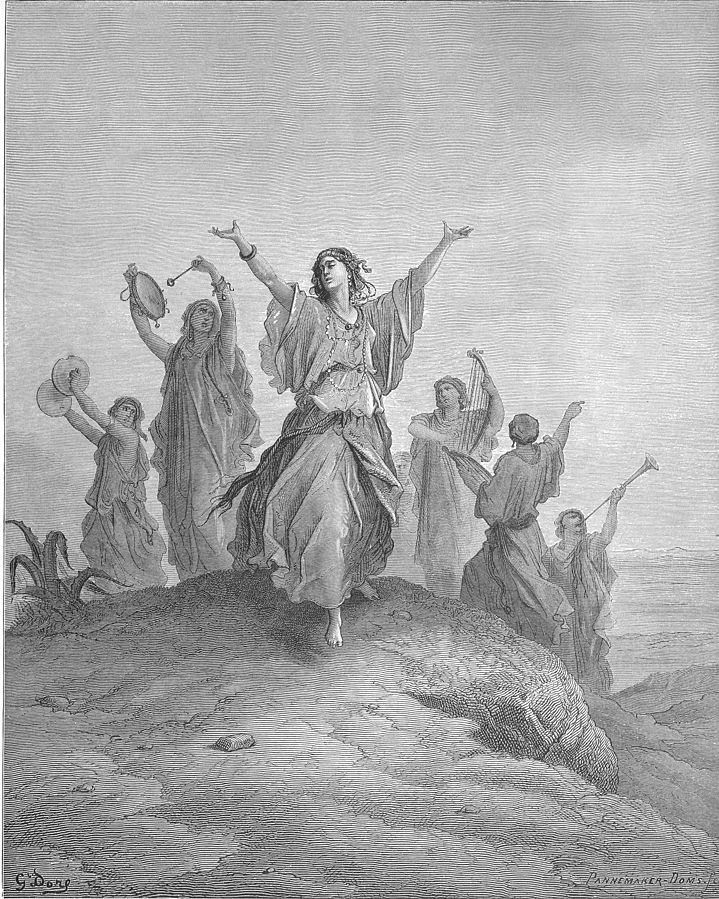
Jephthah, facing a very uncertain battle, makes a vow. “If you will give the Ammonites into my hand, then whoever comes out of the doors of my house to meet me, when I return victorious from the Ammonites, shall be the LORD’s, to be offered up by me as a burnt offering.” The vow: generic religious behavior, not mandated, but regulated in the Bible. The narrator is silent at three points: (1) while “the spirit of the LORD came upon Jephthah,” silence re whether the vow is at the spirit’s prompting; (2) silence re any evaluation of the vow (wise, foolish, pious, impious, etc.); (3) silence re whether the LORD gave victory because of the vow. Re the third point, we might suspect that the mention of the spirit (v.29) before the vow (v.30) means that the vow was unnecessary. Pulling the camera back, do we assume that in our vulnerability we need to bargain with God to get what we want?
Of course, the tragic vulnerability in the story is that of Jephthah’s daughter. For vows must be fulfilled? The Book of 1 Samuel tells of Saul pronouncing a curse on anyone eating during a battle. His son Jonathan, not having heard the curse, eats. Here’s how it plays out when all is known:
Then Saul said to Jonathan, “Tell me what you have done.” Jonathan told him, “I tasted a little honey with the tip of the staff that was in my hand; here I am, I will die.” Saul said, “God do so to me and more also; you shall surely die, Jonathan!” Then the people said to Saul, “Shall Jonathan die, who has accomplished this great victory in Israel? Far from it! As the LORD lives, not one hair of his head shall fall to the ground; for he has worked with God today.” So the people ransomed Jonathan, and he did not die. (1 Sam. 14:43-45)
Where are “the people” when Jephthah’s daughter and Jephthah most need them? My challenge is not simply dealing with my vulnerability.
Mark tells of the time Jesus and the disciples were crossing the Sea of Galilee. “A great windstorm arose, and the waves beat into the boat, so that the boat was already being swamped.” The disciples get the crucial part right: they wake Jesus up—the rest is detail. Before wondering what we might safely conclude from the story, let’s bring Paul into the conversation.
Three times I was beaten with rods. Once I received a stoning. Three times I was shipwrecked; for a night and a day I was adrift at sea; on frequent journeys, in danger from rivers, danger from bandits, danger from my own people, danger from Gentiles, danger in the city, danger in the wilderness, danger at sea, danger from false brothers and sisters; in toil and hardship, through many a sleepless night, hungry and thirsty, often without food, cold and naked.
So “just wake Jesus up and everything will be smooth sailing” is a non-starter. What Paul seems to have concluded: whatever happens, Jesus is in the boat, and it will be more than OK. “But we have this treasure in clay jars, so that it may be made clear that this extraordinary power belongs to God and does not come from us” (2 Cor. 4:7). And we, how are we responding to Jephthah’s daughter’s many sisters?




 With Jacob at Bethel