
Tag Archives: Obedience

The God who makes a way where there is no way (5th Sunday after Pentecost, 6/28/2026)

Readings (Track 1)

Looking back at God’s deliverance at the Red Sea, one of the psalms: “Your way was in the sea, / and your paths in the great waters, / yet your footsteps were not seen” (77:19). One reader summarizes: “God makes a way where there is no way.” God makes a way where there is no way: that’s perhaps the most important thing to learn from our first reading.

The story gives us something of both God’s and Abraham’s perspectives; let’s look at both.

God’s perspective. “After these things God tested Abraham.” Why a test, and why such an extreme test? Recall the project as announced in Genesis 12: “I will make of you a great nation, and I will bless you, and make your name great, so that you will be a blessing. I will bless those who bless you, and the one who curses you I will curse; and in you all the families of the earth shall be blessed.” God’s future with the human family is riding on Abraham. As Mark Twain put it, “Some folk say not to put all your eggs in one basket. I say: ‘Put all your eggs in one basket and watch that basket!”

Why such an extreme test? Well, recall Abraham’s servant’s words: “The LORD has greatly blessed my master, and he has become wealthy; he has given him flocks and herds, silver and gold, male and female slaves, camels and donkeys.” So is Abraham serving God for God’s sake, or for the flocks and herds? Throughout the history of Israel and the Church this has been one of the recurrent core questions. Pick your favorite worst moment in the Church’s history, and this issue is probably at the core. What was the bottom line in the Spanish conquest of the Americas: God or Gold? We have “In God we trust” on our currency. Really? And in which god are we trusting? As the Book of Job frames the question, is God worth serving for nothing? At least, please God, may Abraham, the Father of the faithful, get it right.

So I think we hear sheer relief on God’s part toward the end of the story: “The angel of the LORD called to Abraham a second time from heaven, and said, ‘By myself I have sworn, says the LORD: Because you have done this, and have not withheld your son, your only son, I will indeed bless you, and I will make your offspring as numerous as the stars of heaven and as the sand that is on the seashore. And your offspring shall possess the gate of their enemies, and by your offspring shall all the nations of the earth gain blessing for themselves, because you have obeyed my voice.’”

No less intense, of course, was the experience from Abraham’s perspective.

Our issue, how God could command human sacrifice, would not have been Abraham’s. While prohibited in the Law of Moses, it does not seem to have died out in popular religion until the destruction of the Temple in the 6th Century BC.

Rather, the issue both for Abraham and the Bible itself: what happens when the promise of God and the command of God are in conflict. “I will make of you a great nation;” and just how is the sacrifice of Isaac part of that?

Gideon —one of the judges—with God’s promise to deliver Israel from the Midianites. And what does God command? Get rid of most of your army.

Ahaz —King of Judah— caught between a very hungry Egyptian Empire and an equally hungry Assyrian Empire. Isaiah the prophet issues God’s command: call all your ambassadors home, tear up the mutual assistance treaties, trust in God alone.

Jesus, with “This is my Son, the Beloved, with whom I am well pleased,” ringing in his ears. If there was ever a mandate for action, there it was. And so he meets the tempter in the wilderness, and the command of God as recorded in the Law of Moses vetoes all the tempter’s suggestions for putting the Kingdom on the fast track.

If Jesus is not going to turn stones into bread, not going to let the angels deliver him very miraculously & very publicly, not going to negotiate with the one credible power broker this side of heaven, what future does Jesus’ Kingdom have?

God has given us some breathtaking promises. An almost inevitably —that’s why there are so many stories of this in the Bible— we encounter situations in which the promise of God and the command of God are in conflict.

In countries where it’s dangerous to be a Christian, Christian parents face this challenge. Raise our son or daughter as a Christian, or let the local mosque/temple/party headquarters handle their formation? In other contexts there’s still the challenge captured by Thomas More in Bolt’s A Man for all Seasons: “But since in fact we see that avarice, anger, envy, pride, sloth, lust and stupidity commonly profit far beyond humility, chastity, fortitude, justice and thought…” Nevertheless we raise our children to be more like Thomas More than, say, Richard Rich, whose perjury at More’s trial greased the skids for his execution.

Sometimes it’s more narrowly focused, some version of the warning with which last week’s Gospel ended: “Those who find their life will lose it, and those who lose their life for my sake will find it.”

In these situations the rationale for the command may be opaque, without rhyme or reason. We need the parish around us in such moments, not only to keep us confusing God’s command with our own fears, but also, when it is God’s command, to remind us that Abraham, Gideon & Jesus don’t make bad company.

So we pick up the knife, pick up the fire, and walk with Isaac up the hill. What happens when we get there is not in our control. Abraham got a divine voice and a ram. Gideon sent the Midianites packing. Hezekiah, Ahaz’ son, was rescued from the Assyrian army. Jesus got three nails, a cross, and a crown to go with it. And on the third day that turned out to be the case of God making a way where there was no way. What is in our control is our obedience, our witness.

All well and good —some of us may be thinking— unless you’re the ram. The Jews, out of their generations of experience in serving God “for nothing” have a story about this.

Rabbi Hanina ben Dossa said: Nothing of this sacrifice was lost. The ashes were dispersed in the Temple’s sanctuary; the sinews David used as cords for his harp; the skin was claimed by the prophet Elijah to clothe himself; as for the two horns, the smaller one called the people together at the foot of Mt Sinai, and the larger one will resound one day announcing the coming of the Messiah.”[1]

And so we follow this God who makes a way where there is no way into the coming week.


[1] Wiesel Messengers of God 101.
God’s Wind/Breath (And what do we want?) (6th Sunday of Easter, 5/10/2026)

Readings

If the resurrection of Jesus is a crisis for the world and its institutions—a theme that ran through last week’s readings—the ascension of Jesus is a crisis for the disciples. Since the Feast of the Ascension is this Thursday, it’s worth listening to what Jesus might have to say about it.

The Ascension is a crisis for the disciples and for us. We know where Jesus is: at the right hand of the Father. That’s the center (we’re not one ones centerstsage). Where does that leave us? (“Jesus went to heaven; all I got was this t-shirt”?) Doesn’t this leave us orphans, left to ourselves to figure out how to put our identity and calling into practice?

It’s precisely in the context of this fear that Jesus speaks of the Holy Spirit, the Counselor, the Spirit of Truth. The very breath of God, which gives life to all creation, which inspired the prophets, now will be the means by which the Father and the Son take up residence in the Church and in every believer. As Jesus says, “we will come to him and make our home with him.”

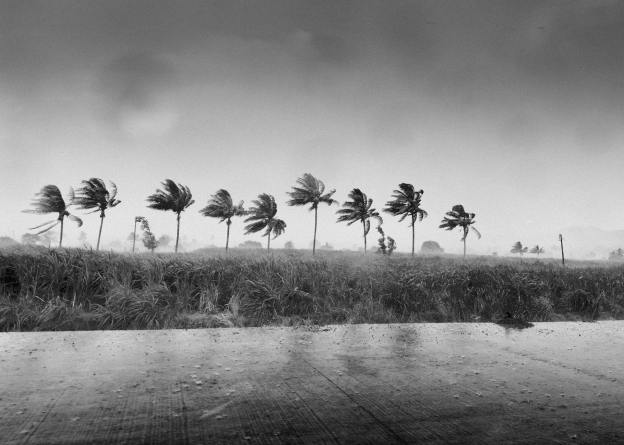
Now, of the three Persons of the Trinity, the Spirit is the One that often remains a sort of blur. It helps to go back to the Hebrew, where ruah, the word we translate as ‘spirit’ is used for both breath and wind. Few things more intimate than breath; few things more powerful than wind. Ruah, spanning everything from the softest breath to the strongest wind—that’s not a bad image to keep in mind when we speak the word ‘spirit’.

The Spirit, in the words of our Catechism (BCP 852, 3rd Q/A), “leads us into all truth and enables us to grow in the likeness of Christ.” That is, the Spirit enables us to receive the Word of God and the Sacraments, and transforms us over time into the image of Christ. The Spirit functions as a sort of catalyst in the chemical sense, not adding anything to the chemical reaction, but making it happen.

How am I supposed to recognize the presence of the Spirit in my life? Pentecostal and charismatic Christians emphasize the extraordinary gifts, such as speaking in unknown languages. We don’t discount these gifts, but we don’t demand to see them in order to recognize the Spirit’s presence. Again from the Catechism (4th Q/A): “We recognize the presence of the Holy Spirit when we confess Jesus Christ as Lord and are brought into love and harmony with God, with ourselves, with our neighbors, and with all creation” (BCP 852),

That’s a useful answer because it makes clear that the Spirit enables not just my relationship to God, but a thick web of relationships that extend to all creation. As the ecologists remind us, everything is eventually connected to everything, and the Spirit is concerned with nothing less.

It’s also an answer that needs some unpacking, because confessing Jesus Christ as Lord and achieving harmony with ourselves and our neighbors don’t always converge in the short term. Paul’s witness in Athens (our first reading) is met with scoffing, and the backdrop of Peter’s letters (our second reading) is that faithful witness regularly meets with persecution. This doesn’t mean that we stop confessing Jesus. It does mean that because our desire is for that “love and harmony,” there’s no place for arrogance in our witness. Recall Peter’s words from today’s reading: “Always be prepared to make a defense to any one who calls you to account for the hope that is in you, yet do it with gentleness and reverence.”

If we have been baptized, we have received this gift of the Holy Spirit. This is the confidence that we have as Christians: a loving Father before us, Jesus Christ our brother beside us, and the Holy Spirit among and within us, enabling us to respond with Jesus to the Father.

Let’s continue in the Catechism (top of p.853): “Q. How do we recognize the truths taught by the Holy Spirit? A. We recognize truths to be taught by the Holy Spirit when they are in accord with the Scriptures.” The Spirit is not going to contradict the Scriptures. The Spirit is going to stretch our understanding of the Scriptures, show us the inadequacies of our current ways of reading Scripture—recall the Spirit drafting Peter into preaching to the Gentiles. If my understanding of the Scripture isn’t getting stretched I’m probably not paying attention.

So far the Catechism. But what of personal experience, on which our culture puts a great deal of value? There doesn’t seem to be much about personal experience in these lines from the Catechism. Isn’t there more to say?

Well, yes. Recall the second lesson. Peter is talking about the Noah story and says: “Baptism, which corresponds to this, now saves you, not as a removal of dirt from the body but as an appeal to God for a clear conscience.” That phrase “an appeal to God” reminds us of the central role of desire in our Christian life. The Christian life is a life marked by desire.

My baptism is not simply something in my past, but equally the definition of my identity now: a desire to live, to live as a human being, to live as Jesus lived (from our tradition’s perspective, three ways of saying the same thing).

We think of God as characteristically telling us what to do. But God equally characteristically asks us what we want, what we desire. A knitter will save a lot of effort if she decides at the start whether she’s knitting a scarf or a stocking cap, rather than figuring it out later. We save a lot of effort—God knows—if we decide what we want, who we want to be sooner rather than later—and stick to it.

Staying clear on this desire in this sense is easier said than done in our culture, which specializes in inciting in us unlimited contradictory desires. We periodically fall for it—so confession is a regular part of our worship. So we need to be in the habit of asking ourselves: are my decisions and patterns of life nurturing and protecting this desire, or letting the world sidetrack it?

Meanwhile, Jesus in the Gospel speaks of guarding his commandments or words. Do we desire to experience the Spirit working in our life? Obey Jesus. It’s a cycle: the Spirit enables us to obey Jesus; obedience opens us to the power of the Spirit. Is there a limit to the effects of this cycle? It would appear not. In last week’s Gospel reading we heard: “Very truly, I tell you, the one who believes in me will also do the works that I do and, in fact, will do greater works than these, because I am going to the Father.”

This is one of the reasons why our tradition speaks so frequently of the importance of a daily encounter with Scripture. How are we supposed to guard Jesus’ words if we don’t know them? If I’ve got the NYT on my Smartphone, I probably want the Daily Office there too.

A final observation. In our world, as in Athens in Paul’s time, there are plenty of philosophic and religious traditions about God. How to distinguish between the true and the false? Recall Jesus’ answer to this question. It’s not simply: “If you love me, you will keep my commandments,” but (from John 8) “If you continue in my word, you are truly my disciples, and you will know the truth, and the truth will make you free.” Follow Jesus’ teaching and see for yourself what happens. If the bumblebee started by trying to puzzle out the aerodynamics of its flight, it’d never get off the ground. So in following Jesus: walking on the water doesn’t look like it’s going to work—until we’re doing it. And this is a lesson some of us have to learn over and over. And this is simply another way of saying what we’ve heard in today’s Gospel: guarding Jesus’ commandments, Jesus’ words, opens us to the life-giving and transforming power of the Holy Spirit.

With Jesus’ ascension we are not left orphans. The ascended Jesus has sent us the Holy Spirit. Keeping Jesus’ words, we open ourselves to that Spirit’s presence and power. Alleluia.