The Fourth Sunday of Easter 2021: A Sermon

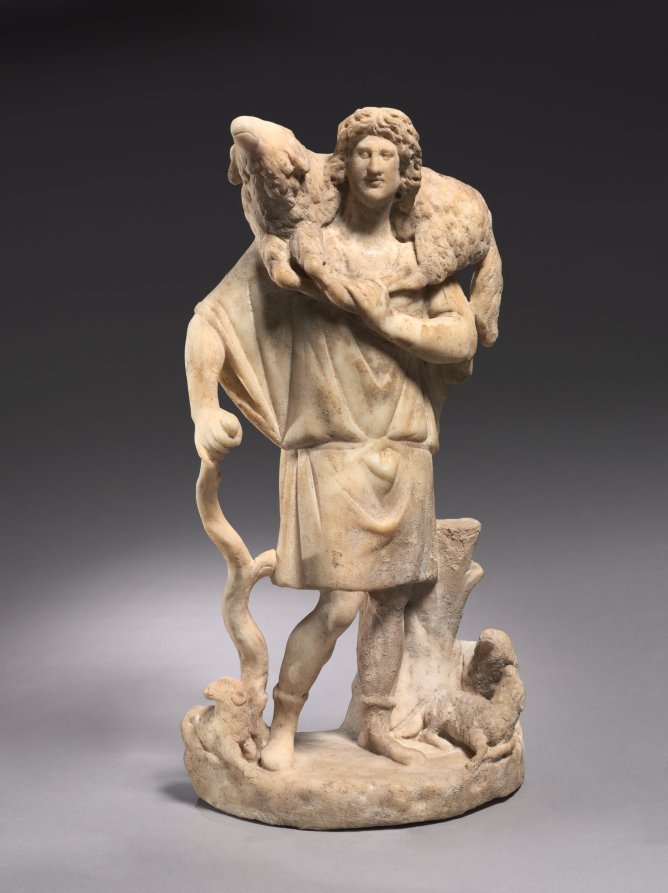
“I am the good shepherd. I know my own and my own know me, just as the Father knows me and I know the Father. The thief comes only to steal and kill and destroy. I came that they may have life, and have it abundantly.”

I would guess that this is the one congregation in the diocese [Good Shepherd Episcopal Church, Sun Prairie WI] that does not need to be reminded of the importance of this image. A little celebration is in order.

Recall that “shepherd” is an image that works on multiple levels. In ancient Israel folk would be familiar with shepherds, and most would know first-hand the importance of good shepherds who were attentive to their sheep, gentle with the weak, strong against their predators. And not only in Israel but throughout the ancient near east rulers, whether good or evil, liked to be celebrated as good shepherds of their people.

King David had confessed “The Lord is my shepherd,” using the Name that later became too holy to be pronounced, which scholars usually vocalize as Yahweh. And here Jesus is saying not “The Lord is the good shepherd” but “I am the good shepherd.” It’s that way of speaking that pointed his followers to the confessions hammered out centuries later, such as the Nicene Creed that we’ll use later in this Mass: “very God of very God.”

And one of Ezekiel’s most profound promises of Jesus’ coming (Ezek 34) picks up the image:

“Mortal, prophesy against the shepherds of Israel: prophesy, and say to them– to the shepherds: Thus says the Lord GOD: Ah, you shepherds of Israel who have been feeding yourselves! Should not shepherds feed the sheep? You eat the fat, you clothe yourselves with the wool, you slaughter the fatlings; but you do not feed the sheep.”

We know this world too well. The New York Times ran an update today on CEO salaries in 2020. Some examples:

  • Norwegian Cruise Lines $36M
  • Hilton $56M
  • Paycom $211M

No wonder there’s not enough for everyone else when many at the top are incapable of saying “enough.”

Ezekiel continues in this vein for a good stretch. Then:

“I myself will be the shepherd of my sheep, and I will make them lie down, says the Lord GOD. I will seek the lost, and I will bring back the strayed, and I will bind up the injured, and I will strengthen the weak, but the fat and the strong I will destroy. I will feed them with justice.”

So that day in Jerusalem, Jesus’ “I am the good shepherd:” I imagine Ezekiel hearing it and smiling…or pumping his fist.

Jesus the good shepherd, come that we might have life, and have it abundantly: green pastures, still waters. In a world in which too many leaders point to paths that lead nowhere, offer solutions that are worse than the problem, very good news. Jesus the good shepherd: that’s an image—a promise—to hand onto. And sometimes we find ourselves hanging onto it for a good stretch.

Now, it doesn’t take going around the block many times before we wonder what this image is really promising, whether we can rely on that promise. And here David can help us. For the psalm that starts “the Lord is my shepherd” contains not only the comforting words about the green pastures and still waters, but also the business about walking through the valley of the shadow of death, There’s a table spread—but “in the presence of those who trouble me.” That sounds like David’s life. And perhaps one of the reasons we’re given such a full account of David’s life (most of the two books of Samuel) is to watch the Lord as David’s shepherd through all of it.

Near the end of the psalm: “Surely your goodness and mercy shall follow me all the days of my life.” “Follow:” that’s perhaps one of the most regrettable translations in the entire Bible. Literally: pursue. My enemies may be fast; the Lord’s goodness and mercy are faster.

What happens if we move from David’s poetry into the prose of our lives? We know that in this life good Christian lives can end badly and painfully. This is why Paul, talking about our hope in the resurrection says “If for this life only we have hoped in Christ, we are of all people most to be pitied” (1 Cor. 15:19). Perhaps David pointed toward this in the last line of the psalm: “and I will dwell in the house of the Lord for ever.” Death doesn’t play the last card.

But there’s another truth, equally important. John’s first letter, a sort of “Dummy’s Guide to the Gospel” spells it out: “We know love by this, that he laid down his life for us [that’s the Good Shepherd who lays down his life for the sheep part]—and we ought to lay down our lives for one another.” So the Shepherd’s action becomes a model for our action. We are taken up, as it were, into the Shepherd’s work. So yes, there’s still the valley of the shadow of death. And John’s telling us not to let any Christian walk it alone. John continues: “How does God’s love abide in anyone who has the world’s goods and sees a brother or sister in need and yet refuses help? Little children, let us love, not in word or speech, but in truth and action.”

“Who has the world’s goods and sees a brother or sister in need and yet refuses help? Here we might return to that NYT article. It turns out that none of the virtues are stand-alone—even love. If I don’t know how to say “enough,” my capacity to love will be severely limited. That’s perhaps the most important take-away from that article: whatever the issue, am I able to say “enough”?

It’s important to notice that John isn’t an outlier. The same Gospel in which we hear “I am the good shepherd” tells of the Good Shepherd’s command to his disciples: “I give you a new commandment, that you love one another. Just as I have loved you, you also should love one another. By this everyone will know that you are my disciples, if you have love for one another.”

“Jesus, the Good Shepherd” is first about Jesus; it is immediately also about how his followers are to follow: loving “not in word or speech, but in truth and action.” And it is through these followers, by the way, that Jesus does much of the shepherding: love is the lubricant that allows us to receive and give what we need from each other.

So the command to love extends only as far as the church walls? Obviously not. It focuses on “one another” because if we’re not working on that there’s little hope that we’ll be of much use to those outside the walls. If we are working on that, the walls will be no barrier.

Let’s circle back to Ezekiel:

“I myself will be the shepherd of my sheep, and I will make them lie down, says the Lord GOD. I will seek the lost, and I will bring back the strayed, and I will bind up the injured, and I will strengthen the weak, but the fat and the strong I will destroy. I will feed them with justice.”

It’s reasonably clear that the abundant life Jesus brings is about much more than the fortunes of individuals, though it’s not less than that. The Shepherd’s out to set the world right, restore our institutions so that they serve, and stop destroying. But here’s where it gets confusing. In our experience setting the world right usually involves a large army and a great deal of violence. Jesus’ strategy is different. So Jesus really isn’t trying to set the world right, but limiting himself to something more modest, something simply interior? No. He’s out to set the world right, but armies and violence don’t cut deep enough. Jesus knows this is confusing, which is why we have parables like the mustard seed: the beginnings seem laughably insignificant, but, oh, the end product.

So, yes, working on this “love each other” business, the church walls are no barrier. “The kingdom of heaven is like yeast that a woman took and mixed in with three measures of flour until all of it was leavened” (Matt. 13:33).

I am the good shepherd. I know my own and my own know me, just as the Father knows me and I know the Father. The thief comes only to steal and kill and destroy. I came that they may have life, and have it abundantly.

Amen. Alleluia. Alleluia.
The Third Sunday of Easter 2021: A Sermon

Sam Kamaleson, a constant source of wisdom and encouragement at World Vision International during my years there, used to talk about the gift of Jesus’ story and our story becoming one story. That and Rowan Williams’ description of intercession as simply holding the subject of our intercession together with Jesus inspired a good bit of this sermon.

Lessons

In today’s collect—the prayer that we use to collect, to center ourselves before the Scripture readings—we prayed “Open the eyes of our faith, that we may behold him in all his redeeming work.” It turns out that that prayer captures something central to today’s readings.

In today’s Gospel Jesus lays out the disciples’ task. They are witnesses, and in God’s generosity that dovetails with the promised proclamation of repentance and forgiveness of sins in Jesus’ name to all nations.

That, so to speak, is the theory. Our reading from Acts gives us an example of the practice. The lectionary choses to begin the reading with Peter addressing the people, which is odd, because the people are only interested in listening to Peter because of what just happened: entering the temple, Peter had, in Jesus’ name, healed a beggar lame from birth, who is now “walking and leaping and praising God.” Had Peter not started speaking the crowd would have demanded that he give some explanation.

So what happened? Luke sets the scene: “One day Peter and John were going up to the temple at the hour of prayer, at three o’clock in the afternoon. And a man lame from birth was being carried in. People would lay him daily at the gate of the temple called the Beautiful Gate so that he could ask for alms from those entering the temple. When he saw Peter and John about to go into the temple, he asked them for alms.”

Now, not only in 1st century Jerusalem, but in most times and places we expect to encounter numerous beggars at the entrances to holy places. The cathedrals of Bucharest, Manila, or Santo Domingo come to mind. The beggers easily become part of the landscape, and are typically not the object of the attendees’ attention. But, the text tells us, “Peter looked intently at him.”

We might wonder if something of Jesus had rubbed off on Peter. The Gospels tell a number of stories of the disciples screening folk who want Jesus’ attention. From earlier in Luke’s Gospel: “People were bringing even infants to him that he might touch them; and when the disciples saw it, they sternly ordered them not to do it.” Jesus will have none of it: “Let the little children come to me, and do not stop them; for it is to such as these that the kingdom of God belongs” (18:15-16). “You are my witnesses” does not mean “You are my bouncers.” And if little children, then others at the bottom of the status pyramid, even this beggar lame from birth.

So “Peter said, ‘I have no silver or gold, but what I have I give you; in the name of Jesus Christ of Nazareth, stand up and walk.’ And he took him by the right hand and raised him up; and immediately his feet and ankles were made strong.” This is Peter’s imagination at work. Despite the societal script in which beggars are simply part of the landscape, Peter’s imagination has put this beggar and Jesus into the same frame, and moments later the beggar is “walking and leaping and praising God.”

So, understandably, a crowd gathers, and that’s where our reading starts. But to start the reading there—with all due respect to the folk who put these reading schedules together—is to miss the point. The witness with which Jesus entrusts the disciples begins not with Peter addressing the crowd, but with Peter’s imagination, with Peter’s mental map. Two elements, Jesus and the beggar, which could easily have stayed far apart, come together, and something beautiful happens. “Open the eyes of our faith, that we may behold him in all his redeeming work.”

When we think about witness or evangelism, we often think of words. And if the standard is the eloquence of Peter or Paul… Today’s reading gives us another approach. Most days we encounter some combination of the good, the bad, and the ugly. Where does our imagination place Jesus in these encounters? Truth be told, sometimes our imagination has no interest in placing Jesus anywhere near these encounters—so that’s where our work starts. “Open the eyes of our faith, that we may behold him in all his redeeming work.”

There’s an interior dimension to the Acts story as well. That beggar lame from birth that so easily becomes simply part of the landscape: perhaps like parts of our lives, situations, relationships, wounds whose pain is simply part of the landscape. What happens if we put Jesus in the same frame? Unlike Peter, but like most Christians in most times and places, we may have no idea what Jesus might be able to do. But that’s where Paul gives us some encouragement. Halfway through his letter to the Ephesians: “Now to him who by the power at work within us is able to accomplish abundantly far more than all we can ask or imagine…” “Open the eyes of our faith, that we may behold him in all his redeeming work.”

The Second Sunday of Easter: A Sermon 2021

Acts 4:32-35; Psalm 133; 1 John 1:1-2:2; John 20:19-31

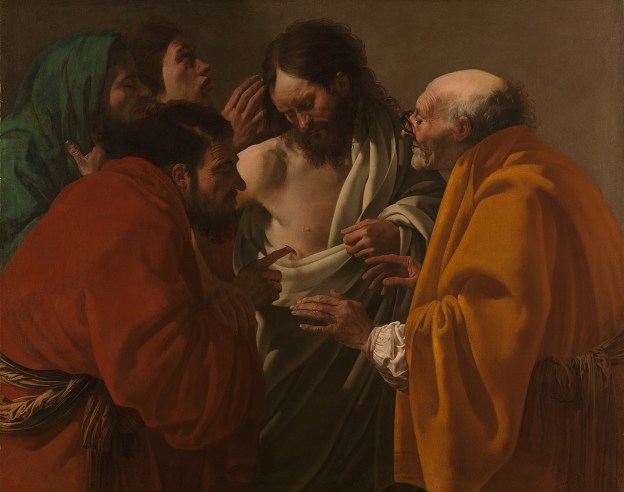
Today’s Gospel tells of Jesus’ appearance on two successive Sundays. Since today correlates with that second appearance, let’s focus mostly on it. There are two surprises there. The first is that Jesus shows up again. The first appearance looked like a one-off event: Jesus gave them the promised Spirit and gave them their marching orders. But here he is.

The bigger surprise is that Thomas is present. It would have been so easy for him to be absent. Imagine: eight days of the others celebrating Easter & Thomas still observing Good Friday. Altar Guild: what liturgical color would you use to keep everyone happy? Thomas could have written them off as gullible; they could have written Thomas off as faithless.

But there they were, together. Given all the issues over which we Christians have split, whether Jesus is alive or dead sounds like it’s at the serious end of the spectrum. But there they are—together.

Why did they stay together? Perhaps simple garden-variety virtues like faithfulness, patience, humility. Perhaps Jesus having washed their feet, told them to love each other, and then all of them abandoning him in the garden: perhaps those shared experiences had something to do with it. The Evangelist doesn’t explain it; I suspect we’re supposed to wonder about it.

There’s an additional element we might consider. Recall the beginning of today’s reading, “and the doors…locked for fear of the Jews.” Particularly during Holy Week we struggle with this language because of the ways it’s been used to encourage hatred and violence directed towards the Jews. How might we better hear it? Among the various possibilities here’s one I wonder about.

Consider these elements in John’s Gospel: In the prologue we read “He came to what was his own, and his own people did not accept him.” In that long dialogue with the Samaritan woman Jesus himself affirms “salvation is from the Jews.” Later, toward the end of the story of the healing of the man born blind:

Some of the Pharisees near him heard this and said to him, “Surely we are not blind, are we?” Jesus said to them, “If you were blind, you would not have sin. But now that you say, ‘We see,’ your sin remains.

Being chosen (elect) and owning that identity carries its own danger: the temptation to coopt that identity, to weaponize it, to make God a prop in the unending quest for security and status. Something like this is at work in the misuse of the practice of qorban: “But you say that whoever tells father or mother, ‘Whatever support you might have had from me is given to God,’ then that person need not honor the father” (Matt. 15:5).

Back to John’s prologue: “But those who did welcome him, those who believed in his name, he authorized to become God’s children” (CEB). So now those who believe are also at risk. Those who believe are now also Jesus’ “own people.” That’s Jesus’ choice, not ours. Recall Jesus’ words: “You did not choose me, but I chose you.” The image of God that comes with our shared humanity involves its own dangers. Built to lower specs, we’d be far less dangerous to ourselves and those around us. How much more self-identifying as the elect!

Now, while “chosen” and “elect” are not common Episcopal self-designations, the substance is there in our worship. At baptism: “We receive you into the household of God.” At the Eucharist: “you have graciously accepted us as living members of your Son.” And the line from the hymn “The Church’s one foundation:” “Elect from every nation…”

If something like this is right, then the anti-Jewish reading is disastrous not only for the Jews, but for us, blinding us to the Gospel’s clear warning. Many of John’s uses of “the Jews” carry an implicit warning: we who believe are equally vulnerable to misusing our calling. Many of John’s uses of “the Jews” reverberate with the divine pain: “He came to what was his own, and his own people did not accept him.”

So, if we wish to paraphrase the text, we might use “the elect” in place of “the Jews,” for instance, “the doors…locked for fear of the elect.” That might keep us on our toes. That might remind us of Paul’s counsel to “work out your own salvation with fear and trembling.”

And, returning to the main thread of this sermon, an awareness of their vulnerability qua believers would not have been a bad reason to stay together during that strange week.

This choice to stay together has consequences. Consider the beginning of our reading from Acts:

32 Now the whole group of those who believed were of one heart and soul, and no one claimed private ownership of any possessions, but everything they owned was held in common. 33 With great power the apostles gave their testimony to the resurrection of the Lord Jesus, and great grace was upon them all.

The whole group “of one heart and soul.” That doesn’t come out of nowhere; the decisions that led to the apostles being together that second Sunday prepared the ground. And here’s the thing: Luke moves from that to “With great power the apostles gave their testimony.” Does Luke want us to wonder about the connection between being “of one heart and soul” and the persuasive power of the testimony?

Sometimes we’re more or less comfortably among the other believers, wondering what is wrong with Thomas. Sometimes we’re channeling Thomas, wondering what is wrong with our community. In both situations today’s Gospel challenges us to hang in together: who knows how we might together encounter the risen Jesus?

Easter Sunday: A Sermon (2021)


Isaiah 25:6-9
; Psalm 118:1-2, 14-24; Acts 10:34-43; Mark 16:1-8

Alleluia. Christ is risen…

We have lost so much over the past year: friends and relatives, assets, opportunities. Our celebration today in no way minimizes or discounts this. We celebrate today because with Jesus’ resurrection the tide has turned; death doesn’t get to play the last card.

Isaiah pretty much writes the script for our celebration:

7 And he will destroy on this mountain the shroud that is cast over all peoples,
the sheet that is spread over all nations;
8 he will swallow up death forever. (“y aniquilará la muerte para siempre”)

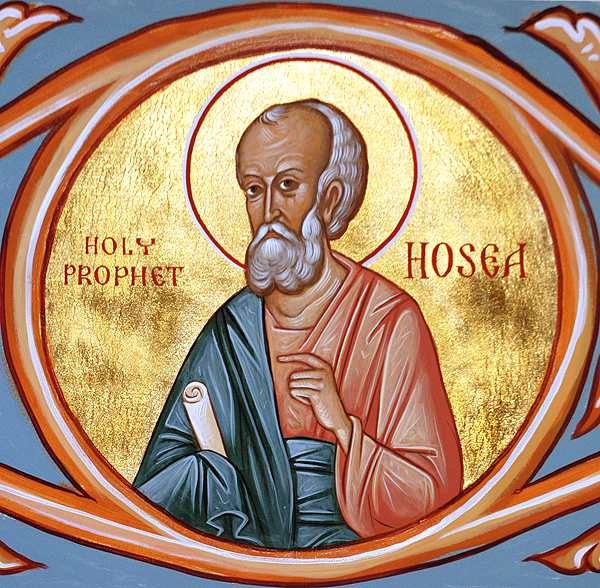
Or from Isaiah’s contemporary, Hosea:

14 I will ransom them from the power of the grave;
I will redeem them from death:
O death, I will be thy plagues;
O grave, I will be thy destruction: (13:14 KJV)

It would have been easy for Mark the evangelist to follow this script. Instead, he gives us an Easter morning that ends with “So they [the women] went out and fled from the tomb, for terror and amazement had seized them; and they said nothing to anyone, for they were afraid.” And that, in our best and earliest manuscripts, is how his Gospel ends. What is Mark doing?

Mark is probably doing a number of things; let’s focus on one probability. Fear, because Jesus’ resurrection isn’t about returning to normal. It’s the beginning of a new creation. The women have a new and unfamiliar world to navigate—no wonder they’re afraid.

Peter’s sermon in our Acts reading helps us flesh this out. Growing up, all of Peter’s notions and dreams of God’s victory had involved the vindication of the Jews and everyone else heading for the very end of the line. But here he is in the home of Cornelius, an officer whose military has been brutally oppressing the Jews for some time: “Truly I perceive that God shows no partiality… [Jesus] went about doing good and healing all that were oppressed by the devil… everyone who believes in him receives forgiveness of sins through his name.” Peter’s world has been thoroughly turned upside down.

This turning did not happen easily. You may recall that prior to this scene God sends Peter a private vision—repeated three times, and sends a messenger to Cornelius’ home with instructions as to how to locate and invite Peter. Peter was no more interested in having his world turned upside down than we are. But he consented, so that non-Jews like us could hear the good news.

To bring this into sharper focus, recall Conan, as played by Arnold Schwarzenegger. “What is best in life? To crush your enemies, to see them driven before you, and to hear the lamentations of their women.” In the aftermath of a hard-fought election and the failed insurrection at the Capitol in January, Conan’s words continue to echo. But if we follow Jesus (“Father, forgive them; for they do not know what they are doing.”) that’s not our script. That has no place in Jesus’ new creation.

The fear Mark describes shows up in Paul’s letter to the Philippians: “Therefore, my beloved, just as you have always obeyed me, not only in my presence, but much more now in my absence, work out your own salvation with fear and trembling; for it is God who is at work in you, enabling you both to will and to work for his good pleasure” (Phil. 2:12-13) (“trabajen con temor y temblor en su salvación). Which world are the Philippians assuming, the dog-eat-dog world of the Empire, or God’s new creation? The tactics they’re deploying: at home in the old creation or in the new? So “work out your own salvation with fear and trembling.”

So, by all means, let us celebrate Jesus’ resurrection. And let us remember that it’s not about getting back to normal, but about the birth of a new creation that we spend a lifetime getting used to, and in which some “fear and trembling” is not out of place.

Alleluia. The Christ is risen…

Re the Daily Office Readings September 30 Anno Domini 2020

Photo by elCarito

The Lessons: Hosea 4:11-19; Acts 21:15-26; Luke 5:27-39

“No one tears a piece from a new garment and sews it on an old garment; otherwise the new will be torn, and the piece from the new will not match the old. And no one puts new wine into old wineskins; otherwise the new wine will burst the skins and will be spilled, and the skins will be destroyed. But new wine must be put into fresh wineskins. And no one after drinking old wine desires new wine, but says, ‘The old is good.’”

Perhaps these are simply parables in the spirit of Ecclesiastes 3:1 (“For everything there is a season, and a time for every matter under heaven.”); both fasting and feasting have their place. But once uttered, they’re, well, ominous. Jesus and the Pharisees, Paul and the Jerusalem leaders: studies in pouring new wine into old wineskins? “So if anyone is in Christ, there is a new creation” (2 Cor. 5:17). Perhaps it’s like that poor camel and the needle’s eye: “”For mortals it is impossible, but for God all things are possible” (Matt. 19:26). Or perhaps the tearing of the cloth/wineskins turns out to redemptive? “I have been crucified with Christ; and it is no longer I who live, but it is Christ who lives in me. And the life I now live in the flesh I live by faith in the Son of God, who loved me and gave himself for me” (Gal. 2:19b-20).

And then just when the parables might be coming into focus, that last bit: “And no one after drinking old wine desires new wine, but says, ‘The old is good.’” So it’s not a matter of old=bad, new=good. And even the tension between old and new may not be the last word.  Perhaps relevant: the brief interchange (unique to Matthew) at the end of a long series of parables: “’Have you understood all this?’ They answered, ‘Yes’. And he said to them, ‘Therefore every scribe who has been trained for the kingdom of heaven is like the master of a household who brings out of his treasure what is new and what is old’” (Matt. 13:51-52).

Re the Daily Office Readings September 29 Anno Domini 2020

Holy Michael & All Angels

Quino

The Lessons: Job 38:1-7; Hebrews 1:1-14

2020 does focus the question of how to celebrate this feast. The temptation is to head directly to Ps 91:11-13 (“For he will command his angels concerning you…”), despite its role in Jesus’ temptation. And if we don’t highlight their protection? Here’s one of Mary Calvert’s prayers (from Pocket Celtic Prayers):

May the saints and angels be with me
From the top of my head
To the soles of my feet.

In the company of your saints
I would live this day;
As they lived their lives for you
So may I live this day.

With them to you I bring
My morning praise;
Heavenly chorus I would echo
In my morning praise.

Where they for ever dwell
There would I be;
In heaven to live with you
There may I be.

Or this from St. Patrick’s Breastplate:

I bind unto myself the power
of the great love of cherubim;
the sweet “Well done” in judgment hour;
the service of the seraphim;
confessors’ faith, apostles’ word,
the patriarchs’ prayers, the prophets’ scrolls;
all good deeds done unto the Lord,
and purity of virgin souls.

Re the Daily Office Readings September 28 Anno Domini 2020

Photo by Ariana Prestes

The Lessons: Hosea 2:14-23; Acts 20:17-38; Luke 5:1-11

Hosea and Luke resonate together nicely. The presenting issue in Hosea’s oracle was Israel’s misunderstanding/misuse of the Lord’s gifts of fertility. The Lord’s endgame: a restoration of abundant fertility (“On that day I will answer, says the LORD, / I will answer the heavens / and they shall answer the earth; / and the earth shall answer the grain, the wine, and the oil…”). So Jesus shows up at the lake, and “speak tenderly” turns out to include “Put out into the deep water and let down your nets for a catch.” Fertility. I do wonder what happened to all those fish. Perhaps Elijah’s calling of Elisha provided the template: “So he set out from there, and found Elisha son of Shaphat, who was plowing. There were twelve yoke of oxen ahead of him, and he was with the twelfth. Elijah passed by him and threw his mantle over him. He left the oxen, ran after Elijah, and said, ‘Let me kiss my father and my mother, and then I will follow you.’ Then Elijah said to him, ‘Go back again; for what have I done to you?’ He returned from following him, took the yoke of oxen, and slaughtered them; using the equipment from the oxen, he boiled their flesh, and gave it to the people, and they ate. Then he set out and followed Elijah, and became his servant” (1 Ki. 19:19-21).

Acts. Luke Johnson notices the multiple ways in which Paul’s speech follows the conventions of the Farewell Discourse, the point of which, broadly, is exhortation. More animals: not oxen (Elijah & Elisha), not fish (Jesus & Simon), but sheep and wolves. There’s a strong sense of menace (Paul, after all, recapitulating Jesus’ last journey to Jerusalem). So: “Keep watch over yourselves and over all the flock” (Paul channeling Michael Conrad’s Sgt. Phil Esterhaus).

Re the Daily Office Readings September 27 Anno Domini 2020

Photo by Luo Lei

The Lessons: Hosea 2:2-14; James 3:1-13; Matt. 13:44-52

“Catch it if you can. The present is an invisible electron; its lightning path traced faintly on a blackened screen is fleet, and fleeing, and gone” (from Annie Dillard’s Pilgrim at Tinker Creek).

James speaks of the “gentleness born of wisdom;” our combination of readings perhaps highlights a related expression of wisdom: paying attention, not getting distracted.

“She did not know / that it was I who gave her the grain, the wine, and the oil, / and who lavished upon her silver / and gold that they used for Baal.” Hosea’s 8th century Israel is a case study in not paying attention, but perhaps not as extreme as that, say, of our stock markets, whose traders imagine that their wealth comes from their cunning and Baal, rather than from God’s generous earth. And then, as now, multiple forms of folly ensue.

Paying attention, not getting distracted particularly by that little organ so close to the brains in which we take so much pride: “placed among our members as a world of iniquity; it stains the whole body, sets on fire the cycle of nature, and is itself set on fire by hell.” [Election year addendum on Not Getting Distracted: “For our struggle is not against enemies of blood and flesh, but against the rulers, against the authorities, against the cosmic powers of this present darkness, against the spiritual forces of evil in the heavenly places” (Eph. 6:12).]

Paying attention: Jesus’ parables highlight the payoff: the encountered treasure, the encountered pearl. And here’s where the dangers start: “As for what fell among the thorns, these are the ones who hear; but as they go on their way, they are choked by the cares and riches and pleasures of life, and their fruit does not mature” (Lk. 8:14). “But the Lord answered her, ‘Martha, Martha, you are worried and distracted by many things; there is need of only one thing. Mary has chosen the better part, which will not be taken away from her’” (Lk. 10:41-42).

“Catch it if you can.”

Re the Daily Office Readings September 26 Anno Domini 2020

From Orthodox Church in America

The Lessons: Hosea 1:1–2:1; Acts 20:1-16; Luke 4:38-44

The Lectionary begins our ten-day stint with Hosea today (for overviews, here and here). Abraham Heschel: “God is conceived, not as the self-detached Ruler, but as the sensitive Consort to Whom deception comes and Who nevertheless goes on pleading for loyalty, uttering a longing for reunion, a passionate desire for reconciliation.”

One’s eyes can glaze reading texts like that from Acts today. Luke Johnson’s observation helps: “More significant by far than any single stage of the journey is the way in which Luke has so obviously structured it to mirror the great journey of the prophet Jesus to his death and triumph in Jerusalem (Luke 9:51-19:44).” I wonder: while Paul specifically is important for the story Luke wants to tell (how the Gospel advances from Jerusalem to Rome), is Luke also using Paul as a model for every believer, someone in whom Jesus’ Spirit continues to work?

As commentators notice, Luke in this Gospel text both follows Mark and reorders his sequence (we encounter the calling of the disciples in our next Luke reading). Is the point to give Jesus’ call of Peter some context? Meanwhile, “proclaim the good news of the kingdom of God:” executing the previously-read mandate from Isaiah, healing and exorcising. O Jesus, we could use more of that here, today.

Re the Daily Office Readings September 25 Anno Domini 2020

Painting by Lucas Cranach the Elder

The Lessons: Judith 13:1-20; Acts 19:21-41; Luke 4:31-37

When the Assyrian army surrounded Jerusalem in the time of King Hezekiah and the prophet Isaiah we’re told that one night “the angel of the Lord” struck down 185,000 Assyrians in the camp—and the Assyrians departed. Today’s text records a similar outcome—at the cost of one Assyrian life. I wonder: has something shifted in the culture and/or theological sensibility?

(By the way, the Book of Judith continues for three more chapters. Judith’s thanksgiving song is particularly worth attention, e.g., “Her sandal ravished his eyes, / her beauty captivated his mind, / and the sword severed his neck!”)

Every year Episcopal parishes complete the Parochial Report—many numbers—“to assist the Church in planning for mission.” Why isn’t one of the numbers requested the number of times merchants in the city have rioted in response to the parish’s missional activities?

The demon gets it right: Jesus is “the Holy One of God.” Not that it does the demon any good—he’s still sent packing, and an unnamed man—his former residence—is a little freer. Holiness and freedom: that’s a very old association: Moses encounters holy ground—and gets sent to bring Israel out of Egypt. Here’s another missional project for us—that also will not be (directly) registered in the Parochial Report—make more visible in our city the link between holiness and human freedom.