Tag Archives: Church

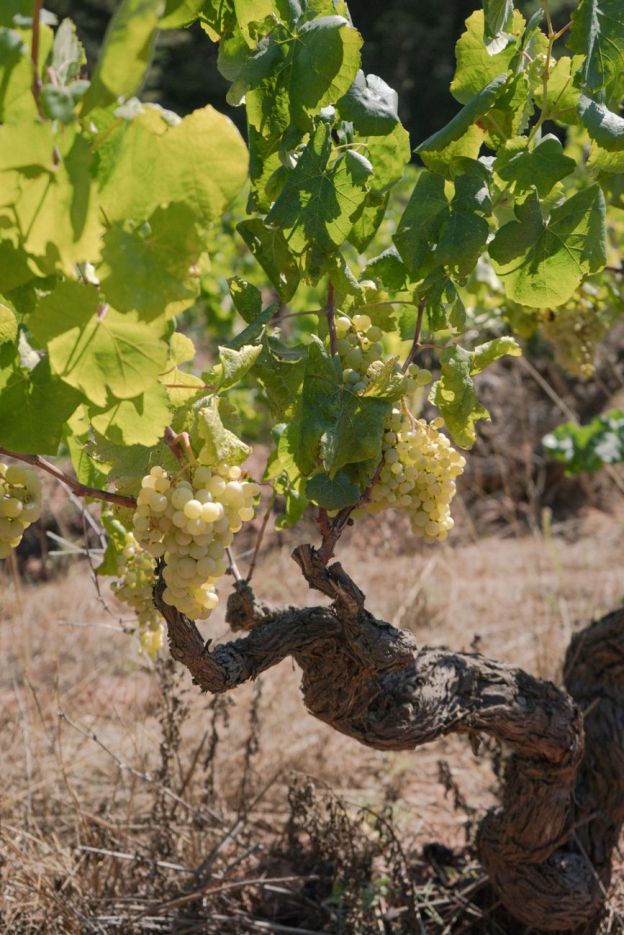
God’s Vineyard (October 4, AD 2026; Proper 22)

Readings (Track 2)

When things go well, the grape harvest brings joy. When things don’t go well, it gets complicated. Happily, our God is creative enough—not to mention downright stubborn—that “complicated” doesn’t get the last word. That’s more or less what today’s readings are about.

As you probably guessed listening to the readings, Jesus is playing off Isaiah’s “love-song:” the vineyard, the watchtower, the wine vat. That love-song is transparently about the Lord’s history with Israel, a history intended to result in justice and righteousness, but actually resulting in bloodshed and a cry.

Isaiah, of course, had a lot to say about justice and righteousness. If we asked what justice and righteousness are for, he might direct us to another of his oracles: “The wolf shall live with the lamb, / the leopard shall lie down with the kid, …They will not hurt or destroy / on all my holy mountain” (11:6a, 9a). Jesus’ “I came that they may have life, and have it abundantly” (Jn 10:10b) applies equally to the Lord’s project with Israel: life in abundance for all, not just the top 1%. But faced with bloodshed and a cry the project is going to get more costly. The hymn about Jesus Paul cited that we heard last week talked about that: “who, though he was in the form of God, did not regard equality with God as something to be exploited, but emptied himself, taking the form of a slave, being born in human likeness” (Phi 2:6-7). And in today’s Gospel we’re approaching that hymn’s center.

Jesus, playing off Isaiah’s love-song, updates it. The vineyard owner sends servants to collect the produce, or, literally, the fruit. “Fruit:” Matthew uses the word more than any of the other Gospels, and almost always metaphorically. John the Baptist: “Bear fruit worthy of repentance” (3:8). Jesus: “You will know them by their fruits” (7:16a). And in Jesus’ parable about the sower and the soils: “Other seeds fell on good soil and brought forth fruit, some a hundredfold, some sixty, some thirty” (13:8). It would be imprudent to assume that this fruit is simply Isaiah’s “justice and righteousness.” It would be equally imprudent to assume that they’re much different. Early in the Sermon on the Mount we heard “unless your righteousness exceeds that of the scribes and Pharisees, you will never enter the kingdom of heaven” (5:20). So Jesus’ updating of Isaiah’s love-song is not about redefining the fruit, but is about the vineyard owner’s son now being onstage.

Before moving on to Philippians, what of “the kingdom of God will be taken away from you and given to a people that produces the fruits of the kingdom”? The Jews are out and the Christians are in? While the parable’s been read that way, that reading runs counter to Matthew’s framing. Recall the ending: “When the chief priests and the Pharisees heard his parables, they realized that he was speaking about them.” Matthew hears the parable as being pretty tightly focused.

But on to Philippians! With both vineyard parables still ringing in our ears, how do we hear Paul? One popular reading of texts like this text: after Jesus, God’s given up on looking for justice and righteousness (Isaiah) or fruit (Matthew) from us; all we have to do is have “faith.” But with this reading why does Paul say “I want to know Christ and the power of his resurrection and the sharing of his sufferings by becoming like him in his death, if somehow I may attain the resurrection from the dead”? Now just before that, that phrase about Paul’s preferred righteousness “through faith in Christ” might better be translated “through Christ’s faithfulness” (so the NRSV note and the CEB). This shifts the focus from our faith to what God has accomplished through Christ’s faithfulness, that is, opening for us the way to life by participating in that faithfulness.

What does participating in that faithfulness look like? Paul’s description here is one that’s liable to have us looking for the nearest exit: “I want to know Christ and the power of his resurrection and the sharing of his sufferings by becoming like him in his death, if somehow I may attain the resurrection from the dead.” So it’s important to notice that this is in essence what we heard Paul calling on his hearers (us!) to do last week: “Do nothing from selfish ambition or conceit, but in humility regard others as better than yourselves. Let each of you look not to your own interests, but to the interests of others. Let the same mind be in you that was in Christ Jesus, who, being in the form of God, did not regard equality with God as something to be exploited…” (2:3-6 NRS alt). Sometimes this participating involves literal death; more often it involves accepting that I’m not the center of the universe—which is often harder. The world tells us that “Let each of you look not to your own interests, but to the interests of others” is a sure way of ending up as roadkill. But we’ve already heard Jesus tell us “For those who want to save their life will lose it, and those who lose their life for my sake will find it” (Mt 16:25). So we do have a choice we need to keep making.

The important thing here is that Paul isn’t talking about imitation, as we might try to imitate Gandhi or Martin Luther King Jr. Recall his language: “in order that I may gain Christ and be found in him… but I press on to make it my own, because Christ Jesus has made me his own,” or, from last week’s reading “work out your own salvation with fear and trembling; for it is God who is at work in you, enabling you both to will and to work for his good pleasure” (2:12-13). There’s effort involved (“straining forward to what lies ahead”), but it’s not a self-improvement project.

Participating in Christ’s faithfulness: that sounds like what Paul’s colleague John the Evangelist records Jesus talking about: “I am the true vine, and my Father is the vinegrower. He removes every branch in me that bears no fruit. Every branch that bears fruit he prunes to make it bear more fruit.… Abide in me as I abide in you. Just as the branch cannot bear fruit by itself unless it abides in the vine, neither can you unless you abide in me. I am the vine, you are the branches. Those who abide in me and I in them bear much fruit, because apart from me you can do nothing” (Jn 15:1-2, 4-5).

So here we have, if you like, a third vineyard parable. The Lord, it seems, has solved the vineyard/fruit problem by Jesus himself becoming the vine, and those participating in Jesus’ faithfulness, the branches.

OK, preacher, you might say, you’ve just swapped one metaphor for another: what’s John’s “abide” about? Well, too briefly, it’s about two things. First, it’s about the typical practices in our Episcopal tradition, “the means of grace” as the General Thanksgiving puts it. Perhaps its most concentrated form is in the Holy Eucharist, in which we ask God to roll up the sleeves for two projects: “Sanctify [make holy] them [the bread and wine] … to be for your people the Body and Blood of your Son… Sanctify [make holy] us also that we may faithfully receive this holy Sacrament, and serve you in unity, constancy, and peace.” (No points for guessing which project involves more exertion on God’s part!) Second, it’s about the neighbor, because the neighbor is usually the test of whether I’m looking to my own interests or to the interests of others. Perhaps we should simply add “the neighbor” to our listing of the “means of grace.”

In any case, Jesus talking about being the vine, with the branches bearing fruit brings us back full circle. “The wolf shall live with the lamb, / the leopard shall lie down with the kid, …They will not hurt or destroy / on all my holy mountain.” Life in abundance for all. That’s still the endgame. Participating in Christ’s faithfulness our fruit witnesses to it and, God knows, perhaps even contributes to its realization.

Who is blessed/happy? (6th Sunday after the Epiphany, 2/16/2025)

Readings

Whether we respond to the readings with “The Word of the Lord” or “Hear what the Spirit is saying to the Church,” I take the readings to set the agenda for the preacher: what might the Spirit want us to hear today in these words of the Lord? That agenda’s in the form of a question, so most of the time the sermon’s an invitation to reflect together. So let’s dive in.

Words like ‘happy’ or ‘blessed’ appear in three of our texts. ‘Happy’ has a broad range of meanings; what are these texts talking about? Well, it looks like they’re part of a long conversation in the Mediterranean world about what counted as a life well-lived. It’s certainly about something more basic than one’s momentary emotional state. ‘Happy’ is the first word in the Book of Psalms, despite many of the psalms assuming situations that have the speakers crying “Help!” In this sense there’s considerable overlap between ‘happy’ in that psalm and Jeremiah’s ‘blessed.’

Both texts talk about two groups, their behavior and the results of that behavior. The Psalm speaks of the righteous and wicked, the behavior of the righteous captured by “Their delight is in the law of the Lord.” Jeremiah speaks of those who trust and those who don’t trust the Lord. Both use the tree image: those who delight in the law, those who trust: they’re like well-watered trees: they endure; they’re fruitful. They’re the ones who are happy (Psalm 1), blessed (Jeremiah). Trees: the image suggests a rather long timeframe. Fruit, or the effects of drought: these take time. The image is hopeful and can nourish our hope. Droughts: they’re a given; we don’t need to fear them.

So these texts are saying that in this life, this world the righteous prosper and the wicked fail? No, for starters because Jeremiah’s career is the antithesis of ‘prosper.’ They are saying that delighting in the law of the Lord, trusting the Lord are life-giving. Notice the careful language with which Psalm 1 closes (and introduces the entire book): “For the Lord knows the way of the righteous, / but the way of the wicked is doomed.”

In other words, whether all this plays out in a satisfactory way in this life, this world is left unanswered. Earlier texts often seem to assume that it does; our latest texts—like Daniel or the Wisdom of Solomon—are sure that it doesn’t. Paul’s words to the Corinthians continue this trajectory: without a resurrection in which each receive their due “we are of all people most to be pitied.”

But returning to Jeremiah and the psalm, notice that while for both of them the Lord’s torah (law, or, more broadly, teaching) is fundamental, neither narrows the focus to obeying or not obeying. Jeremiah understands that the issue is often trust, who or what we put our weight on. The psalmist speaks of delight in the Lord’s law or teaching. That’s an invitation to a life of continual discovery. Paul to the Ephesians: “test everything to see what’s pleasing to the Lord” (5:10 CEB).Cue the music from the various iterations of Star Trek, one contemporary vision of a corporate life well-lived.

Hearing Jesus’ words after Jeremiah and the psalm, we might hear them as encouragement: even if you’re poor, hungry, etc., you’re still in the life-well-lived game. And that wouldn’t be a bad way of hearing them. But there’s more.

Earlier in the Gospel Luke recorded Mary’s song. “He has cast down the mighty from their thrones, / and has lifted up the lowly. / He has filled the hungry with good things, / and the rich he has sent away empty.” Growing up with your mother singing songs like that will do things—good things—to your head. Three Sundays ago we heard Jesus reading Isaiah: “The Spirit of the Lord is upon me, because he has anointed me to bring good news to the poor…” and here Jesus is doing just that.

“Whoa, Mary, Jesus! Pretty hard on the rich!” we might think. Well, their words reflect centuries of their people’s experience. Of course riches can be used in good ways, but usually? Sirach nails it: “Wild asses in the wilderness are the prey of lions; / likewise the poor are feeding grounds for the rich” (13:19). We shouldn’t assume that these words match our reality, nor should we assume that they don’t. (And, by the way, the next thing Jesus says—which we’ll hear next Sunday—is “Love your enemies, do good to those who hate you, bless those who curse you, pray for those who abuse you.” So however we read our situation, we’ve been told how to respond.)

Happy those poor, hungry, weeping, hated. Not because these are positives, but because God’s reign is—as Jesus proclaims—at hand. Now, in our text we hear “for surely your reward is great in heaven.” So isn’t this another version of “pie in the sky when you die”? No, first, because the border between heaven and earth is porous, and a reward “great in heaven” is a sight better than having received all the consolation you’re going to get. Second, because of where Luke is taking this. Later in the Gospel we hear “And [Jesus] said to them, ‘Truly I tell you, there is no one who has left house or wife or brothers or parents or children, for the sake of the kingdom of God, who will not get back very much more in this age, and in the age to come eternal life’” (18:29-30; italics mine). So, describing the church in Jerusalem, Luke writes “There was not a needy person among them, for as many as owned lands or houses sold them and brought the proceeds of what was sold. They laid it at the apostles’ feet, and it was distributed to each as any had need” (Acts 4:34-35). What is the Church for? It is where the truth of Jesus’ Beatitudes can be experienced.

How might we wrap this up? Already in the Old Testament we have the contours of a life well-lived: a life in which our trust in the Lord is growing, a life in which our delight in the Lord’s teaching is growing. To quibble a little with Gene Roddenberry, for all practical purposes the final frontier is not space, but the week ahead.

And with the power of the Lord Jesus’ Spirit active in our midst, this life well-lived is particularly good news for the poor, the hungry, those weeping, those excluded, reviled, and defamed on account of the Son of Man. As one of our Eucharistic Prayers puts it, “that we might live no longer for ourselves, but for him who died and rose for us, he sent the Holy Spirit, his own first gift for those who believe, to complete his work in the world, and to bring to fulfillment the sanctification of all” (BCP 374).

Humanity’s future: Human, not bestial (Ascension, 5/9/2024)

Readings (with Daniel 7:1-14 read in place of Acts)

Alleluia! Christ is risen!
The Lord is risen indeed! Alleluia!

How’s that as an exercise in understatement? Not only risen, but, in Ephesians’ language “seated … at [God’s] right hand in the heavenly places, far above all rule and authority and power and dominion.”

Like last year, we heard Daniel’s vision in place of Acts’ account of the ascension. I make the change for two reasons. First, having only Acts and Luke is something like having our participation in a wedding confined to watching the couple leaving for the church. Daniel’s vision pictures the ceremony itself: “one like a son of man coming with the clouds of heaven. And he came to the Ancient One and was presented before him. To him was given dominion and glory and kingship, that all peoples, nations, and languages should serve him…”  

Daniel’s vision pulls the camera way back to encompass—representatively—human history, and to ask how it ends. It is a profoundly hopeful vision: history ends not with some version of “The one with the biggest teeth wins” but with authentically human life. And what today’s feast celebrates is that Daniel got it right. The Son of Man—Jesus’ preferred self-designation—has in fact been “given dominion and glory and kingship.” That’s good news that our neighbors—near and far—need to hear.

“Dominion and glory and kingship.” “Hey preacher, sure doesn’t look like it.” No it doesn’t, if dominion is measured by the compulsion of Daniel’s beasts. That’s one of the Church’s oldest temptations: let’s use the beasts’ tools, marry Church priorities with State power. No. Jesus’ dominion: creating space for free human choice, with the utterly reliable promise that even the smallest choice matters. “and whoever gives even a cup of cold water to one of these little ones in the name of a disciple– truly I tell you, none of these will lose their reward” (Matt. 10:42).

And then there’s our reading from Ephesians: “God put this power to work in Christ when he raised him from the dead and seated him at his right hand in the heavenly places, far above all rule and authority and power and dominion, and above every name that is named, not only in this age but also in the age to come. And he has put all things under his feet and has made him the head over all things for the church, which is his body, the fullness of him who fills all in all.” If we’re paying attention, that text can be downright jarring. Imagine someone introducing a speaker like this: “She is the CEO of J P Morgan Chase—and the Manager of the McDonald’s at 5th Avenue & 42nd Street in Manhattan.” “Far above all rule and authority and power and dominion…head for the church.”

If you want evidence that Paul’s certifiable, there it is. Or maybe Paul has seen what we have trouble seeing. Think about the sort of thing we’ve been hearing in our readings from Acts this Easter season.

“But Peter and John answered them, “Whether it is right in God’s sight to listen to you rather than to God, you must judge; for we cannot keep from speaking about what we have seen and heard” (Acts 4:19-20).

Later, the high priest: “We gave you strict orders not to teach in this name, yet here you have filled Jerusalem with your teaching and you are determined to bring this man’s blood on us.” To which Peter and the apostles: “We must obey God rather than any human authority. The God of our ancestors raised up Jesus, whom you had killed by hanging him on a tree. God exalted him at his right hand as Leader and Savior that he might give repentance to Israel and forgiveness of sins” (Acts 5:27-31).

Stephen, while being stoned, “Lord, do not hold this sin against them” (Acts 7:60).

Daniel’s beasts, Paul’s “rule and authority and power and dominion:” these are not the agents for a human future. But Jesus’ Church: we’re the heralds, the witnesses, the evidence, of that human future, and who knows what we might contribute to it in the process.

This Feast of the Ascension. About Jesus, certainly. Being about Jesus, profoundly good news re human history’s goal. Being about Jesus, a reminder of the centrality of Jesus’ Church for that human history.

Alleluia! Christ is risen!
The Lord is risen indeed! Alleluia!